

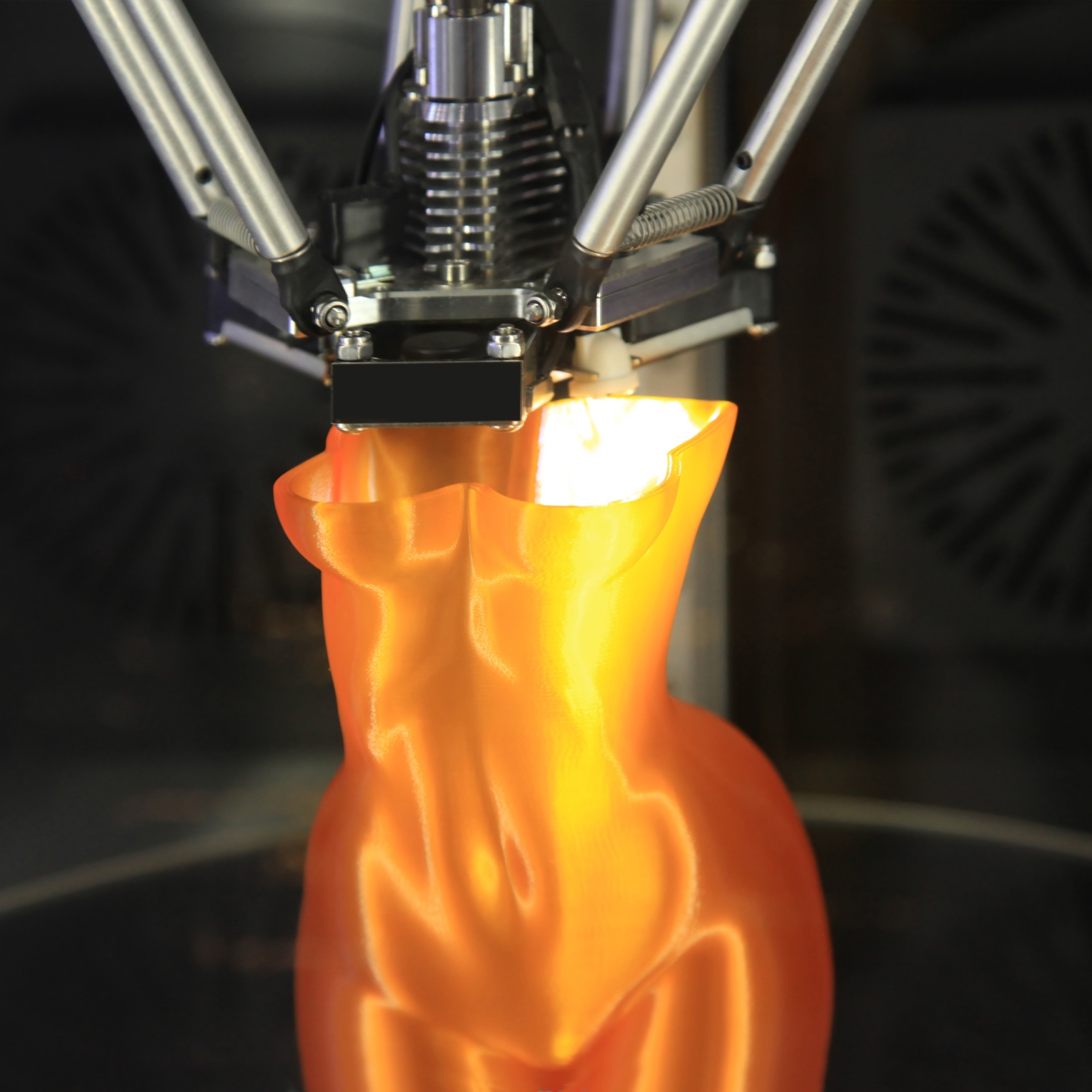
What do a marble sculpture, a towering metal monument, and a delicate gallery installation have in common? More than you might think. Behind many of today's most striking works of art is a combination of creative vision and modern fabrication technology.
Artists have always embraced the tools of their time. Today, technologies such as 3D printing, CNC machining, laser cutting, and water jet cutting are helping creators push beyond traditional limitations while preserving the craftsmanship that makes every piece unique. Rather than replacing artistic skill, these tools give artists greater freedom to experiment with scale, detail, and materials.
The Modern Art Toolkit
Modern fabrication combines digital design with advanced manufacturing techniques to turn creative concepts into physical works of art. Many studios now begin with a digital model before selecting the fabrication method best suited to the project.
Some of the most widely used technologies include:
- 3D printing for building sculptures and prototypes layer by layer.
- Laser cutting for creating intricate patterns in wood, acrylic, and thin metals.
- CNC (Computer Numerical Control) machining for carving stone, wood, and metal with exceptional precision.
- Water jet cutting for shaping thick or heat-sensitive materials without causing thermal damage.
Each method offers unique advantages, and many artists combine several of them within a single project.
A Growing Industry That Demands Precision
The demand for high-quality fabrication continues to grow alongside the global art market. According to the Art Basel and UBS Global Art Market Report 2025, worldwide art sales reached approximately $57.5 billion in 2024.
With collectors, galleries, museums, and public art commissions investing in increasingly ambitious projects, precision has become more important than ever. Whether producing a museum installation or a large outdoor sculpture, artists need fabrication methods that consistently deliver clean finishes and accurate dimensions.
Key Benefits for Artists and Fabricators
Modern fabrication isn't just changing how artwork is made. It's expanding what's possible, helping artists create more ambitious pieces while improving precision, efficiency, and material versatility. Here are some of the biggest advantages these technologies bring to the fine art industry today:
1. Creating Complex Geometry and Large-Scale Artwork
Large-scale sculptures once required extensive manual sculpting, plaster molds, and repeated revisions before production could begin. Digital fabrication has dramatically simplified that process.
Artists can now design entire sculptures in 3D software, print scale models for review, and make adjustments long before fabrication starts.
Modern fabrication also makes ambitious projects more practical by:
- Creating lightweight hollow structures with internal supports.
- Scaling artwork to different sizes without redesigning it.
- Reducing manual production time for complex forms.
- Making transportation and installation easier for oversized pieces.
This flexibility allows artists to focus on creative expression while reducing many of the logistical challenges associated with large installations.
2. Achieving High-Precision Detail
Many contemporary artworks feature intricate geometric patterns, layered components, and detailed textures that would be difficult to reproduce consistently by hand.
Different fabrication technologies contribute to that precision in different ways:
- Laser cutting creates delicate patterns with clean, sharp edges.
- CNC machining produces highly accurate carvings in stone, wood, and metal.
- High-pressure water jet systems cut thick materials without introducing heat that can distort the finished piece.
For projects involving stone, glass, or heavy metals, a water jet cutter provides exceptional precision while protecting materials from heat-related damage. OMAX, a Hypertherm company, manufactures advanced water jet systems used across industries where clean, accurate cutting is essential, including fabrication work that supports artistic and architectural projects.
These technologies allow artists to produce complex designs that remain faithful to their original vision from digital model to finished artwork.
3. Blending Materials for Strength and Longevity
Many works of fine art are expected to remain on display for decades, particularly outdoor sculptures and public installations. That means durability is just as important as appearance.
Modern fabrication gives artists access to a wide variety of materials that balance aesthetics with long-term performance, including:
- Stainless steel for corrosion resistance.
- Bronze for classic appearance and structural strength.
- Reinforced composites that reduce weight while maintaining durability.
- Weather-resistant coatings that protect against moisture and UV exposure.
Digital fabrication has also improved traditional casting methods. Artists can produce highly detailed sand molds using 3D printing before casting bronze, capturing intricate details while streamlining production.
4. Digital Modeling Expands Creative Possibilities
Today's artistic process often begins long before any material reaches a workshop.
Using software such as Blender or Rhino, artists can experiment with proportions, test different compositions, and refine intricate details before fabrication begins. Small-scale prototypes can then be produced to evaluate both aesthetics and structural performance.
Digital modeling also offers practical advantages:
- Testing ideas before committing expensive materials.
- Identifying structural concerns early in the design process.
- Scaling artwork for multiple exhibitions.
- Improving collaboration between artists and fabrication specialists.
By resolving potential issues early, artists can spend more time refining creativity instead of correcting production challenges later.
Better Collaboration Between Artists and Fabricators
Modern fabrication has also changed the way creative teams work together. Digital files can be shared between artists, engineers, and fabrication specialists, allowing everyone to review dimensions, suggest improvements, and resolve technical questions before production begins.
This collaborative workflow reduces costly revisions, shortens production timelines, and helps ensure the finished artwork remains true to the artist's original vision. For large commissions and public installations, that coordination is often essential to delivering projects on schedule.
Supporting Restoration and Conservation
Modern fabrication isn't only helping create new artwork. It's also playing an increasingly important role in preserving existing pieces. Museums and restoration specialists can use digital scanning and precision machining to reproduce damaged decorative elements, create custom support structures, or fabricate replacement components that closely match the original work.
These techniques allow conservation teams to stabilize valuable pieces while minimizing intervention and preserving their historical character.
Conclusion
Fine art will always begin with imagination, creativity, and craftsmanship. Modern fabrication simply gives artists more ways to bring those ideas into the physical world. From creating monumental sculptures and intricate installations to supporting restoration and long-term preservation, technologies such as 3D printing, CNC machining, laser cutting, and water jet cutting continue to expand what's possible.
As these tools evolve, they will remain valuable creative partners, helping artists produce work that is not only visually striking but also built to endure for generations.