

Cold temperatures do not automatically damage paintings. In stable conditions, lower temperatures may even slow some chemical aging processes in art storage. The greater risk occurs when cold artwork is handled, transported, exposed to vibration, or moved suddenly from a cold environment into a warm one. Understanding how cold temperatures damage paintings helps determine the right precautions for each type of artwork.
How Cold Temperatures Damage Paintings
Cold-related damage can occur through several processes:
- Paint brittleness. Paint films can become less flexible as temperatures fall below their glass transition temperature (Tg). When paint is brittle, impacts, vibration, or flexing of a canvas can contribute to cracking, flaking, or loss.
- Differential contraction. Canvas, wood, ground, paint, and varnish respond differently to low temperatures. When these materials contract at different rates, stress can develop between the layers.
- Condensation. When a cold painting is brought into a warm, humid environment, moisture may condense on its surface. This can contribute to varnish bloom, staining, and conditions favorable to mold growth.
- Humidity changes. Cold environments, particularly enclosed or poorly controlled spaces, can be accompanied by changes in relative humidity. Hygroscopic materials such as wood and canvas can respond to these fluctuations by expanding or contracting.
- Rapid temperature cycling. Frequent changes between cold and warmth can place stress on different materials, potentially contributing to deterioration over time.
Cold Damage by Type
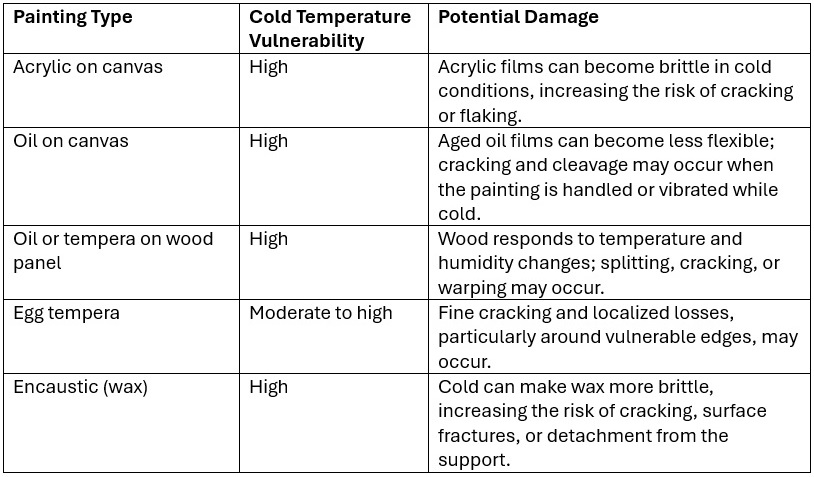
The effects of cold depend on the materials and construction of the painting. The following table provides a general overview of how cold temperatures damage paintings depending on their type.
Best Conservation Practices
- Maintain stable conditions. Keep paintings within a stable temperature and relative humidity range appropriate for their materials. A commonly recommended indoor temperature range is around 60°F to 70°F.
- Use appropriate transportation. For valuable or fragile artwork, insulated crates and climate-controlled vehicles can help reduce exposure to extreme temperatures and rapid environmental changes.
- Avoid handling cold paintings unnecessarily. Do not flex, roll, or subject a cold canvas to unnecessary vibration or impact.
- Allow gradual acclimatization. When artwork has been transported in cold conditions, allow it to adjust gradually to the new environment before unpacking or handling it extensively.
FAQs
Can a painting be damaged in a cold room?
A stable, appropriately controlled temperature is not necessarily harmful to a painting. The greater risks are associated with very low temperatures, improper handling while the artwork is cold, and sudden changes between cold and warm environments.
Which paintings are more sensitive to cold?
Acrylic and encaustic paintings can be particularly vulnerable because their films or wax layers may become brittle at low temperatures. Paintings on wooden panels can also be sensitive because wood responds to changes in temperature and relative humidity.
How long should a painting acclimatize after traveling in a cold truck?
There is no single acclimatization period that applies to every painting. The appropriate time depends on the artwork's materials, construction, packaging, temperature difference, and environmental conditions. Fragile or valuable works may require a longer gradual adjustment before unpacking and handling.