

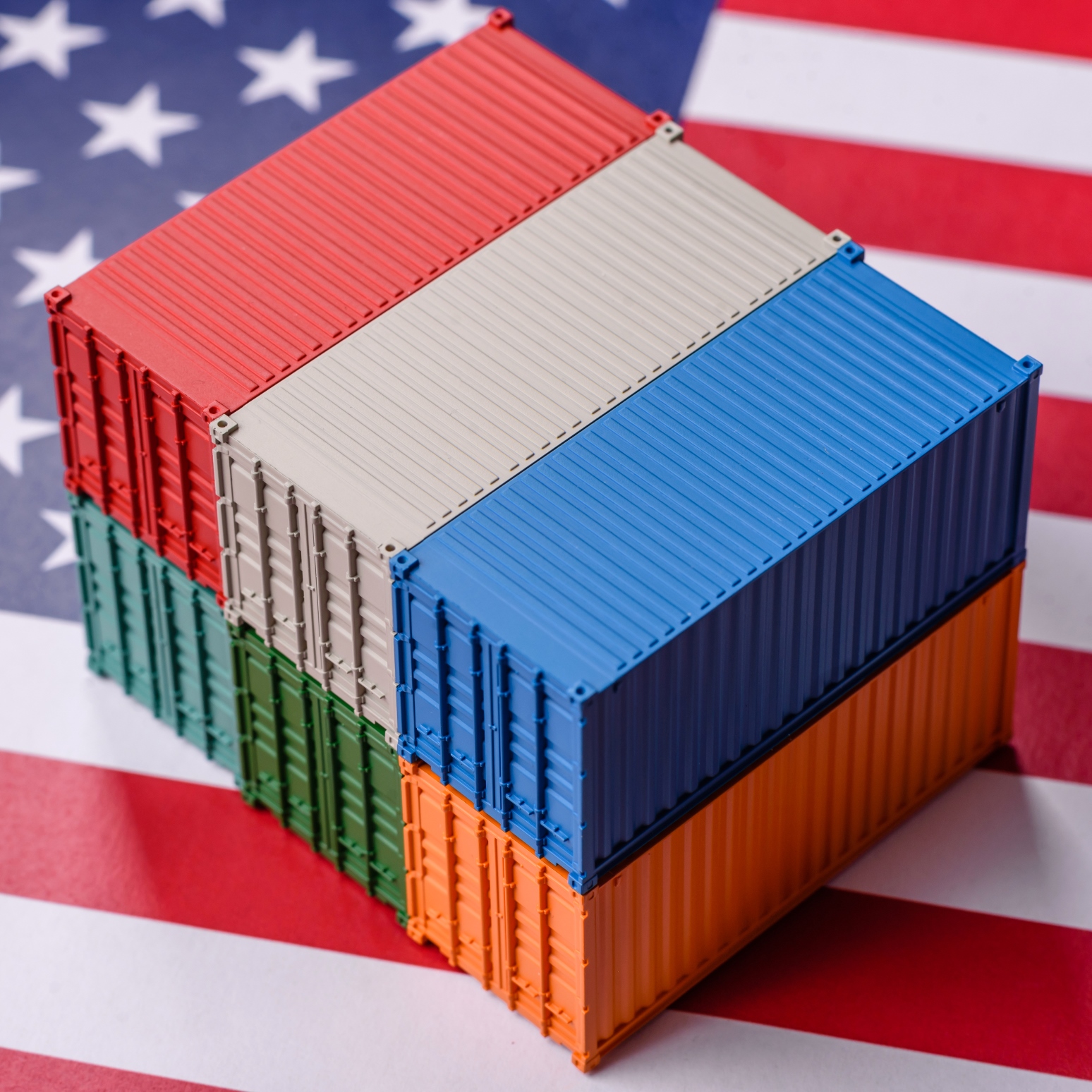
Moving goods across international borders has always been complex. In 2026, that complexity continues to grow as tariff changes, shifting trade relationships, evolving customs requirements, and rising transportation costs reshape global supply chains. At the same time, customers expect faster deliveries and greater reliability, making efficient cross-border logistics more important than ever.
The good news is that optimization doesn't require a complete supply chain overhaul. Instead, it comes from making smarter decisions in a handful of critical areas that improve efficiency, control costs, and keep goods moving smoothly across borders.
The Scale of What's Moving
Cross-border shipping is not a niche concern. According to the Bureau of Transportation Statistics' 2025 Transborder Freight Data Annual Report, U.S. freight flows with Canada and Mexico alone equaled $1.6 trillion in 2025, representing nearly one-third of the country's total international trade value of $5.3 trillion. That's roughly $4 billion in daily cross-border freight crossing U.S. land borders.
For businesses moving goods internationally, every inefficiency in that system has a direct cost. Customs delays, documentation errors, misclassified tariff codes, and carrier selection problems aren't abstract logistics issues; they translate to late deliveries, held goods, penalty fees, and frustrated customers.
How to Optimize Cross-Border Logistics
Getting cross-border shipping right comes down to four areas. Businesses that address each one consistently outperform those managing logistics reactively.
1. Make Customs Compliance Systematic
Manual customs processes create delays that compound across high shipment volumes. The businesses that move goods fastest treat compliance as an automated, documented system rather than a case-by-case task.
Key steps that make the biggest difference:
- Use classification software to assign accurate tariff codes at the point of product setup, not at the point of shipment
- Calculate total landed cost, duties, taxes, and fees, before goods ship, so customers aren't surprised at delivery
- Qualify for trusted trader programs where applicable, which significantly reduce secondary inspection rates at major borders
- Partner with licensed customs brokers in key markets who know local requirements and have established relationships with customs authorities
2. Build Visibility Across the Full Shipment Lifecycle
Shipments you can't see in real time are shipments you can only react to after problems develop. A connected technology stack changes that to proactive management.
- A Transport Management System (TMS) provides live tracking, alerts at exception points, and route performance data
- Integrating the TMS with ERP and warehouse systems creates a single source of truth for order status across borders
- Real-time document status visibility, knowing when customs has received and accepted paperwork, allows teams to intervene before a hold becomes a delay
3. Position Inventory Closer to the Customer
Long transit times from a single origin country are a structural problem that better carrier selection alone won't solve. Multi-nodal fulfillment addresses it at the root.
Working with third-party logistics providers and bonded warehouses allows inventory to sit in-market or near-market before it clears formal customs, cutting the distance between order and delivery. This approach also distributes risk: no port, crossing, or corridor becomes a single point of failure.
4. Plan for Disruption Before It Happens
Cross-border shipping in 2026 is exposed to more volatility than a few years ago. Tariff changes arrive with little notice. Crossings close unexpectedly. Carrier capacity tightens during peak periods and geopolitical events.
The businesses that absorb disruption most efficiently are the ones that planned for it:
- Maintain relationships with multiple carriers across relevant modes and corridors
- Define Incoterms clearly with every buyer and supplier so that responsibility at each handoff is never ambiguous
- Build realistic lead time buffers based on actual border performance data, not optimistic estimates
- Review alternative routing options for critical lanes before they're needed, not after
A business that has built these four pillars is operating with a fundamentally lower risk profile than one managing cross-border logistics reactively. And for the most complex regulatory layer, customs, specialist expertise makes the remaining difference.
Why Expert Customs Guidance Matters More Now
The regulatory environment for cross-border trade has become significantly more dynamic. New tariff measures under Section 232 and IEEPA are being introduced and revised with little notice, classification disputes have become more common, and documentation requirements continue to vary across markets. Keeping up with these changes requires ongoing attention and specialized knowledge.
For businesses that don't have extensive in-house customs expertise, partnering with trusted customs brokers can provide valuable support in managing compliance, product classification, and customs inquiries while reducing the risk of costly delays. Livingston International is one example of a provider in this space, helping businesses navigate evolving trade regulations and maintain efficient cross-border operations.
Use Technology to Improve Decision-Making
Technology has become one of the most valuable tools for managing cross-border logistics efficiently. Beyond tracking shipments, modern logistics platforms help businesses analyze shipping performance, identify recurring delays, and improve forecasting.
By using real-time data to monitor carrier performance, transit times, and customs processing, businesses can make more informed decisions that reduce costs and improve reliability over time. Better visibility also allows teams to respond more quickly when disruptions occur, helping keep shipments on schedule.
Conclusion
Cross-border logistics optimization is not a project with an endpoint. It's an ongoing operational discipline that compounds over time. Each improvement in classification accuracy, in partner network depth, in documentation quality, or in technology adoption reduces friction and cost on every subsequent shipment.
In a trade environment where tariffs, regulations, and carrier costs are all moving simultaneously, the businesses that build this discipline early are the ones that navigate change with the least disruption.