

You are an artist, and you have landed your first online job in fine art. Sounds great, right? But when you looked at the address, the buyer isn’t local, and now you need to ship the piece to them.
This is where the real challenge begins. How would you be assured that your art piece will be in perfect condition when it reaches your customer’s doorstep? The answer is simple: by taking all the necessary precautions.
In this guide, we will provide you with a fine arts shipping checklist to ensure the safe transit of art pieces, so you can ship your artwork without any worries.
Let's dive right in.
Fine Arts Shipping Checklist
Here is the checklist to ensure safe transit of your art pieces:
- Preparation & documentation
- Packaging options
- Crating (for valuable or large pieces)
- Choosing the right carrier
- Handling instructions
- Transit & receiving
- Post-delivery care
1. Preparation & Documentation
Before you start packaging, ensure everything is documented properly. Begin by creating an inventory list, detailing each artwork's description, dimensions, and value. This ensures you have a record for both insurance and personal tracking. Take high-resolution photos of each piece from various angles, especially if you need to file an insurance claim later.
Also, make sure your artwork is properly insured during transit. This can give you peace of mind in case something goes wrong. Lastly, if you’re shipping internationally, prepare the necessary customs documentation such as commercial invoices, export licenses, and other required forms.
2. Packaging Options
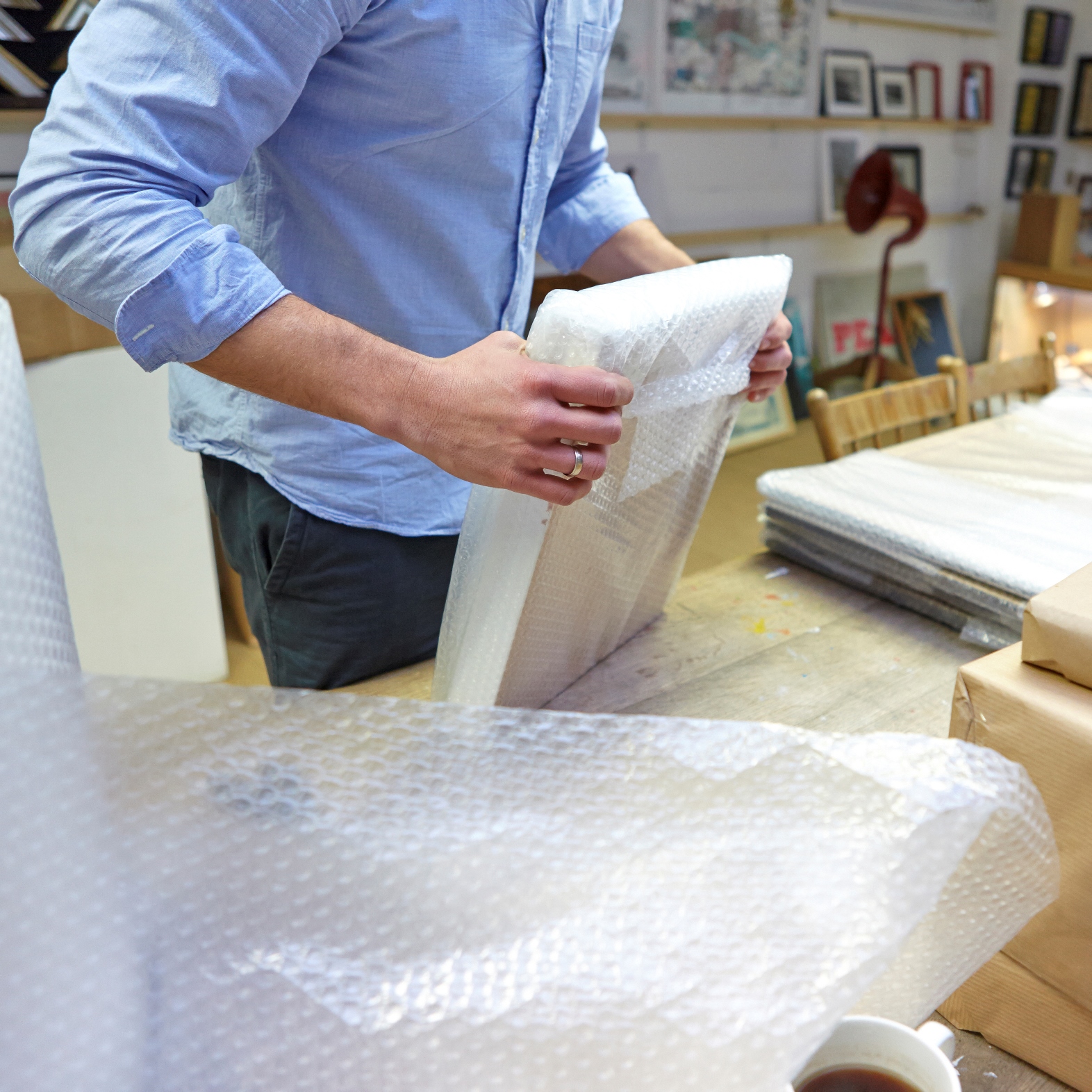
Packaging is crucial for protecting fine art during transit. Start by choosing custom packaging boxes for each piece. Custom-sized boxes fit the artwork more securely and offer better protection against shifting during transit. Use acid-free packing paper around the artwork to avoid surface damage. Wrap the artwork in multiple layers of bubble wrap, paying special attention to the edges and corners.
Next, place foam board or Correx sheets around the artwork for additional support. Don't forget to use corner protectors, as these shield the most vulnerable parts of the artwork. Fill any space in the box with more bubble wrap or air cushions to keep everything in place.
3. Crating (for Larger or High-Value Artworks)
For larger or high-value artworks, it’s wise to consider custom wooden crates. These provide an extra layer of protection against damage during transit. When creating, make sure to add inner padding, such as foam or bubble wrap, to prevent any pressure points on the artwork. This extra padding helps absorb shocks and keeps the piece from shifting within the crate.
Once the artwork is securely positioned, seal the crate with heavy-duty tape or nails to ensure it’s tightly closed. Label the crate clearly with "Fragile" and "This Side Up" to ensure proper handling by the carrier. Crating may seem like an extra step, but it’s worth it for valuable pieces.
4. Choosing the Right Carrier
Selecting the right carrier can significantly affect the safety of your artwork during transit. Specialized fine art shippers are often the best choice, as they are trained to handle fragile items with care. If you opt for standard carriers like UPS, FedEx, or USPS, make sure the packaging is secure and clearly marked with “Fragile” and “Artwork” labels.
It’s also important to ensure you have tracking information and delivery confirmation. This will help you stay informed about the shipment’s progress and confirm when it arrives at its destination. Specialized carriers also offer additional services, such as climate-controlled shipping for sensitive materials.
5. Handling Instructions
Proper labeling and special handling instructions are essential to ensure your artwork is treated with care. Label each package clearly with “Fragile” and “This Side Up” stickers to signal that the contents require special handling. If necessary, include a note inside the package with additional instructions, such as "Keep Upright" or "Avoid Moisture."
Including specific guidance about how to handle the piece can prevent accidents. In some cases, it might also be beneficial to note any specific conditions under which the artwork must be kept, such as avoiding extreme temperatures or direct sunlight.
6. Transit & Receiving
During transit, be mindful of environmental factors that could affect your artwork. Avoid shipping during extreme weather conditions when possible, as temperature fluctuations or moisture could cause irreversible damage. If the artwork is large or fragile, you may want to opt for a carrier that offers climate-controlled transportation.
Once the artwork arrives, inspect it immediately for any signs of damage. Compare the condition with the photos you took before shipping to ensure it arrived safely. Prompt inspection allows you to address any issues quickly, especially if you need to file an insurance claim.
7. Post-Delivery Care
After receiving the artwork, unpack it carefully, removing all protective materials like bubble wrap, foam, and corner protectors. Handle it gently, especially around the edges, to avoid any unintentional damage. If the artwork is framed, check the frame’s integrity to ensure it wasn’t affected during shipping.
Finally, perform a thorough condition check. If the artwork appears to have arrived in perfect condition, you’re all set. If there’s any damage, report it to your insurance provider immediately. Keeping your packaging materials and photos can help process any claims or repairs.
Conclusion
By following this fine arts shipping checklist, you can confidently ship your artwork knowing that it is well-protected throughout its journey. Proper preparation, careful packaging, and choosing the right carrier are all essential steps to ensure your pieces reach their destination in perfect condition. With the right precautions in place, you can minimize the risks of damage and avoid any unnecessary stress.
Whether it’s your first time shipping art or you’re an experienced artist, this guide provides you with the tools to ensure a smooth transition for your art pieces. Safe and secure shipping helps build your reputation as a professional, ensuring your customers receive their artwork exactly as they envisioned.