

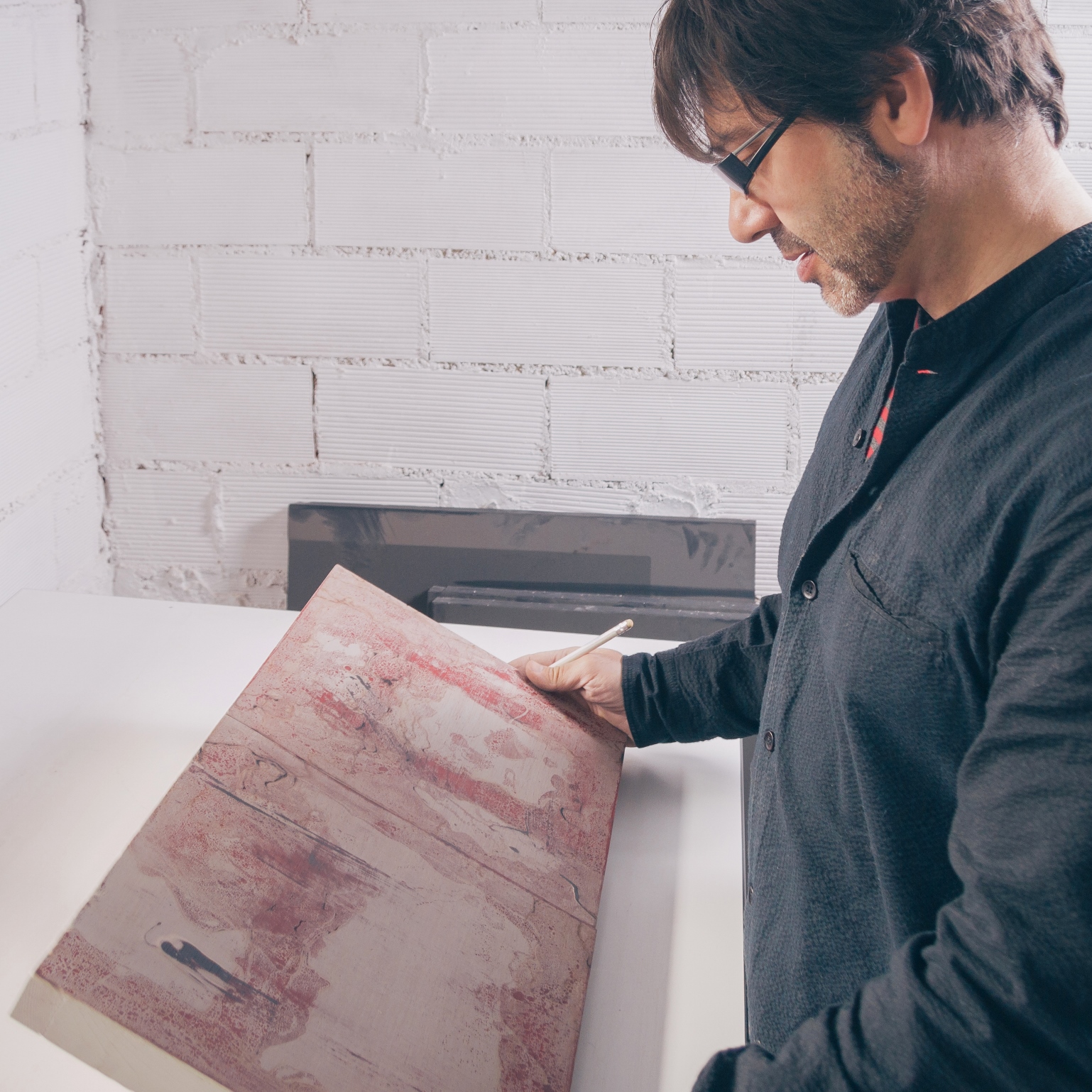
Condition assessment before shipping has always played a vital role in professional art logistics. Traditionally, reports were created on paper and accompanied by printed photographs. Conservators marked cracks, paint losses, and other signs of damage by hand, while colleagues at borrowing museums or galleries reviewed the documentation weeks later, when the artwork arrived. This method worked and is still used, but it has limitations, including slower communication, difficulties sharing information, and the potential for subjective interpretation. Digital tools are now making each stage of the process more efficient.
Condition Assessment Before Shipping, Done on a Tablet
One of the most common changes in condition reporting is the adoption of tablet-based applications. A conservator can photograph an artwork and mark areas of concern directly on the image, using color-coded symbols to indicate cracks, flaking paint, abrasion, or previous repairs. Reviewers can then examine each mark alongside a close-up photograph and a written note. Standardized terminology and drop-down menus also help avoid vague descriptions such as “some wear.” Once completed, the report can be shared digitally with registrars, insurers, and borrowing institutions, often within minutes.
Advanced Assessment Tools
High-resolution photography provides detailed records of an artwork’s surface and helps document areas that may require closer examination. Different lighting techniques reveal different features. Raking light, directed across the surface at a low angle, can show paint deformations, lifting edges, and canvas distortions. Ultraviolet (UV) examination can help conservators identify varnish layers and areas of previous retouching or restoration. More advanced methods, including multispectral imaging, capture information across multiple wavelengths and can reveal details not visible in ordinary photographs.
Spotting Changes Between Departure and Arrival
The value of digital documentation becomes particularly clear when an artwork reaches its destination. Image-comparison software can align photographs taken before shipping and upon arrival, helping reviewers identify visible differences. This comparison can highlight changes that might be overlooked during a routine visual inspection. However, reliable results depend on consistent lighting, camera angles, image scale, and color calibration. Digital comparison supports professional examination but does not replace it.
Limits of Technologies
Despite their advantages, digital tools for condition assessment have limitations. Consistent photography requires time, suitable equipment, and specialized training, which may not always be practical for smaller collections. Advanced imaging systems can also be expensive. In addition, digital files require secure, organized, and long-term storage to remain accessible as part of an artwork’s documentation and history.
For these reasons, technology continues to complement rather than replace traditional assessment methods. A careful physical examination, supported by clear written descriptions and photographic records, remains essential for condition assessment before shipping. Combining experienced professional judgment with appropriate digital tools helps create more accurate, accessible, and useful condition reports.