

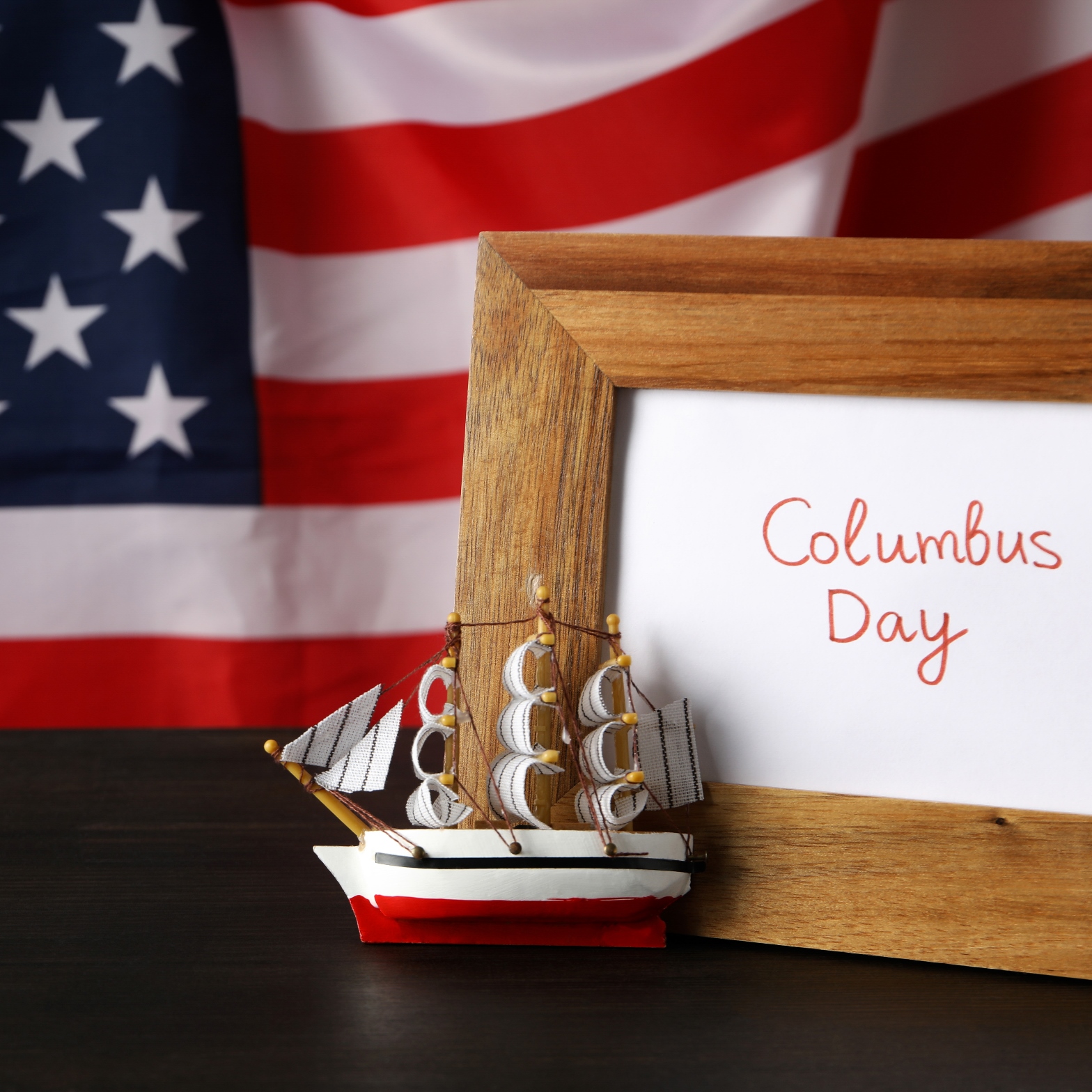
October 12, 2026, is the federal holiday Americans observe as Columbus Day, commemorating Christopher Columbus’s arrival in the Americas in 1492. Although Columbus believed he had reached Asia, his voyage marked a turning point in world history, leading to centuries of exploration, migration, cultural exchange, and European colonization.
The arrival of Columbus and the subsequent encounters between Europe and the Americas profoundly changed societies on both sides of the Atlantic. These events also brought devastating consequences for Indigenous peoples, including displacement and the loss of lives and traditions. Today, Columbus Day provides an opportunity to reflect on this complex history and explore how artists have represented it across generations.
Columbus Day: The Spirit of Adventure and Exploration
The story of Columbus’s 1492 voyage has inspired generations of artists and audiences. His expedition became part of a broader history of maritime exploration that reshaped global connections. Paintings depicting the arrival in the Americas often reveal not only the fascination with distant voyages but also the cultural attitudes and historical perspectives of the periods in which they were created.
The Arrival of Columbus Through Art
As Columbus’s arrival became a defining event in historical narratives, artists drew inspiration from it to create memorable interpretations. The following paintings offer different perspectives on the encounters and dangers associated with the era of exploration.
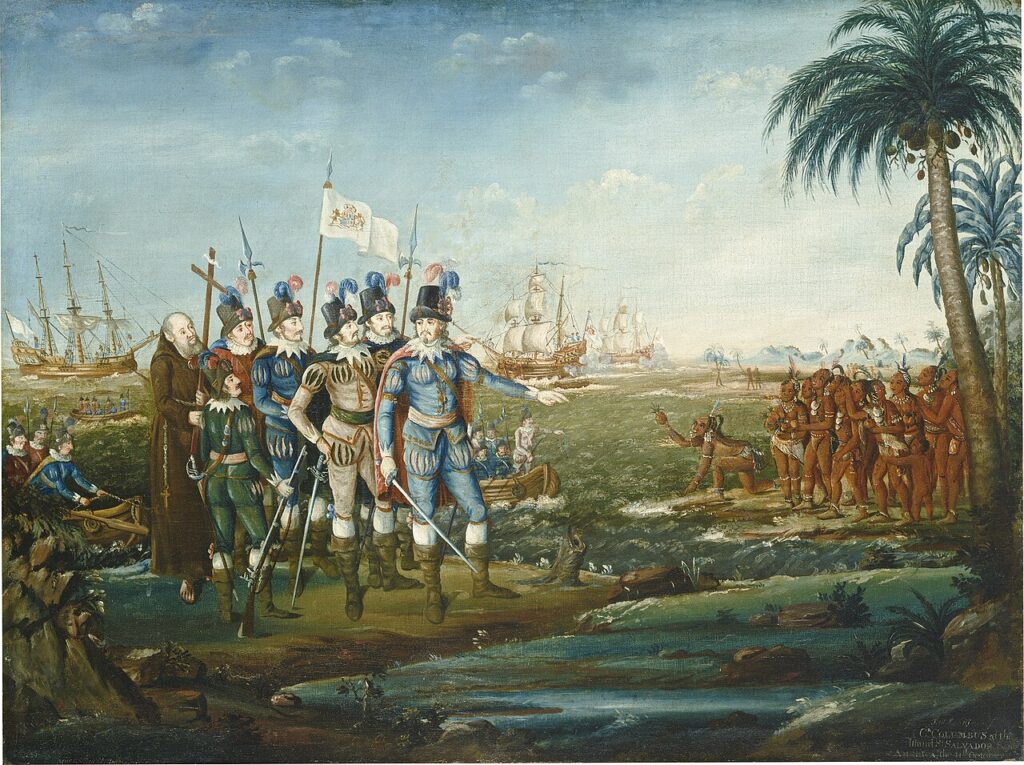
Frederick Kemmelmeyer, First Landing of Christopher Columbus (1800–1805)
This painting depicts Columbus’s crew encountering Indigenous people on the shore. The composition reflects the colonial attitudes of its time, presenting the Europeans as prominent figures carrying weapons, a banner, and a cross. One Indigenous figure kneels and offers a pineapple, reflecting the artist’s interpretation of the encounter rather than necessarily documenting the historical event.
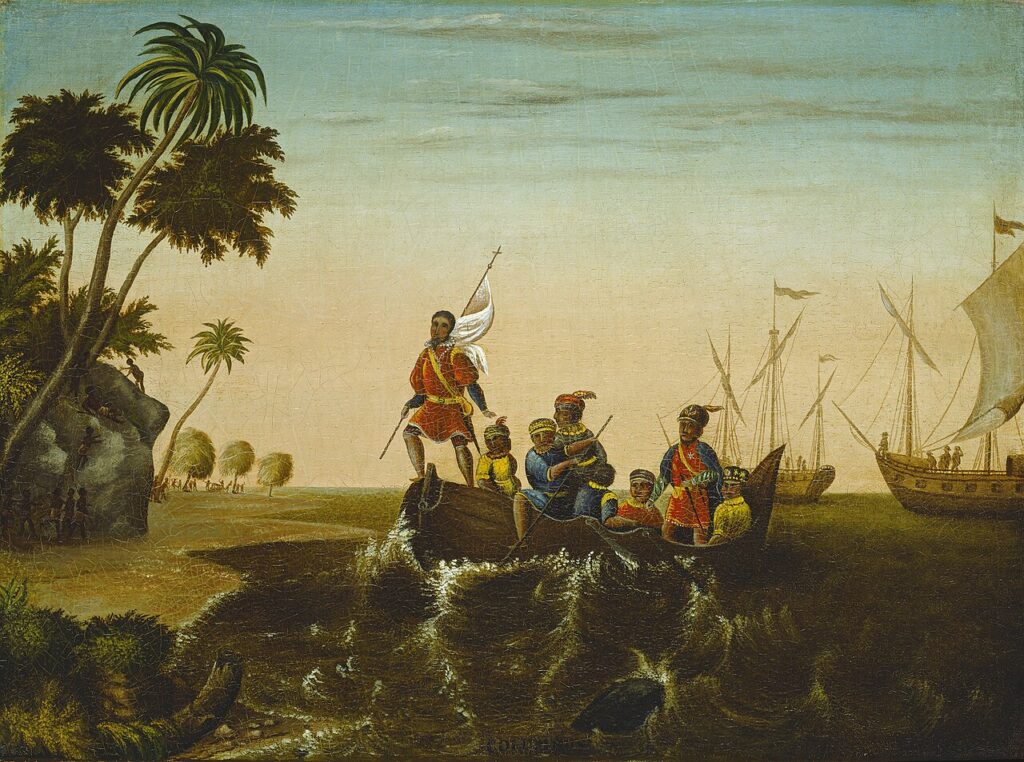
Edward Hicks, The Landing of Columbus (1837)
Created by Pennsylvania Quaker folk artist Edward Hicks, this painting presents Columbus’s arrival through vivid colors and carefully arranged figures. A man at the front of the boat holds a white flag as the crew approaches the shore. Its ceremonial atmosphere offers a different visual interpretation of the event, shaped by the artistic conventions of the 19th century.
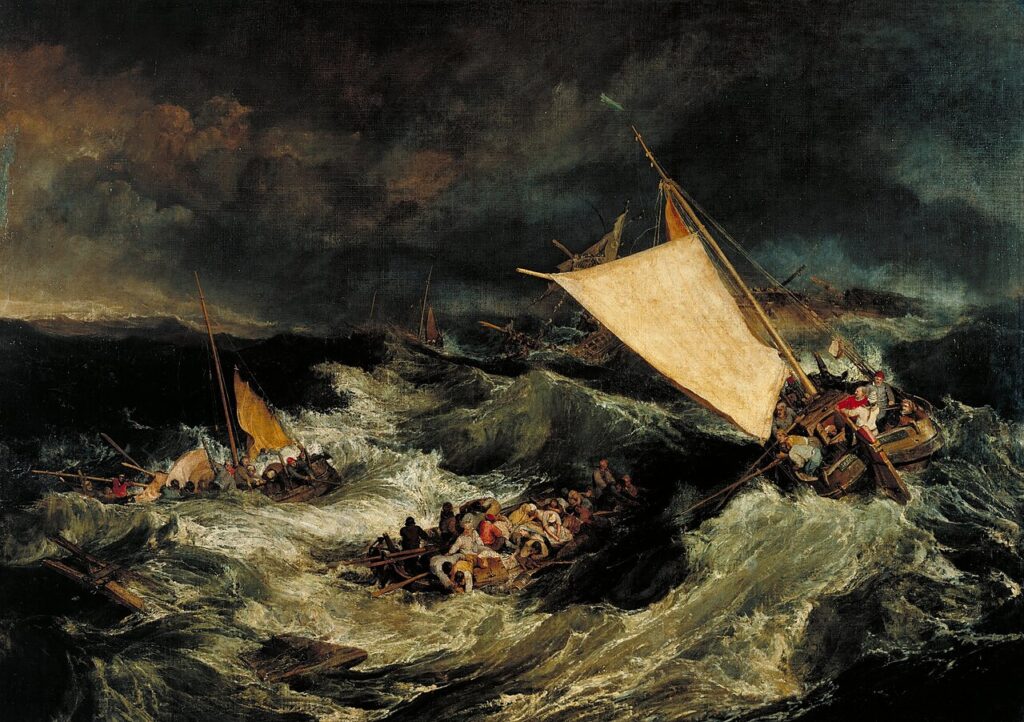
J. M. W. Turner, The Shipwreck (1805)
Although J. M. W. Turner’s The Shipwreck does not depict Columbus’s voyage, it captures the dangers of maritime travel. Towering waves overwhelm vessels and threaten the people aboard, emphasizing the vulnerability of sailors facing the power of the sea. The painting offers a dramatic contrast to idealized depictions of exploration and arrival.
These artworks demonstrate how paintings can preserve historical narratives while revealing the perspectives and biases of their creators. This Columbus Day, exploring art inspired by maritime exploration offers an opportunity to reflect on the past, its complex legacy, and the importance of understanding history from multiple perspectives.