

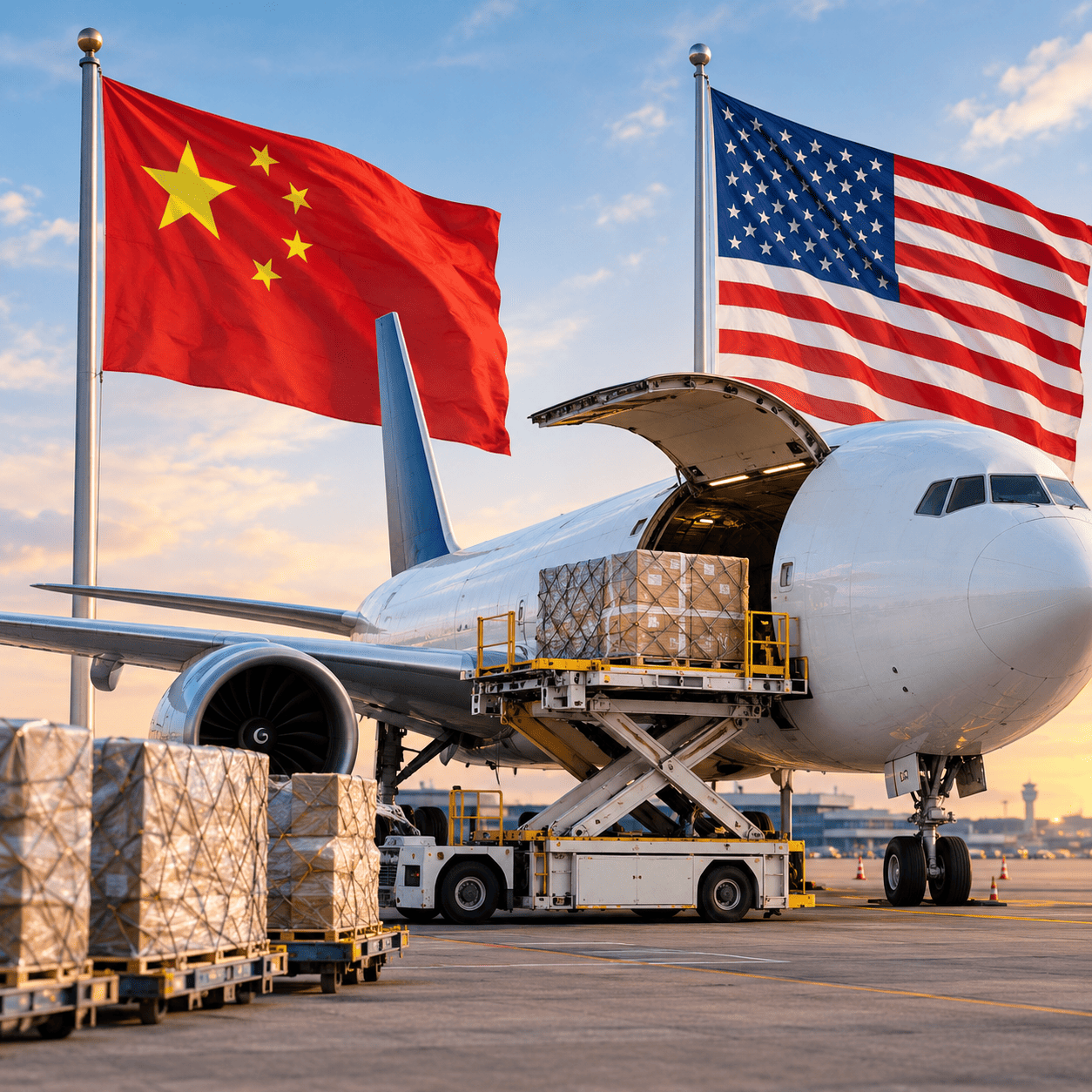
Most small businesses importing from China start with ocean freight because it costs less. They stick with it until a supplier delay, a sudden reorder, or a product launch raises a harder question: what if the shipment has to arrive in days, not weeks? That's usually when you first look seriously at air freight, and when you notice how little practical advice exists on using it well.
This guide covers when air freight makes sense for a small or mid-size business, what it costs, which documents you need, and the mistakes that turn a simple shipment into an expensive one.
When air freight is the right call, and when it isn't
Air freight from China to the US typically moves door to door in 5 to 10 days. A full ocean shipment takes 4 to 6 weeks once you add customs clearance and inland delivery. You pay a real premium for that speed, so be specific about when it earns its price.
Air makes sense when a launch or seasonal window is close, and an ocean shipment won't land in time, or when a best-selling SKU has run out and every day of stockout costs you revenue. It also suits small, light, high-value cargo, where freight is a small fraction of the goods' worth, and samples or first orders you need fast so the full run can start with confidence.
Ocean still wins when you've planned the order well ahead, when the cargo is heavy or bulky relative to its value, or when you're testing a new supplier and want to keep costs down while volumes stay small.
A useful rule of thumb: if freight as a share of the goods' value already feels uncomfortable by ocean, air will make it worse. The exception is when speed itself generates the extra revenue, such as hitting a launch date or preventing lost sales on a restock.
What it costs
Air freight from China to the US generally runs $6.50 to $10 per kilogram. LCL (less-than-container) ocean freight costs roughly $0.80 to $1.90 per kilogram, and a full ocean container runs $2,200 to $4,300. These figures move with fuel prices, capacity, and season, so treat them as a budgeting starting point. Any forwarder worth using will quote an actual number for your specific shipment before you commit.
Dimensional weight trips up a lot of first-time importers. Carriers price air freight on whichever is higher: the cargo's actual weight or its volumetric weight, calculated from the shipment's size. Light, bulky goods can end up priced on volume, which is one reason air suits small, dense, valuable cargo far better than large, light cargo.
Documents and steps
A typical China-to-US air shipment needs a commercial invoice, a packing list, and an air waybill (the air freight version of a bill of lading). On the US side, you'll need customs entry and any product-specific filings handled before the cargo clears. Goods from China may face standard duties, Section 301 tariffs, and other trade measures depending on HTS classification, so confirm your duties before the shipment leaves rather than after it lands.
The process starts with a quote based on the shipment's real weight, dimensions, and value, not a rough estimate. Next, confirm your supplier is ready because the forwarder coordinates pickup once goods are packed, and a factory delay becomes a transit delay. Then prepare the paperwork and clear customs. A licensed customs broker matters here, since misclassified goods and missing documents are the most common reasons a shipment sits in a warehouse. Finally, track the shipment closely enough to act on a delay the moment it happens, or you waste most of what you paid for.
Ship4wd's guide to shipping from China to the USA compares ocean and air options in more depth, with current pricing ranges and the documents each mode requires. It's a useful next step if you're working out which option fits a specific shipment.
Common mistakes that make a fast shipment expensive
Skipping the dimensional weight check. A shipment that looks cheap by actual weight can come back much higher once volumetric weight applies. Run the calculation before you book, not after the invoice arrives.
Treating customs as an afterthought. Air shipments move so fast that you have little buffer to fix a documentation problem before it costs you days. Confirm HTS classification and duty estimate before the goods leave the supplier.
Splitting cargo into too many small parcels. Several small parcels often cost more than one consolidated air shipment, and each one adds a separate point of failure at customs and delivery.
Having no plan B. You usually choose air because you have no room for delay, which makes it the worst moment to discover a supplier or paperwork problem. Even a basic pre-shipment inspection catches quality issues while you still have time to react.
Picking the cheapest quote. A low quote that leaves out customs clearance, insurance, or inland delivery is just an incomplete one. Ask what each forwarder includes before you compare numbers.
Choosing a forwarder for regular air shipments
If you ship by air occasionally, almost any competent forwarder will do. If you restock a product line every few weeks or manage multiple SKUs across suppliers, the relationship starts to matter more than the per-shipment rate.
Look for rate visibility before you book, so the price doesn't change once cargo is moving, and customs clearance is handled in the same booking rather than through a separate broker you have to find and manage. You also want real tracking that shows a delay the day it happens, plus a team you can reach when something goes wrong. That last point carries extra weight for high-value or time-sensitive cargo, because air freight leaves so little room to absorb a mistake.