

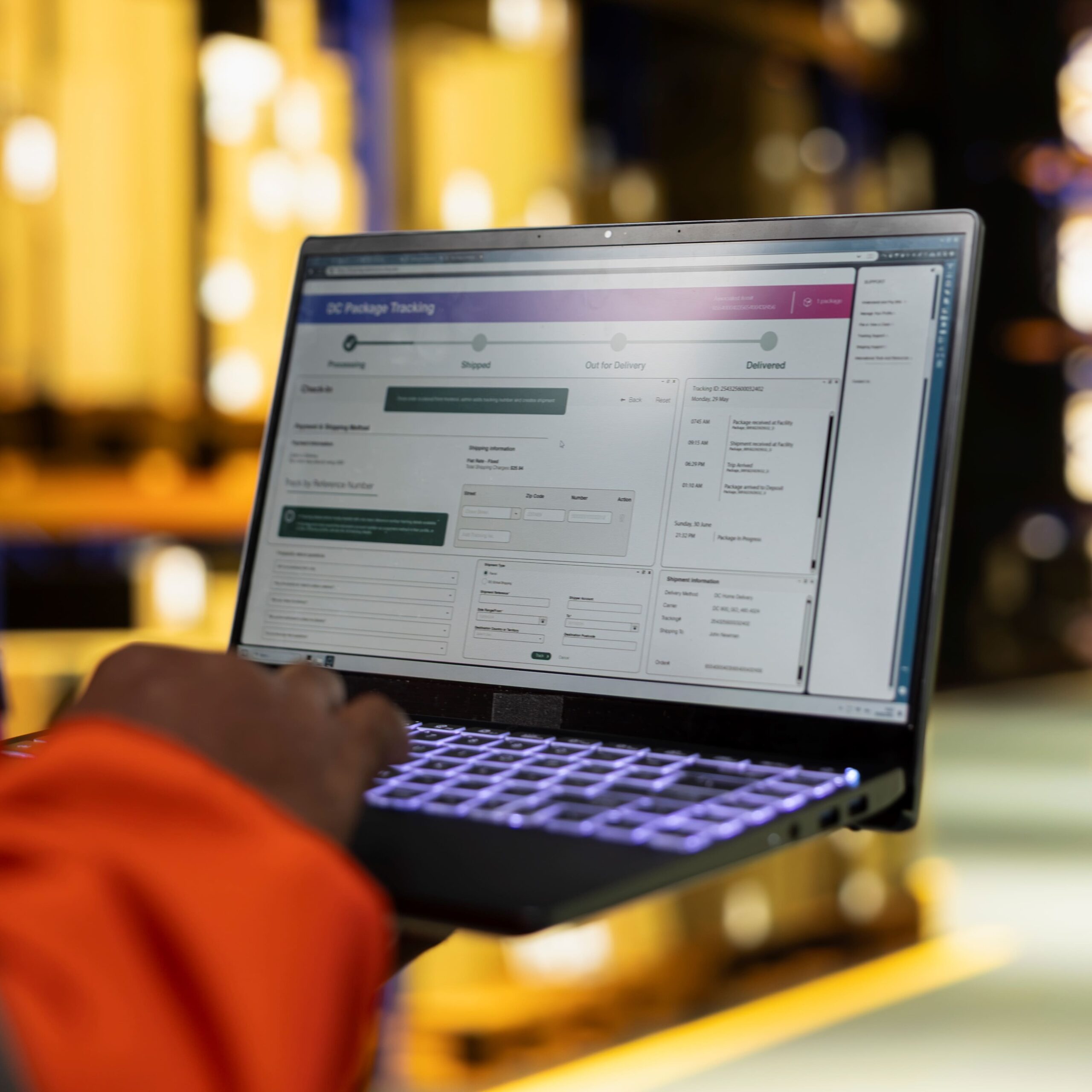
Most freight forwarders continue to face many of the same challenges they encountered five years ago: paper-heavy documentation that can slow customs clearance to a crawl, limited real-time visibility across multimodal shipments, and no straightforward way to compare carrier rates without contacting multiple brokers. Good freight forwarding software should address all of these issues in one place. After reviewing dozens of platforms based on features, pricing, and feedback from actual users, this guide highlights six of the best options to consider in 2026.
The vetting process for this list
Every platform on this list was assessed using information gathered from official product websites, software review platforms, and what actual users report. Only platforms with a demonstrated track record in freight forwarding operations made the cut.
The 4 Best Digital Freight Forwarding Software Options in 2026
Logistaas – Best for Customs and E-Invoicing Compliance Across Emerging Markets
Which Problems Can Logistaas Solve?
Freight forwarders managing shipments across multiple countries often find themselves relying on three or four different software platforms to handle day-to-day operations, accounting, and customs requirements. Logistaas brings these functions together, with tools for managing shipments by air, ocean, and road, as well as customs processes, plus a CRM designed specifically for freight businesses and integrated accounting capabilities. The platform is used in more than 80 countries and processes hundreds of thousands of shipments each year. It also offers built-in e-invoicing compliance in around 30 jurisdictions, a relatively uncommon combination at this price level.
What's Logistaas's Edge in Digital Freight Forwarding Software in 2026?
Most TMS platforms treat accounting and customs compliance as afterthoughts bolted on through third-party integrations, but Logistaas builds both directly into the product. For NVOCCs, consolidators, and multi-office forwarding groups trying to cut system sprawl, that kind of built-in depth is hard to match.
Linbis – Best for Document Automation Across Freight Modes
Which Problems Can Linbis Solve?
Manual document creation is one of the most error-prone parts of freight operations, and Linbis takes direct aim at that. The platform covers air, ocean, and ground freight with document creation powered by AI, real-time shipment tracking, and an integrated warehouse management module. It's a SaaS platform built for freight forwarders, 3PLs, and distribution centers, and it works without any infrastructure investment on the customer's side (which matters for smaller operations watching their IT spend).
What's Linbis's Edge in Digital Freight Forwarding Software in 2026?
Linbis combines AI-driven document generation with multi-modal freight support, which cuts down on the manual data entry errors that tend to cause the most expensive mistakes in forwarding operations. For logistics providers who need a single platform covering freight management, warehousing, quotation, and financial analytics, it's a genuinely full-stack option.
Riege – Best for Global Freight Forwarding With Deep Customs Connectivity
Which Problems Can Riege Solve?
Running freight operations across 60-plus countries means dealing with a different customs authority in almost every market, and that's exactly where Riege's Scope platform was built to help. Founded in 1985, Riege serves over 900 customers with more than 16,000 users globally.
What's Riege's Edge in Digital Freight Forwarding Software in 2026?
Riege's four decades of experience in logistics software means their customs connectivity isn't theoretical. It's been stress-tested across real markets, and that kind of operational depth is difficult to replicate.
Shipthis – Best for AI-Native Freight ERP Across All Transport Modes
Which Problems Can Shipthis Solve?
Managing freight across air, sea, road, and rail from a single platform is harder than it sounds, but Shipthis was built from the ground up to handle exactly that. The platform covers end-to-end freight operations with document intelligence powered by AI, automated pricing and rate management, real-time vessel and flight tracking, and GAAP-compliant multi-currency accounting.
What's Shipthis's Edge in Digital Freight Forwarding Software in 2026?
Unlike platforms adapted from general ERP systems, Shipthis was purpose-built as a freight ERP with AI built in rather than layered on top. Starting at $49 per month with data migration included, it's one of the more accessible entry points for forwarders who want genuine AI capabilities without enterprise-level pricing (think mid-market sweet spot).
The Process Behind This Ranking
This ranking was built through a structured research process focused on real-world relevance rather than marketing claims.
Platforms were first collected from freight software directories, industry publications, review sites, and supply chain communities. Tools lacking sufficient user feedback, feature transparency, or customer evidence were removed.
The remaining platforms were evaluated by comparing their advertised capabilities with user experiences, reviewing features, usability, industry recognition, and credibility signals such as awards, media coverage, and industry involvement. This helped identify solutions with proven value for freight forwarding operations.
Digital Freight Forwarding Software in 2026: Proof Points
The final filter looked for evidence that each platform delivers results in freight forwarding contexts. Dedicated service and feature pages covering air, ocean, and customs operations were reviewed alongside verified customer feedback describing real operational outcomes. Where available, case studies describing improvements to document processing time, carrier connectivity, or customs clearance speed were factored into the final assessment.
How to Pick Your Best Match
The right freight forwarding platform depends on your operations, freight types, team needs, and business goals. Before choosing a solution, consider these key factors:
- Industry Experience: Choose platforms designed specifically for freight forwarding, with workflows built around industry processes like air waybills, bills of lading, and customs documentation.
- Features and Capabilities: Ensure the software supports your freight modes, such as ocean, air, and multimodal shipping, without relying heavily on add-ons.
- Pricing Model: Compare pricing structures carefully. Per-user and per-shipment models can impact costs differently as your business grows.
- Performance Tracking: Look for platforms that measure key metrics like quote conversion, shipment visibility, customs processing time, and document turnaround.
- Compliance Support: Prioritize solutions with built-in support for trade regulations, customs requirements, and international shipping standards to reduce manual work and compliance risks.
Closing Thoughts
Freight forwarding software is no longer a nice-to-have. The forwarders pulling ahead in 2026 are the ones who've replaced paper and disconnected systems with platforms that handle visibility, documentation, and compliance in one place.
The right fit depends on your size, freight mix, and compliance requirements. Logistaas suits multi-country forwarders needing native accounting and customs tools. Riege fits larger global operations. Shipthis and Linbis work well for teams prioritizing AI-native workflows.
Whichever direction you go, the platforms that offer real freight-specific depth will keep delivering as the industry pushes further toward full digitization.