

Everyone has heard about the need to use only acid-free materials for art packing. But what are these materials, and how is this standard justified? Learn about the effects of acidity on artwork and get a ready-to-use checklist for packing material selection in this guide.
Why Use Acid-Free Materials for Art Packing?
The greatest problem with ordinary packing is that some commercial paper and board are made from mechanical wood pulp, which contains lignin. Some papers may also use alum-rosin sizing. These components can contribute to acidic degradation over time, accelerating the breakdown of cellulose in paper-based artworks.
The result of this process is familiar to everyone who has ever opened an old frame. You may see yellowing, brown staining where the backing touched the sheet, and foxing accompanied by brittleness. Acidic materials can also transfer acidity to adjacent materials, meaning that unsuitable packing can contribute to the deterioration of an artwork over time.
A solution to this risk is acid-free packing material with a neutral or alkaline pH. Acidity can be assessed using cold-extraction methods such as TAPPI T 509. Many conservation-grade materials are also buffered with an alkaline reserve, often calcium carbonate, to help neutralize acids. However, buffered material is not universally suitable for art packing; the appropriate material depends on the artwork and its media. Sensitive photographic materials, for example, require products specifically evaluated for photographic compatibility.
Essential Materials for Art Packing
Art packers in the US may use the following acid-free materials for secure packaging and appropriate conservation protection:
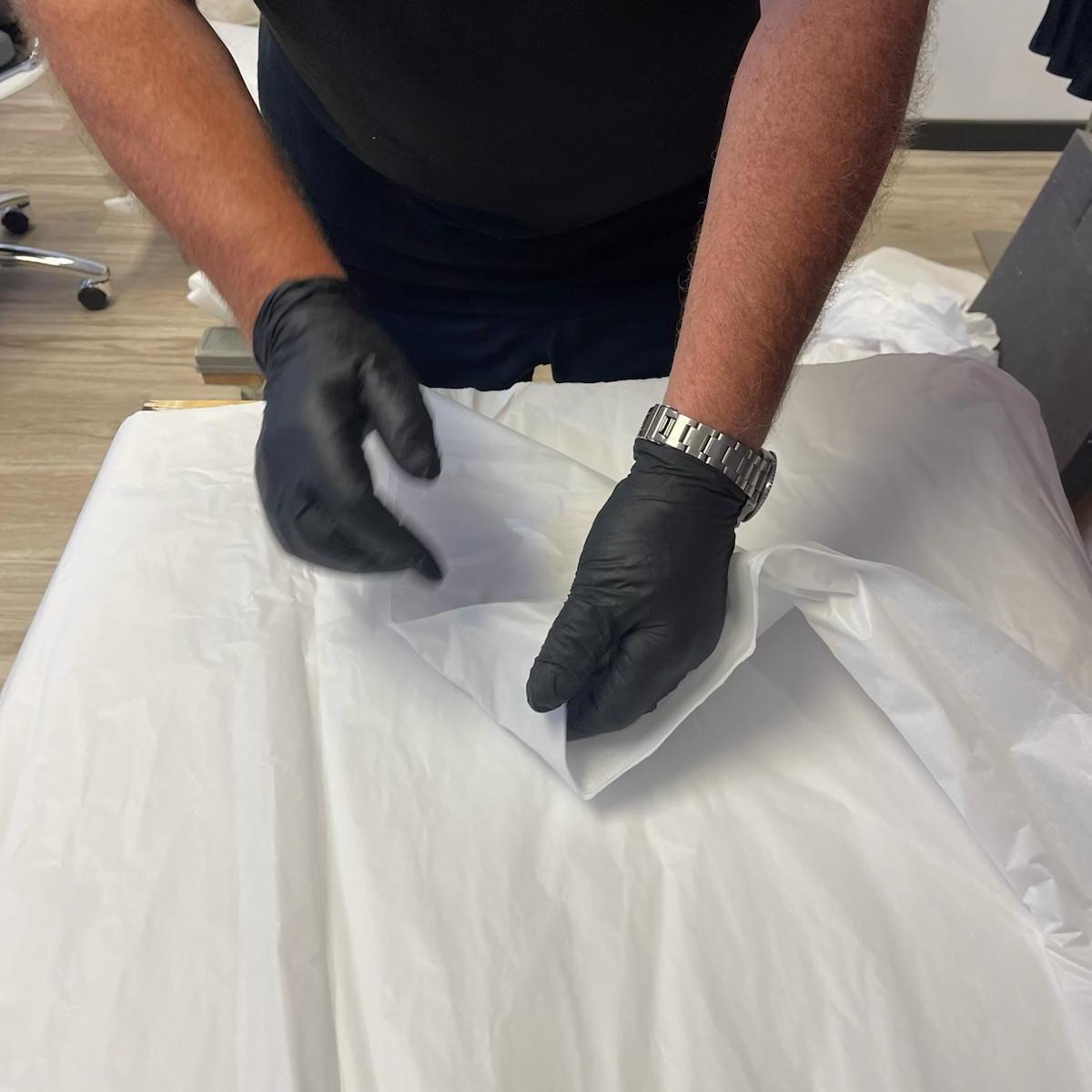
- Acid-free tissue made from purified alpha-cellulose or cotton fiber.
- Glassine paper, a dense, smooth paper commonly used as an interleaving material.
- Museum board or mat board made from 100% cotton rag or purified alpha-cellulose.
- Archival corrugated board made from lignin-free, conservation-quality fibers.
- Polyester film, such as Melinex or Mylar, which is chemically stable when properly selected.
- Polyethylene foam, including Ethafoam, Volara, or Microfoam, with closed-cell properties.
- Tyvek, a spunbonded polyolefin sheet that is durable, lightweight, and water-resistant.
Each of these materials can provide useful physical protection, but their suitability depends on the artwork, packing method, and conditions of storage or shipment.
Caveat to Know
Please keep in mind that acid-free materials for art packing are only a minimum safety standard, not a guarantee of long-term preservation. Lignin content, adhesives, coatings, and other chemical properties also matter. For photographic artwork, for example, look for materials that have passed the Photographic Activity Test (PAT) under ISO 18916:2025, where applicable. The test evaluates potential chemical interactions between enclosure materials and specified photographic materials.