

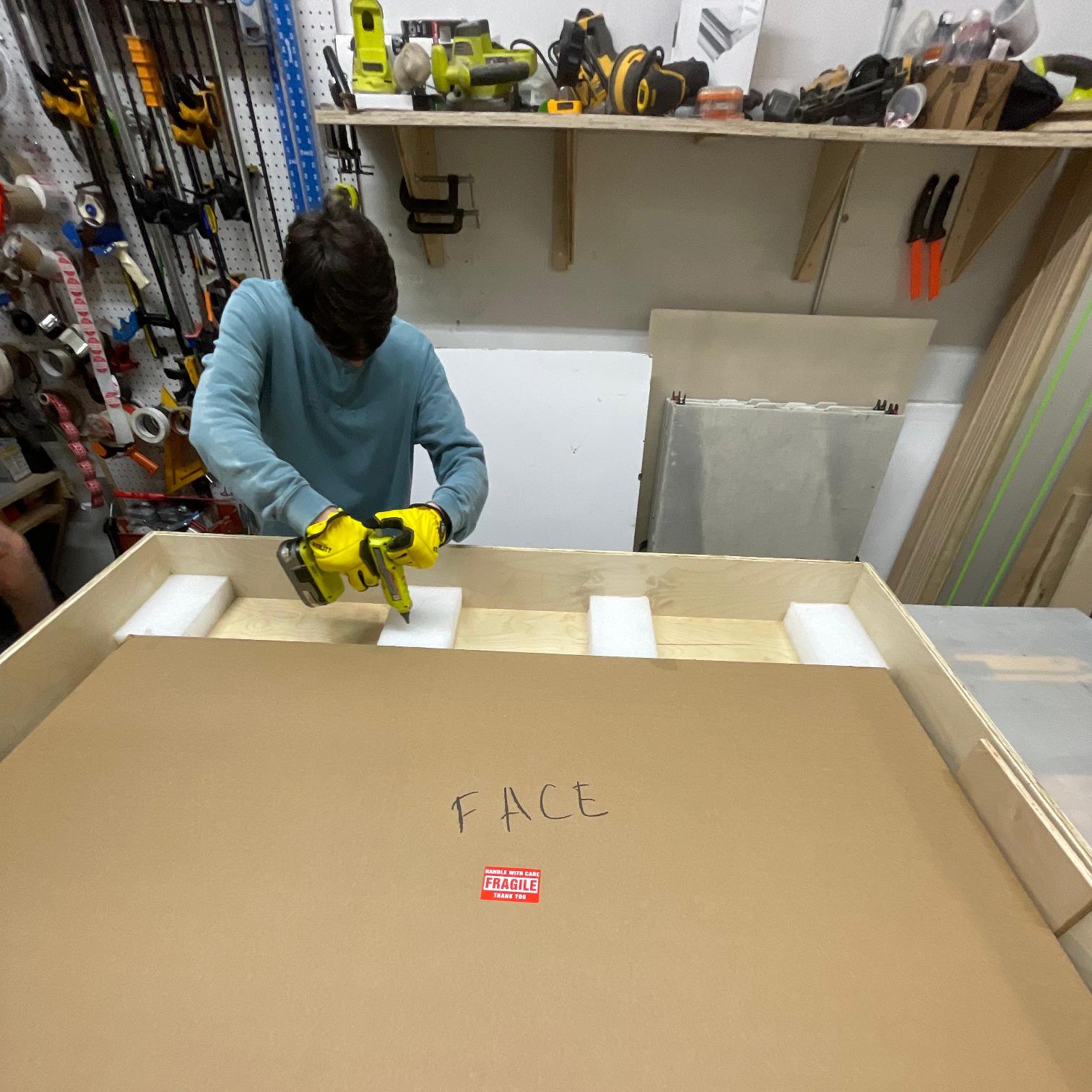
Artwork packing materials are specialized substrates, foams, containers, papers, and barriers used to protect art during storage or transit. Unlike ordinary packaging, professional art packing materials are selected for their physical performance and chemical stability when used around delicate art surfaces. When properly combined, they provide protection against impact, vibration, moisture, abrasion, and environmental changes.
The Layering System of Artwork Packing Materials
Professional art packing is executed in layers, with each material serving a specific protective function. The standard sequence may include:
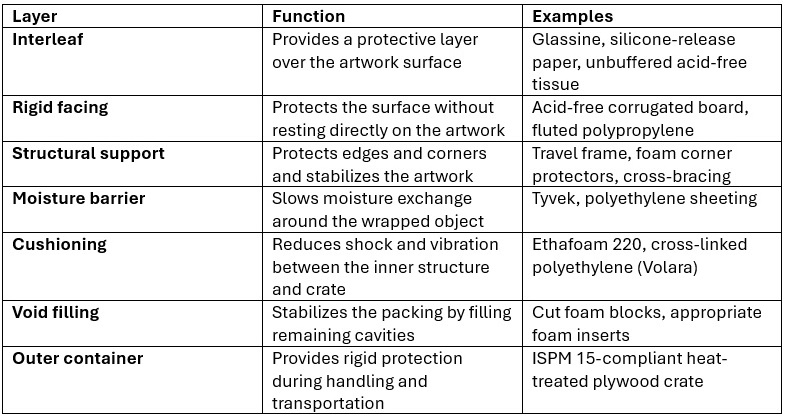
The exact combination of art packing materials depends on the artwork’s medium, condition, dimensions, value, destination, and expected environmental conditions.
What Does “Archival-Grade” Mean?
The term “archival-grade” is widely used in conservation and art logistics, but it does not have one universally regulated definition across the industry. In practice, professional materials are generally selected based on several expected properties:
- Acid-free. Acid-free materials are designed to minimize the transfer of harmful acidity to objects they contact. However, pH alone does not determine whether a material is appropriate for long-term art storage or packing.
- Lignin-free. Materials used around sensitive artworks should avoid lignin and other wood-pulp components that can contribute to yellowing and chemical degradation.
- Buffered or unbuffered. Buffered paper contains an alkaline reserve that helps neutralize acids. It can be suitable for many cellulose-based materials, including paper and some canvas applications. Protein-based materials, such as silk and leather, and certain photographic materials may require unbuffered paper.
- PAT-tested when appropriate. Materials intended for direct contact with photographic materials should be evaluated for compatibility, including performance in the Photographic Activity Test (PAT), ISO 18916.
- Low off-gassing. Professional packing materials should minimize potentially harmful emissions from plasticizers, sulfur compounds, volatile acids, and other unstable additives.
Therefore, archival-grade artwork packing materials involve a combination of chemical stability, physical protection, and compatibility with the specific artwork—not simply the absence of acid.
Art owners and professional art packers should review each material’s technical specifications before adding it to their packing toolkit.
FAQ
Is bubble wrap safe for artwork?
Bubble wrap can be used as an outer cushioning layer, but it should not normally be placed directly against a delicate painted surface. A suitable interleaf and protective rigid facing should be used between the artwork and the bubble wrap.
What is the difference between acid-free and archival materials?
Acid-free generally refers to a material’s acidity or alkalinity, while “archival-grade” describes a broader range of characteristics, including chemical stability, durability, and compatibility with the object.
Are art packing materials reusable?
Some materials, such as foam inserts and wooden crates, can be reused if they remain clean, dry, structurally sound, and capable of providing adequate protection. Interleaving papers and tissues should generally be replaced after use, particularly if they have been contaminated, compressed, or exposed to unstable environmental conditions.