

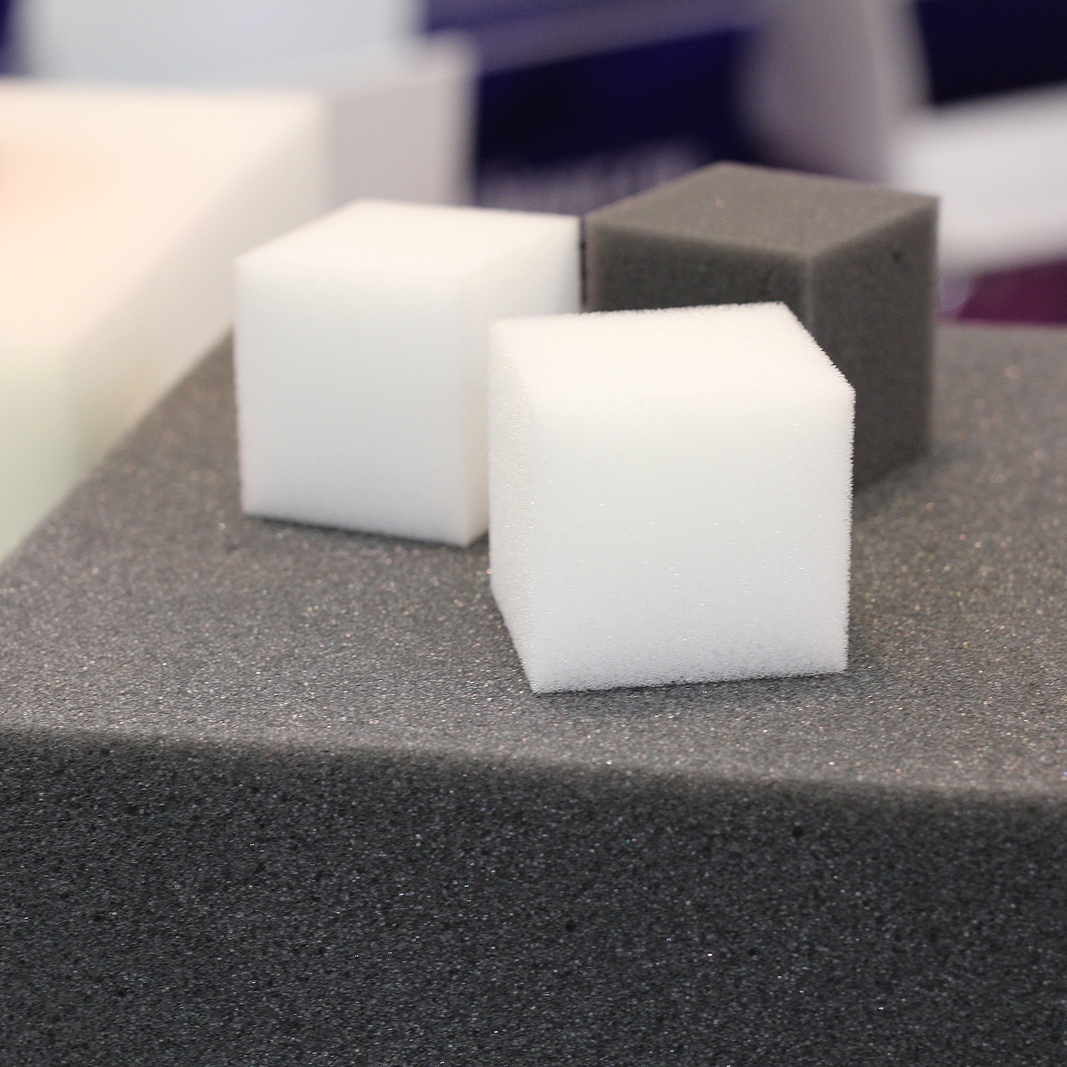
Wondering when foam should not be used for artwork? Foam should not be used when its material, surface, or physical properties are incompatible with the artwork. This is especially important for friable, tacky, gilded, or otherwise sensitive surfaces, as well as for heavy objects that can compress unsuitable foam.
Foam is widely used in museum and fine art packing, but not every type is chemically stable, durable, or suitable for direct contact with an artwork. The wrong material can abrade a surface, transfer residue, deteriorate over time, or lose its cushioning properties.
For conservation-quality packing, foam should be selected for its chemical stability, physical performance, and compatibility with the object. Closed-cell polyethylene foams, for example, are widely used for mounts, linings, and cushioning, while some polyurethane foams are appropriate only for short-term applications and should be separated from the artwork by a suitable barrier.
When Foam Should Not Be Used for Artwork
- Friable media: Pastel, charcoal, chalk, and other powdery or easily transferred media require special protection. Foam or other packing materials should not rub against these surfaces, as mechanical contact can dislodge particles.
- Soft or tacky surfaces: Fresh or insufficiently cured paint, wax, resin, and other sensitive surfaces can be vulnerable to pressure, abrasion, or unwanted contact. A suitable non-contact support or barrier should be used instead of placing foam directly against the surface.
- Gilded and delicate frames: Foam can provide useful cushioning around frames, but direct pressure, sharp edges, or an abrasive foam surface can damage fragile gesso, gilding, and decorative finishes. A soft, appropriate interlayer may be necessary.
- Damp packing conditions: Foam itself does not automatically create condensation, but tightly enclosed packing can limit air exchange and retain moisture already present in the package. Artwork and packing materials should therefore be conditioned to an appropriate relative humidity before packing, particularly when hygroscopic materials are involved.
- Heavy point loads: Foam must have sufficient density, thickness, and resilience for the weight it supports. An unsuitable soft foam can compress or creep under a heavy object, reducing support and allowing the artwork to shift during handling or transport.
Foam Types Compared
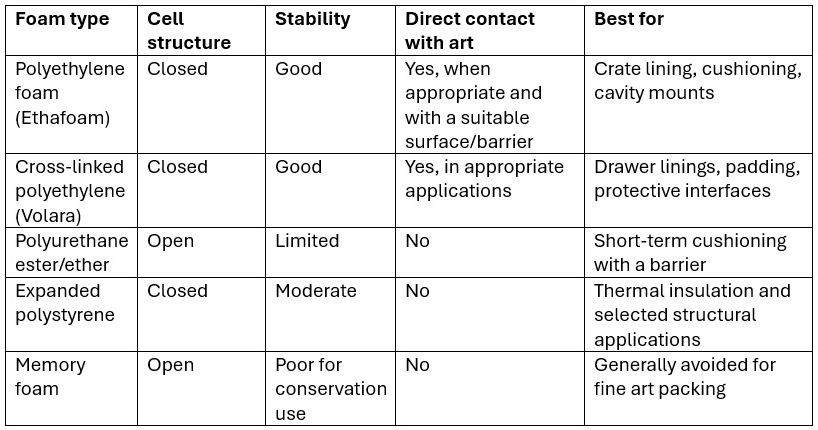
Polyethylene foams are widely used in conservation because they are chemically stable and suitable for cushioning, crate lining, and mounts when properly selected. Cross-linked polyethylene foams such as Volara are also valued for their durability and fine, closed-cell structure.
Polyurethane foam requires more caution. It is generally better suited to short-term cushioning and should not be placed directly against artwork. Expanded polystyrene can be useful for selected insulation and structural applications, but its static-generating properties make it unsuitable near friable media such as pastels and charcoal.
The polymer alone does not determine whether a foam is conservation-safe. Additives, surface treatments, density, cell structure, and ageing characteristics also matter. Therefore, deciding when foam should not be used for artwork means matching the foam and packing method to the artwork's surface, condition, weight, and intended duration of use.
FAQs
How can I identify the foam’s type?
Do not rely on feel or appearance alone. Different foams can look similar, and commercial products may contain additives or have different formulations. Whenever possible, check the manufacturer's technical specifications and identify the polymer, density, cell structure, and intended application.
Is acid-free foam safe for artwork?
Not necessarily. “Acid-free” primarily describes the pH characteristics of paper-based materials and does not, by itself, establish that a plastic foam is chemically stable or suitable for conservation. For foam, ask the supplier for information about the polymer, additives, ageing characteristics, and conservation suitability.
What should I do if foam sticks to the artwork?
Do not pull, scrape, or forcibly remove the foam. Mechanical removal can cause additional damage, particularly if paint or other surface material has become attached to the foam. Isolate the object and contact a qualified conservator for assessment and safe removal. For artworks with fragile or friable surfaces, professional advice should be obtained before attempting any treatment.