

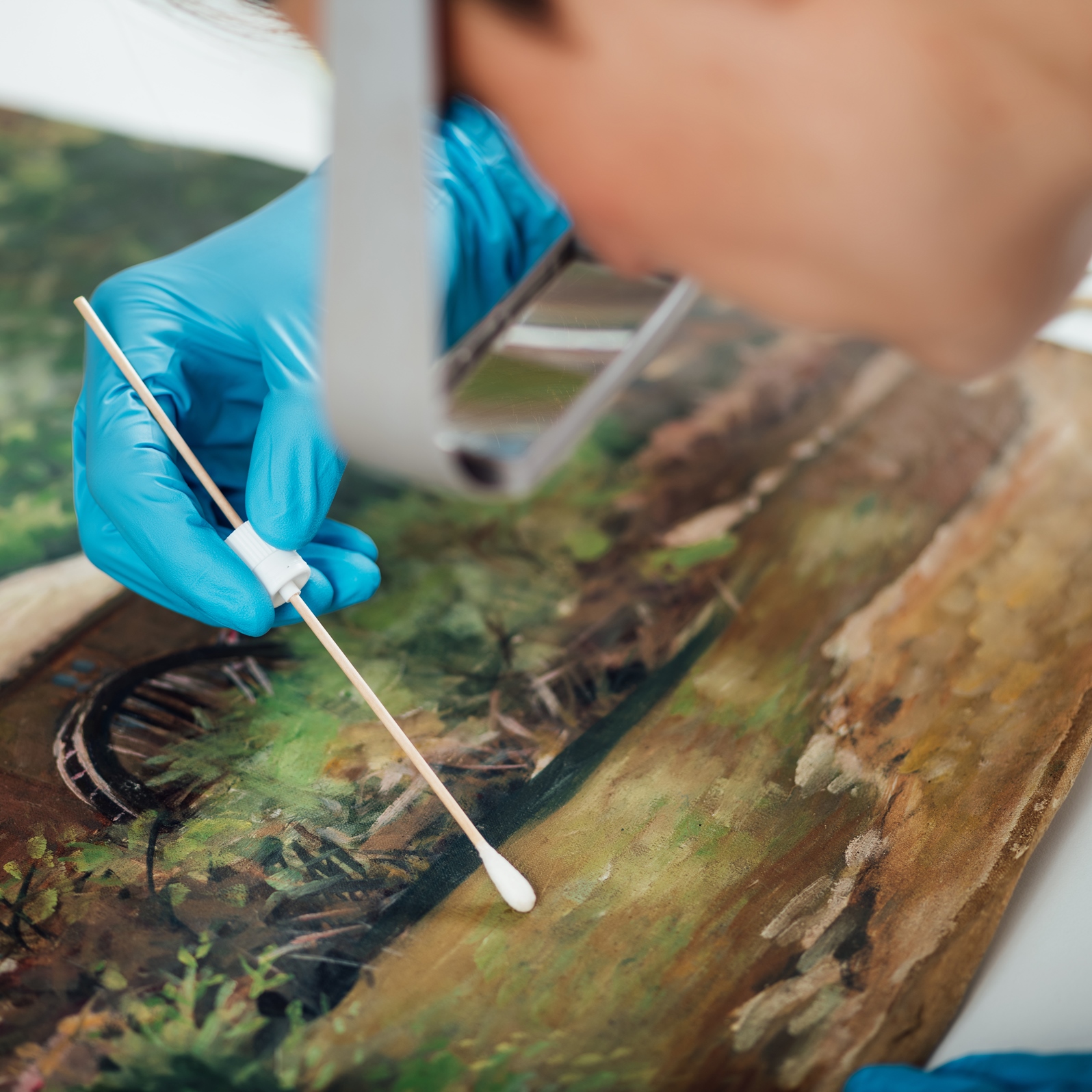
Every art conservator knows that preventive conservation for artwork can do much more than treatment or repair after damage has occurred. Interventive work should generally be a second choice, as it can affect an art object’s original materials and integrity. That is why it makes sense to invest time and effort in preventive measures rather than risk making changes that can never be fully reversed.
Fundamentals of Preventive Conservation for Artwork
Climate Control
Fluctuations in temperature and humidity can be among the greatest threats to artworks. Wood panels, canvas, ivory, and parchment are hygroscopic materials that absorb and release moisture as relative humidity (RH) changes. Repeated cycles can contribute to cracking, warping, and other forms of deterioration. Thus, preventive conservation for artwork depends on stable environmental conditions, with data loggers monitoring temperature and RH and alerting collection owners to significant changes. Small fluctuations can sometimes be buffered with conditioned silica gel in enclosed spaces, while HVAC systems can provide broader environmental control.
Light Management
Light damage is cumulative and irreversible, potentially causing fading, discoloration, and embrittlement of light-sensitive materials. To minimize these effects, conservators use the lowest practical light levels for each type of artwork and manage total exposure over time. Around 50 lux is often adequate for many paintings, although some works may require higher levels for proper viewing. UV-filtering glazing can provide additional protection, while LED lighting with low UV and heat output is generally preferred for display.
Pollutants and Pest Management
Airborne pollutants can damage sensitive materials, particularly metals, pigments, and paper. Proper air filtration and suitable sorbents can help reduce exposure to harmful contaminants. Professionals also recommend integrated pest management systems to monitor and prevent infestations while minimizing the need for pesticides in sensitive art storage spaces.
Materials for Housing and Storage
The rule of thumb is to use only chemically stable materials for wrapping, housing, and packing. Lignin-free, acid-free, or alkaline-buffered boards and tissues are commonly preferred for paper-based artworks, while polyester film and polypropylene can be used for protective sleeves. Ethafoam and other suitable inert materials can provide cushioning. Adhesives should be selected carefully, with conservation-grade options such as wheat starch paste and methyl cellulose used where appropriate.
Handling and Mounting
Handling practices should be adapted to the material and condition of each artwork. Clean, dry hands are appropriate for many paintings and unvarnished surfaces, while gloves may be useful for certain objects and photographs. Paintings should be carried securely with two hands by the frame or stretcher, and mounts should provide adequate support while distributing the object’s weight safely.
Following these professional principles can make preventive conservation efforts more comprehensive and effective. Rather than waiting for the first signs of deterioration, owners and institutions can take practical steps to reduce risks and avoid extensive or invasive repairs.