

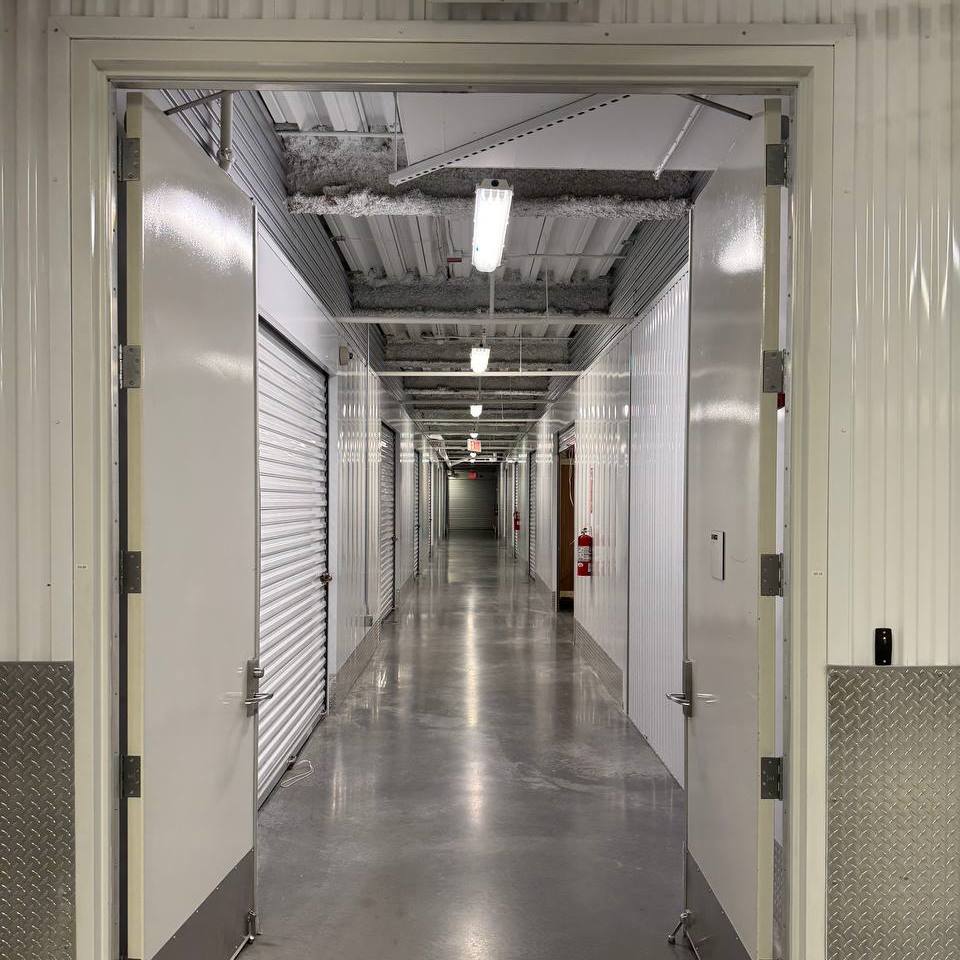
Because artworks are often stored for extended periods between exhibitions, sales, and transportation, the quality and stability of the storage environment are essential for their preservation. Climate monitoring in art storage is a continuous process designed to maintain optimal conditions for artworks over time. It relies on a combination of discipline and an in-depth understanding of how environmental conditions affect art objects made from different materials.
Stability Above All
At the heart of climate monitoring in art storage lies the fact that many materials used in artwork creation are hygroscopic, though to different extents. Most art objects are composite structures; for instance, an oil painting combines stretched fabric, a ground layer, paint films, and varnish, each expanding and contracting at its own rate in response to changes in relative humidity and temperature.
When fluctuations are significant, internal stress can occur. Repeated cycles of expansion and contraction can lead to cracking, flaking, delamination, and loosening of joints. That’s why art storage facility operators strive to maintain stable environmental conditions at all times.
Equipment Needed for Climate Monitoring in Art Storage
Storage facilities use various types of equipment, each responsible for a specific aspect of climate control and monitoring.
- Sensing. The foundation of environmental stability is a network of thermohygrometers. These devices combine relative humidity (RH) sensors with temperature sensors and can operate as standalone data loggers or wireless nodes reporting to a central gateway. Sensors are placed not according to a standard floor plan alone, but with microclimate considerations in mind. Typical locations include areas near exterior walls, at floor and ceiling height, and inside dense racking zones. Sensors undergo regular calibration to ensure accurate readings and reliable environmental control.
- Control. Air handling units deliver conditioned air through chilled-water coils for dehumidification, followed by reheating when necessary. Isothermal or ultrasonic humidifiers can be used to add moisture when storage rooms become excessively dry.
- Buffering and containment. Passive control of RH and temperature can also help maintain stable environmental conditions. A storage facility typically functions as an insulated, vapor-sealed envelope, while silica gel and conditioned sorbents can be used in vitrines and transit crates to help regulate local humidity.
- Resilience. Storage facilities also need to be prepared for various emergencies. They may have redundant HVAC units to maintain environmental conditions during equipment failures, designated areas to isolate pest-infested artworks, and backup power systems to help ensure uninterrupted operation.
As you can see, climate monitoring doesn’t boil down to maintaining a stable number on a controller. It is a well-organized process involving continuous measurement, data recording, equipment maintenance, and regular review by competent staff. Together, these measures help create a stable storage environment and reduce the risk of climate-related damage to valuable artworks.