

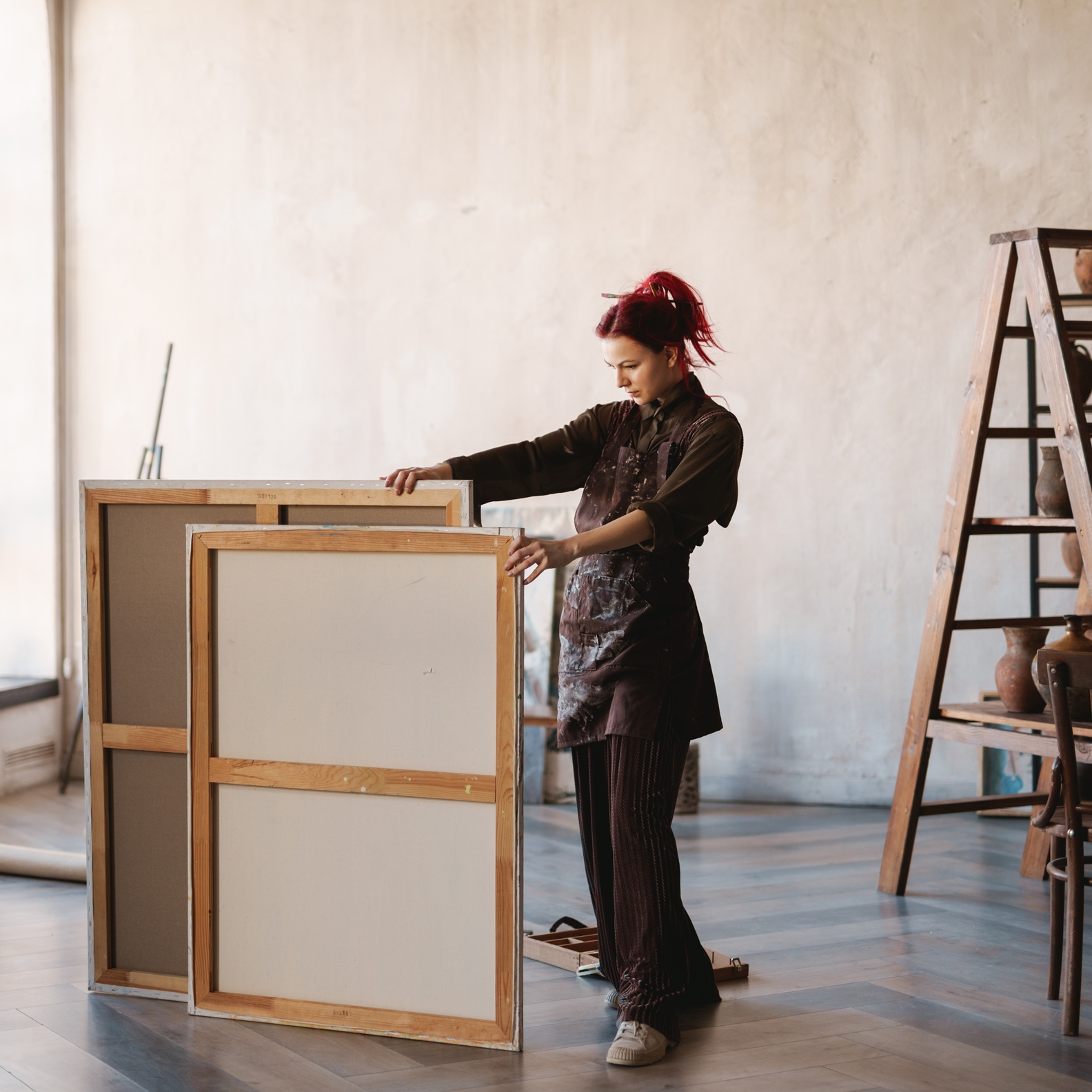
There comes a time when the excitement of putting together a personal art collection ends up being met by the practical fact of lacking space to display it all. The move from exhibition into storage becomes the next step of owning a collection of art pieces, but it is also where many private collectors make very expensive mistakes. Storing fine art pieces is fundamentally different from storing household possessions. To protect an investment and preserve the physical integrity of each piece, transitioning to a specialized, climate-controlled fine art storage facility is an absolute necessity.
The Shield of Environmental Controls
The main danger posed to any work of art in a conventional setting is that of an unstable atmosphere. Organic components in materials such as wood, canvas, paper, fabrics, and paint are very hygroscopic – they always absorb and give off moisture depending on conditions in their immediate environment. In the presence of unstable temperature and relative humidity, these materials expand and contract at varying speeds. In the course of time, all these stresses result in paint cracks and warps, and weakening of structural stability.
In order to stop these gradual and almost imperceptible processes of decay, specialized art storage centers uphold an unwavering environmental base. The standard of the industry demands a stable temperature range of 65°F to 72°F and relative humidity (RH) fixed at 45% to 55%. Apart from temperature and RH, such centers ensure that mold spores, pests, and contaminants of the city environment do not enter the premises through state-of-the-art air filters. Moreover, sensitive artwork surfaces are protected from light degradation through UV-filtered, dim lighting.
Archival Packing and the Crating Standard
Even inside a perfectly controlled environment like that of a museum, art pieces are extremely susceptible to physical interaction, as well as chemical interaction. It is highly unwise to use conventional packing materials like consumer bubble wrap or regular cardboard because these materials are known to have acids and synthetic stabilizers, which can off-gas over time, causing staining and chemical degradation to the surface.
Before a single art piece can be stored, it has to be layered in a series of steps. The first step involves the use of one layer, which will come into direct contact with the surface of the artwork. This layer must consist of acid-free archival tissue paper or glassine. Only after that can cushioning layers such as dense sheets of foam and bubble wrap be used with the bubbles facing outward.
For high-value or exceptionally fragile pieces, standard soft packing is rarely enough. Collectors are advised to understand how to pack artwork for international shipping step by step to establish the same rigorous packing standards for static storage. A custom double-wall box or museum-grade wood crate keeps the artwork insulated from shock during handling.
The Volumetric Paradox of Crated Artworks
The logistics of preparing collections for storage become even more complex when dealing with three-dimensional or structurally delicate assets. While paintings can be stored vertically on specialized racks to optimize space, sculptures require dedicated crating and custom interior supports. For example, when shipping ceramic sculptures internationally, art handlers utilize advanced floating cradle designs to absorb shocks and eliminate point-load pressure.
This level of structural isolation is equally crucial for long-term storage. Because delicate ceramics, glassworks, and mixed-media sculptures cannot be packed tightly against other objects, they require custom-engineered crating. This is where the spatial paradox occurs: a single sculpture or a cluster of fragile three-dimensional items will command a significantly larger storage volume than flat, stackable canvases, requiring spacious vault planning from the very beginning.
Calculating the Real Footprint of a Storage Vault
This volumetric reality is the single most common detail private collectors overlook. When planning storage budgets, collectors frequently tally the raw dimensions of flat canvases and sculptures, completely forgetting that museum-grade crating dramatically expands the actual space an item occupies. A professional wood crate can easily add six to eight inches of plywood, structural bracing, insulation, and foam padding to every side of an artwork.
This spatial expansion is exponential. A collection that appears modest on paper can quickly balloon in physical volume once crated. To prevent arriving at a facility only to discover that crates don’t fit in the leased unit, space requirements should be determined using the dimensions of the packaging. It is highly recommended to figure out the exact cubic footage of the crated collection before finalizing any storage agreement or booking transportation.
Professional art storage is an active commitment to the longevity of a collection. By looking past the size of the unpacked painting and taking into consideration museum-grade packing, climate-controlled conditions, and actual crated volume, collectors can safeguard their investments for the long run. In the world of fine art, preservation remains a matter of absolute precision.