

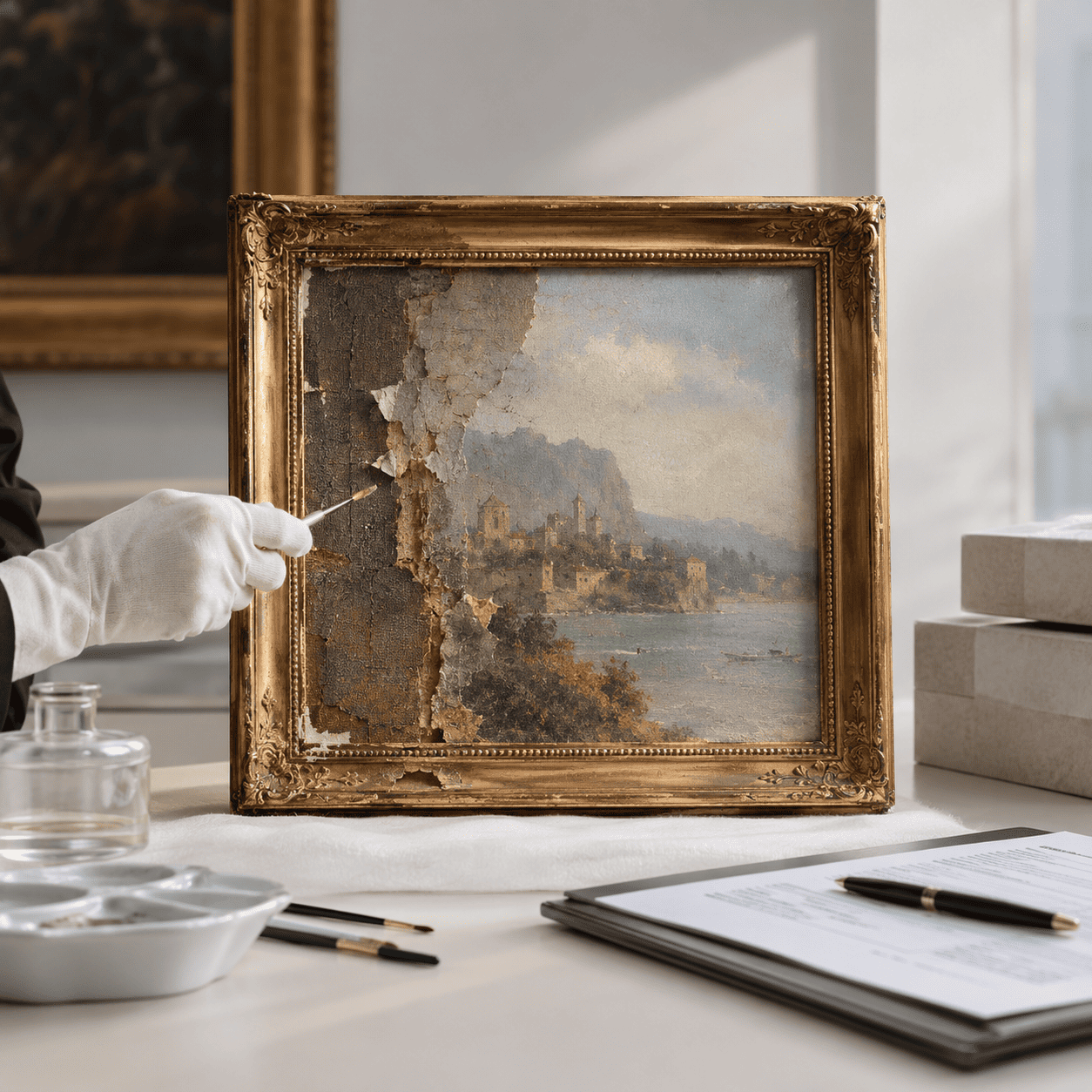
The key distinction in partial loss vs. total loss in art insurance is the extent of the damage and how the insurer evaluates the claim under the policy. Partial loss may involve restoration costs and other eligible expenses. Total loss generally means the artwork has been destroyed, permanently lost, or cannot be recovered. The amount payable depends on the policy’s valuation terms, limits, and applicable conditions. Learn more about what fine art shipping insurance covers.
What Is Partial Loss?
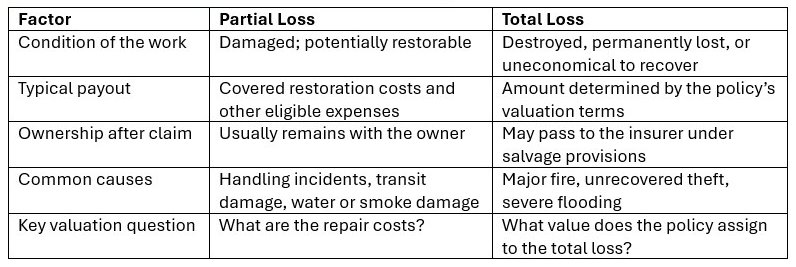
Partial loss occurs when an artwork is damaged but retains some of its value and may be restored. Depending on the policy, compensation may include:
- Restoration costs: Professional conservation, cleaning, retouching, or reframing when covered and appropriate.
- Associated expenses: Eligible packing, transportation, and expert assessment costs, subject to policy terms
Compensation is generally limited by the insured value and applicable policy provisions.
What Is Total Loss?
Total loss occurs when an artwork is destroyed or permanently lost, including theft when the work cannot be recovered. A constructive total loss may apply when an artwork survives physically but recovery or restoration is considered economically impractical under the applicable policy terms.
For scheduled artwork insured on an agreed-value basis, the payout is generally based on the value specified in the policy, subject to its limits, deductibles, and conditions. Other policies may use market value or another valuation method. After a total-loss payment, ownership of the damaged or recovered artwork may pass to the insurer under the policy’s salvage provisions.
Partial Loss vs. Total Loss in Art Insurance
How Do Insurers Make the Final Decision?
When assessing partial loss vs. total loss in art insurance, insurers typically consider:
- Condition reports: Documentation of the artwork’s condition before and after the incident.
- Restoration estimate: A conservator evaluates the damage and estimates appropriate treatment costs.
- Policy review: The insurer evaluates the evidence, insured value, coverage limits, exclusions, and applicable settlement provisions.
If restoration costs approach the insured value, the insurer may consider a total-loss settlement. However, there is no universal threshold; the policy wording and individual circumstances determine the outcome.
FAQ
What is constructive total loss in art insurance?
It occurs when an artwork survives physically but recovery or restoration is considered economically impractical under the applicable policy terms.
Does art insurance cover loss of value after restoration?
Coverage depends on the policy wording and any applicable endorsements. Some policies may cover certain expenses associated with damage, while others may exclude them.
What happens if a stolen artwork is recovered after the payout?
The insurer may have ownership rights under the policy’s salvage provisions. The original owner may have a right to buy back the artwork if the policy or settlement terms allow it.