

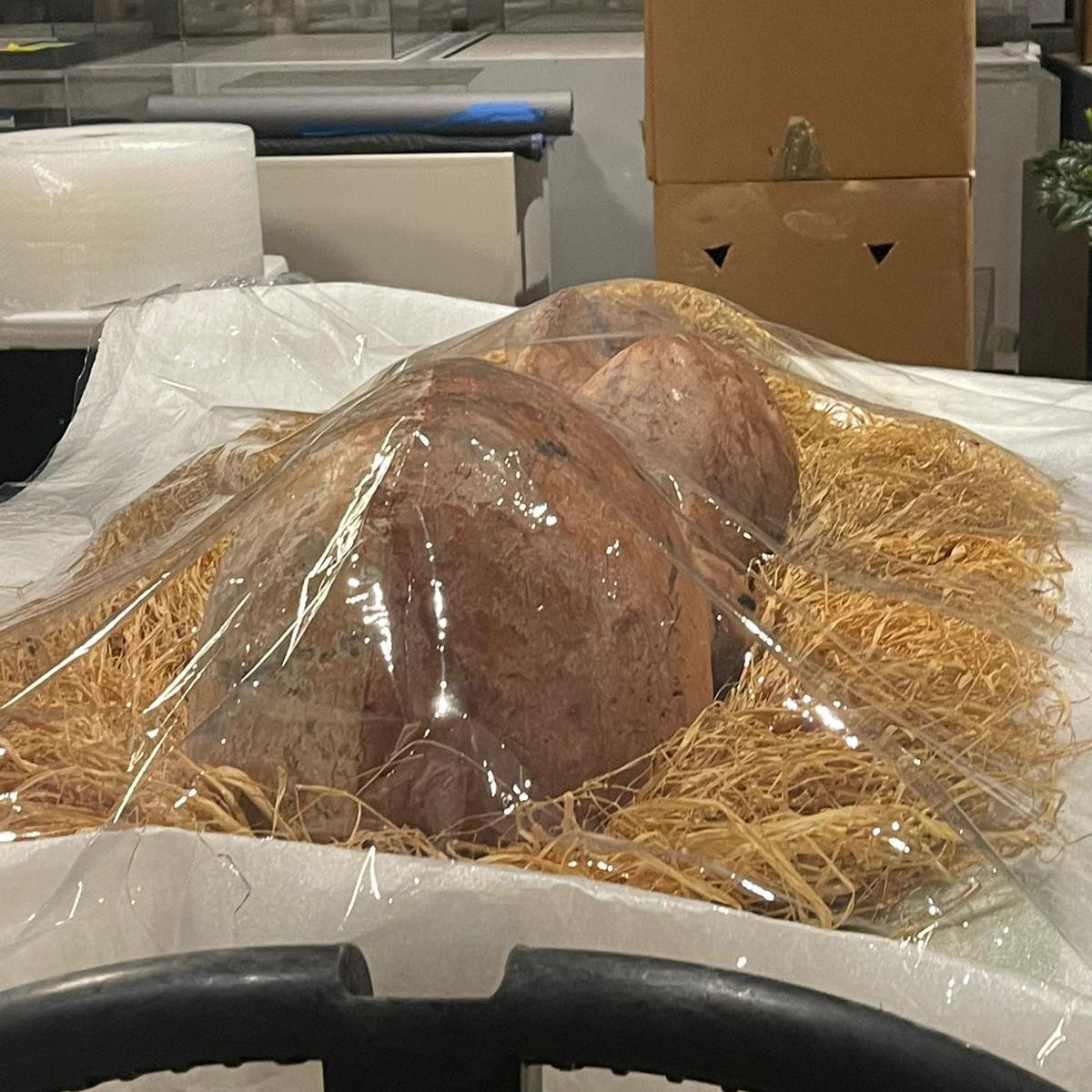
Shipping three-dimensional artworks is often a challenge in fine art logistics. Such objects are asymmetrical and structurally complex. Besides, they are typically heavier than standard canvases or prints, so their packaging methods are more sophisticated. Be it a marble bust or a bronze figurine, its value and historical significance can be considerable. Thus, when it comes to packaging artwork for shipping, you should always consider the unique vulnerability sources and conservation demands of the item.
Unique Safety Risks of Sculpture Transportation
While securing flat artwork from transportation risks is relatively straightforward, the task becomes way more challenging with sculptures. These three-dimensional art objects face stress across multiple directions during shipping. Weight is rarely distributed in a perfectly uniform way, so sculptures are exceptionally vulnerable to damage during moving.
It’s also notable that stone and marble sculptures often come with internal fissures that the human eye can’t grasp. Even seemingly strong bronze art objects are prone to damage because of their vulnerable surfaces. That’s why every sculpture and 3D art object requires a thorough condition assessment before making any moves. The evaluation will help uncover weak points, structural instabilities, and surface risks, and allow art handlers to develop a custom packing strategy.
Custom Crating as the Best Way of Packaging Artwork for Shipping
With the unique safety risks to sculptures discussed above, one can see that they often require advanced packing techniques and materials to enjoy a safe trip. First, the sculpture’s delicate surfaces should be covered with acid-free, non-abrasive materials that will prevent chemical reactions and surface pigment damage. Second, three-dimensional objects should be properly cushioned inside their shipping containers so that no structural damage occurs as a result of vibration or physical impact.
Advanced packing strategies that work well for old and fragile sculptures include wooden crates fitted to their unique dimensions. Art crates are filled with custom-cut inserts that immobilize the object inside the container during shipping. Another pro method is a non-contact mounting system, which prevents pressure on fragile surfaces and guarantees risk-free transportation.
Pro Tips for Managing Weight and Load Stress in Sculptures
We at Fine Art Shippers also employ a thorough protocol for load stress prevention and weight management when packaging artwork for shipping. Stress fractures can occur if a heavy sculpture’s weight isn’t distributed and supported evenly. Our risk mitigation strategy involves base reinforcement and selection of load-bearing points, ensuring stress reduction. Though a standard approach is upright shipping for internal balance preservation, sometimes, art shippers can go for the horizontal shipping method as a more effective solution for stress reduction.