

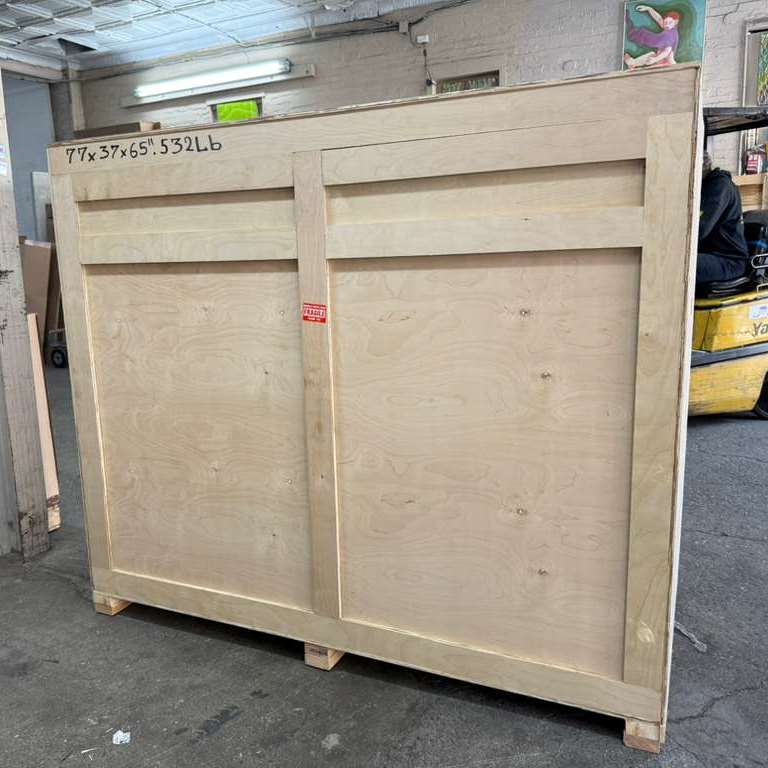
Whether a priceless blue-chip painting moves across continents or a fragile Ming Dynasty vase travels to an art exhibition in a neighboring state, carefully designed wooden crates are an industry standard of safety. Crates protect art from environmental fluctuations and bring conservation science into everyday practice. Find museum-quality crating explained in this guide to learn what principles museums employ to keep their precious assets safe.
Material Selection: The Foundation of Safety
The main principle of museum-grade art crating is to prevent direct contact of the artwork with chemically unstable materials. Off-gassing is the worst enemy of delicate art surfaces. It represents the release of volatile organic compounds from adhesives, paints, foam, or treated lumber. Museum conservators always test packing materials for archival-grade safety before including them in the packing guidelines.
Climate Control and Passive Buffering
Professionally designed crates can maintain a stable microclimate, which is essential for artwork transportation. Most art objects are made of organic materials, which are highly sensitive to RH and humidity changes. Even a brief exposure to a 10% fluctuation in RH can result in irreversible cracking, warping, and flaking processes in paintings. To prevent damage, museum staff use passive climate buffering means, such as silica gel packets calibrated to target RH parameters. Rubber gaskets may also be used to seal the crate to prevent air infiltration.
Structural Engineering: Museum-Quality Crating Explained
The core task of a museum crate is to absorb and deflect the mechanical forces of transport. Crates should be immune to vibration, impact, and compression to protect artworks packed inside them. Such structural strength is achieved by means of using several layers in the crate’s wall; an outer hardwood shell is responsible for structural integrity, while the intermediate layer consists of rigid foam, which guarantees a high degree of impact absorption. The crate’s interior consists of soft inner foam, which creates a custom-carved cradle for the art object.
A Sneak Peek into the Crate Fabrication Process
Museum-grade fabrication processes are distinct from mass production. First, the museum staff creates a condition report and studies the object’s dimensions, with all vulnerabilities carefully recorded. Crate makers produce technical drawings and construct a mockup for review before final cutting. The sequence of crate construction is highly standardized:
- The outer shell is assembled first.
- Interior insulation is fitted and glued.
- The foam cradle is fabricated last, after all structural work is complete.
The crate undergoes a final check for airtightness of joints and seams and smooth operation of crate hardware. Labels and handling warnings are applied in line with industry standards to help all members of the shipping process. Now that you have museum-quality crating explained, feel free to apply these principles in your art shipping practices for added safety.