

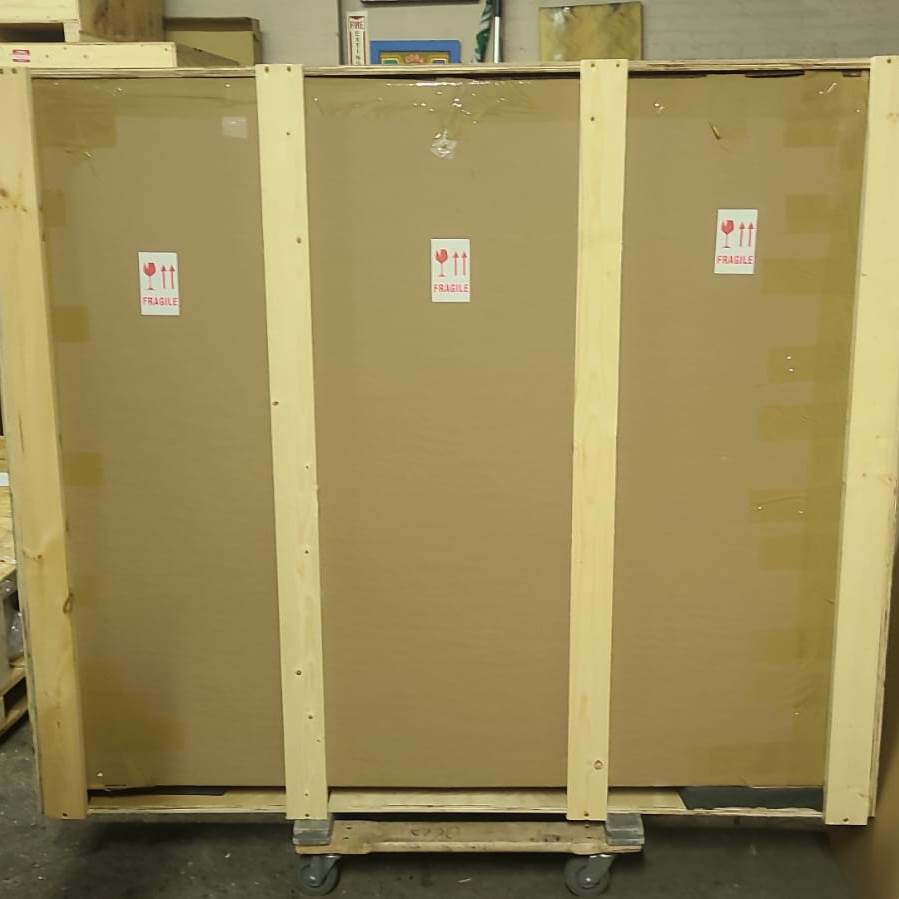
Most shipping guides recommend building a custom crate and floating the painting inside as a major safety precaution. This approach is generally correct, but it represents only the entry-level version of professional art transportation. Interested in how to ship large paintings without damage? This guide will walk you through advanced techniques that often remain behind the scenes of expert logistics.
Learn How to Ship Large Paintings Without Damage: Top 5 Tips
Professional shipping doesn’t boil down to one smart trick. As a rule, it is a combination of carefully planned precautions that address mechanical shock, humidity changes, surface abrasion, and handling behavior. The following five measures can make the delivery of your large painting significantly safer.
A Travel Frame
Paintings with delicate gilded or ornately molded frames, as well as large unframed canvases, often require a separate travel frame. It represents a plain, rugged wooden surround in which the painting is mounted for transportation. The travel frame protects the artwork from external impact and reduces pressure during handling.
True Floating
The term “floating” is often used loosely in professional logistics, with some shippers associating it with simply wrapping the painting in foam. However, the professional-grade version of floating presupposes that no part of the artwork makes contact with the crate’s walls in any direction. Foam blocking is precisely engineered to suspend the painting in space, cushioning it from all six sides without touching the surface directly.
Shock and Tilt Indicators
Adhesive shock and tilt indicators are sometimes attached to the crate’s exterior or interior to provide objective, time-stamped evidence of impact if a damage claim needs to be filed. Their second, less obvious purpose is creating invisible control for handlers. When workers see these indicators, they understand that the quality of handling is being monitored and are encouraged to treat the crate with additional care.
Reusable Skeleton and Slat Crates
Many touring exhibitions use skeleton, or slat, crates instead of fully sealed museum crates. These reusable structures represent a reinforced wooden shell with a travel frame that slides in and locks securely. This design allows quick extraction and re-packaging of even oversized paintings while maintaining a high level of protection during repeated transportation.
Professional Interleaving
Direct-contact protection for the painted surface requires specific materials applied in a specific order. Art plastic, glassine paper, or acid-free archival tissue paper is placed against the paint layer because it is a safe wrapping material for sensitive surfaces. After that, the appropriate cushioning system is added to secure the painting inside its container.
Remember that none of these tips on how to ship large paintings without damage work in isolation. Together, they create a comprehensive shipping strategy that minimizes risks and helps ensure that valuable artwork arrives safely at its destination.