

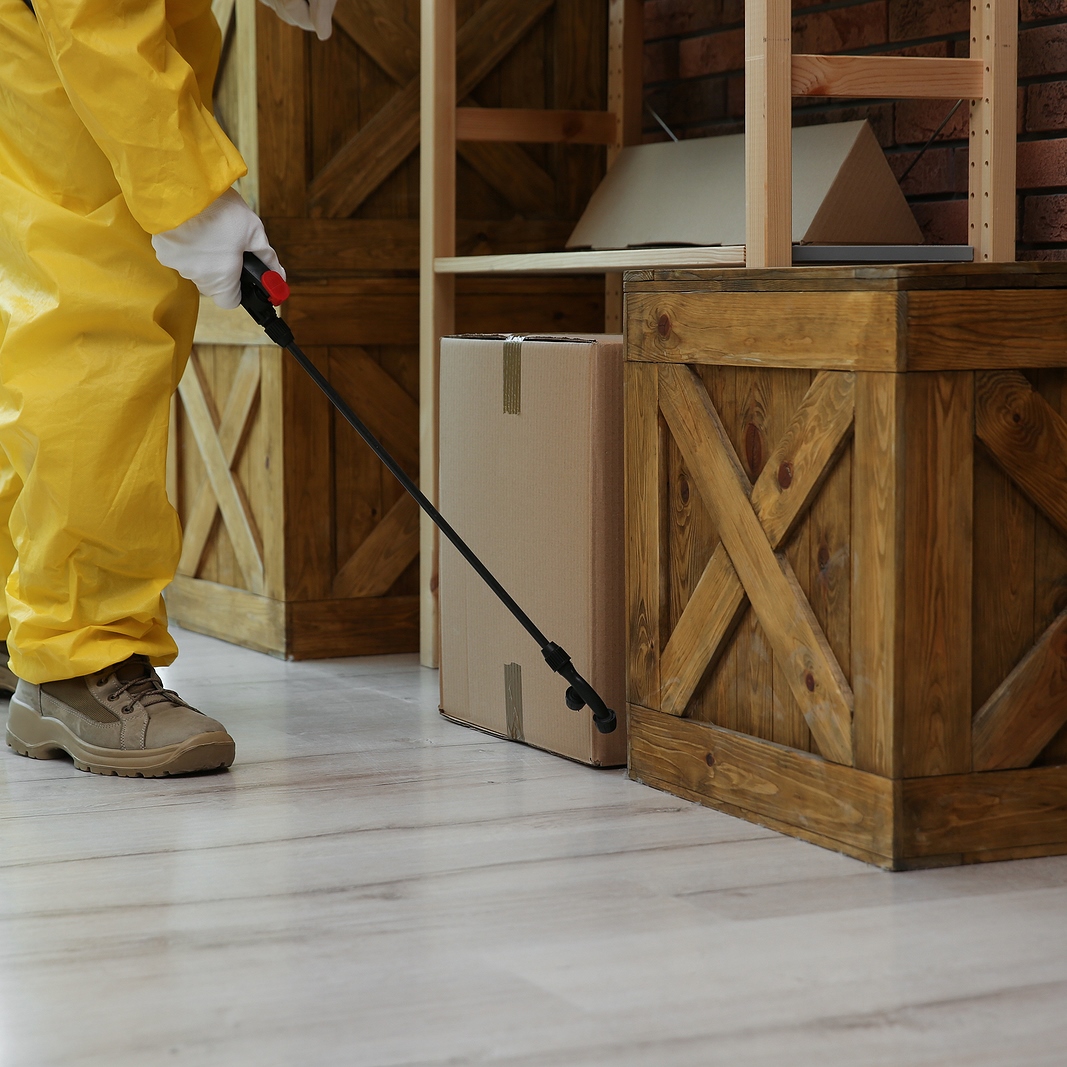
As Fine Art Shippers transports art collections from New York to the West Coast and provides a climate-controlled storage service, our team has watched pest risk shift from an afterthought to a line item in every serious collection-care plan. A single dermestid beetle in a crate of textiles can undo months of careful conservation work, and insurance underwriters now ask about pest protocols almost as often as they ask about fire suppression. That change did not happen overnight, and it is worth understanding why it matters to anyone who ships, stores, or exhibits valuable objects.
Part of what has changed is who gets involved. Storage facilities managing paper-based archives and natural-fiber textiles in warmer regions increasingly coordinate with local exterminators who understand regional insect behavior rather than relying on a national contract alone. A facility handling works on paper in a Texas warehouse, for instance, works with specialists in Dallas pest control because regional humidity patterns and native insect populations differ sharply from what a facility in the Northeast deals with. That kind of localized vendor relationship has become a standard part of how art logistics teams build out their facility protections, not a generic add-on.
A few years ago, pest management in storage facilities was mostly reactive. A moth problem showed up, someone called an exterminator, and the building got sprayed. That approach is largely gone from serious collection-care operations now. Facilities that store art and antiques have adopted integrated pest management programs that treat prevention as the primary defense rather than the last resort. According to the U.S. Environmental Protection Agency (EPA), effective pest management relies on combining prevention, monitoring, and targeted control methods rather than routine chemical treatment alone. That shift away from blanket chemical spraying matters enormously for collections, since many conservation-grade materials cannot tolerate repeated pesticide exposure without risk of staining or chemical damage.
Monitoring has gotten quieter and more constant
The biggest practical change in storage facilities is the move from periodic inspection to continuous, low-disturbance monitoring. Sticky traps placed at regular intervals, paired with digital logging, let facility managers track insect activity trends over months instead of guessing based on visible damage. Many vaults now run scheduled trap checks as part of the same rounds that cover humidity and temperature readings, so pest data sits alongside environmental data rather than in a separate silo. This matters because early detection of a handful of psocids or silverfish gives a facility weeks of lead time before an infestation spreads into adjacent storage units or crates.
Identification has also become more precise. Facility staff are trained to recognize the specific species found in collection spaces rather than treating every insect sighting the same way because the response to a carpet beetle differs from the response to a booklouse. This specificity reduces unnecessary chemical use and lets teams target the actual entry points and conditions that are drawing pests in, whether that is a loading dock door left open too long or a humidity spike near an exterior wall.
Climate control is now a pest strategy, not just a comfort setting
Conservators have long known that humidity drives mold growth, but it is now widely understood that humidity also drives insect activity directly. Keeping relative humidity below roughly 65 percent has become a standard target in storage planning precisely because it limits the conditions that let dermestid beetles, silverfish, and psocids thrive. As climate patterns shift and regions experience longer warm seasons, facilities in places that once had mild pest pressure are now dealing with insect populations that used to be confined further south. That geographic shift means storage planning has to account for regional pest behavior the same way it accounts for shipping routes and seasonal temperature swings, as explored in state-of-the-art storage design that integrates climate control with pest exclusion from the ground up.
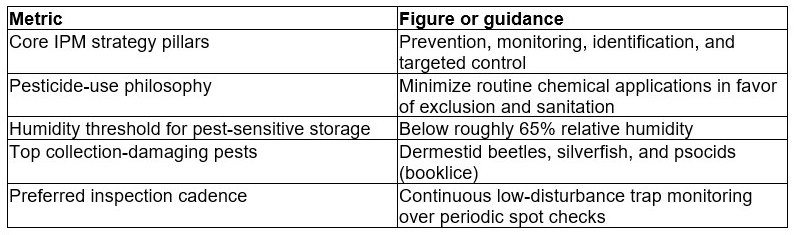
These figures reflect a broader point: pest control for collections is no longer about eliminating insects after they appear, it is about engineering conditions where they never get a foothold. That requires sealed building envelopes, controlled humidity, and careful inspection of incoming crates and materials before they ever reach a storage floor. Facilities that treat these steps as routine, rather than reactive, see dramatically fewer incidents and far less need for aggressive intervention later.
Choosing the right partners for the right climate
The last major shift is in how facilities select pest management partners. National chains still exist, but collection-care teams increasingly prefer technicians who understand the specific insect pressures of their region and who can work within the constraints of a facility holding irreplaceable objects. That means avoiding fumigants that could react with varnishes or textiles, scheduling treatments around exhibition calendars, and documenting every intervention for insurance and condition-report purposes. A facility in a humid Gulf Coast city needs a different pest strategy than one in a dry mountain climate, and the best storage operators now build those regional differences into their vendor contracts rather than applying a single national standard everywhere.
For readers of this publication, the takeaway is straightforward even if pest control feels like a small detail in the much larger world of art logistics. Every crate that moves through a shuttle route, every painting that sits in a climate-controlled vault, and every archive box waiting in long-term storage depends on a facility that has thought carefully about what shares that space besides the art. Pest management has become one more layer of professional collection care, quietly sitting alongside climate control, security, and handling protocols as something that simply has to be done right.