

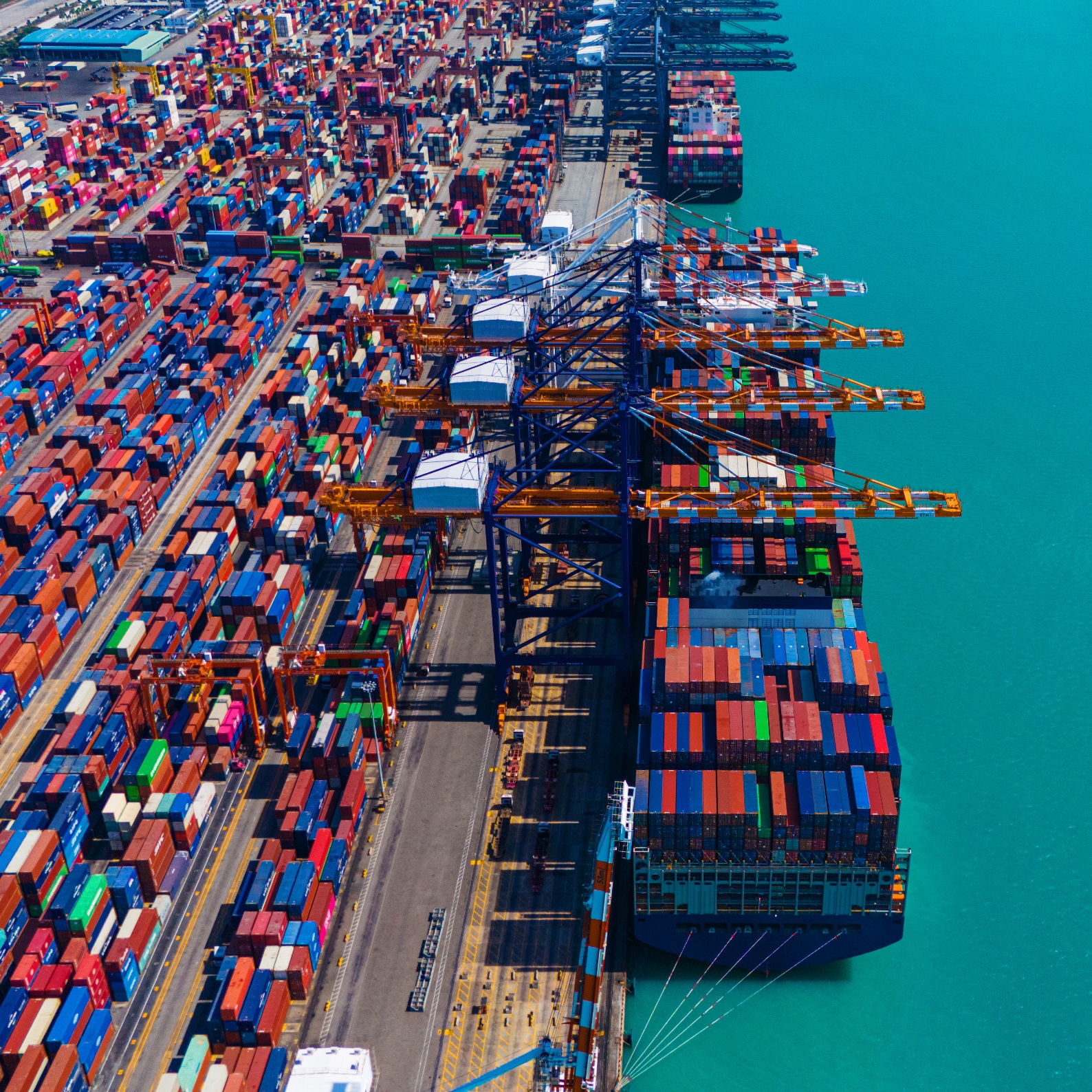
Ask any experienced terminal manager where efficiency breaks down in a port, and the answer is rarely the vessel side. Berth scheduling, crane cycles, and vessel planning have received years of technology investment. The yard, on the other hand, has been the overlooked middle ground where good plans meet operational reality and often fall apart.
A container yard management system changes that equation. It brings the same data discipline and operational visibility to yard operations that terminal operating systems brought to vessel planning, and in doing so, removes one of the most persistent bottlenecks in the entire port system.
The Yard Is Where Port Efficiency Is Won or Lost
The container yard sits between two pressure points. On one side, vessels arrive with time-sensitive discharge requirements. On the other hand, trucks and rail arrive with their own windows, their own constraints, and very little tolerance for delays.
The yard has to absorb, sort, store, and release thousands of containers while keeping both sides moving. As part of an automated shipping system, efficient container yard management ensures cargo flows seamlessly between ships, trucks, and rail. When the yard runs well, the port runs well. When it doesn't, congestion builds faster than it can be cleared, and the effects move outward into the supply chain within hours.
Container yard optimization at scale requires more than experienced yard staff and good communication. It requires a live, coordinated view of every container, every piece of equipment, and every movement in the yard, updated continuously and accessible to every team that needs it.
What a Modern Container Yard Management System Actually Does
Real-Time Container Tracking Across Every Zone
Container tracking in terminals used to mean a periodic physical count, a clipboard walk through the yard, or a query to a database that was updated batch by batch. Modern сontainer terminal operating system platforms, combined with yard management systems, operate differently. IoT sensors, RFID tags, GPS-equipped handling equipment, and optical scanning all feed live position data into a single operational layer.
Every container's location, status, dwell duration, and next scheduled movement are visible from one screen in real time. Yard controllers stop searching and start directing. The search time that consumed hours of staff effort daily is eliminated, and the decisions that follow are based on current data rather than assumptions about where something should be.
Stacking Optimization That Reduces Rehandles
Automated stacking crane management platforms now use machine learning to make placement decisions that account for what will be needed hours or days in advance. Rather than placing a container in the nearest available slot, the system positions it based on its departure window, destination sequence, and the probability of what will need to come out before it does.
The result is a yard that is physically organized around operational logic rather than space availability. Containers due to depart on the next vessel load are accessible without moving other boxes first. Import containers awaiting customs clearance are grouped separately. Reefer units are positioned near monitoring infrastructure. That kind of intelligent smart container yard planning reduces rehandle rates and keeps crane cycles productive.
Gate Management That Clears Queues Before They Form
Port gate management system functionality within a modern yard management platform handles the truck gate as a managed appointment process rather than a first-come, first-served queue.
Drivers pre-register, receive time-slot assignments, and arrive at a gate that already knows what they're picking up or delivering. OCR cameras capture license plates and container numbers automatically on approach. The gate transaction is completed in seconds rather than minutes. Truck turnaround times drop. Gate queues shorten. And the yard receives arrivals in a sequence that matches its operational plan rather than one that creates random congestion spikes.
Where AI Is Changing the Calculation
The shift from a capable yard management system integration platform to an intelligent one is happening through AI and machine learning applied at the operational layer.
Predictive arrival modeling uses vessel ETAs, customs data, and historical dwell patterns to forecast when specific containers will be needed in the yard before the request comes in. That allows the system to pre-position boxes, pre-assign equipment, and prepare the gate sequence in advance of actual demand.
Terminal yard automation built on AI moves beyond executing instructions to generating them. The system proposes the optimal stacking plan, the most efficient crane sequence, and the best truck appointment window and presents those proposals to operators who review, adjust if needed, and confirm. Human judgment stays in the loop. Manual calculation comes out of it.
AI also plays a direct role in container handling efficiency for reefer management, dangerous goods segregation, and cargo prioritization, tasks that previously required supervisor-level expertise to handle correctly at speed.
Integration Is What Makes or Breaks the Investment
A port terminal yard operations platform delivers maximum value when it operates as part of a connected system, not a standalone module. The most capable yard management systems available today are designed to integrate bidirectionally with terminal operating systems, ERP platforms, customs systems, vessel scheduling tools, and logistics partner networks.
When the yard management system and the TOS share live data, berth planning decisions automatically account for yard capacity. When it connects to customs platforms, import dwell time is shortened because clearance status is visible inside the yard planning layer. When it integrates with shipper and carrier systems, truck appointment scheduling becomes a coordinated process across the supply chain rather than a local one.
Port yard planning software that operates in isolation, however capable, creates a more organized silo rather than a connected terminal. Integration planning has to be part of the implementation scope from the start, not an afterthought after the core system is live.
What Port Leaders Need to Get Right Before Go-Live
The technology decisions in a yard management implementation are rarely where projects run into trouble. The bigger challenges are organizational.
Data quality is the first. A yard management system built on inaccurate container records or unreliable equipment tracking will surface bad data faster and more visibly than a manual system did. Before go-live, container records need to be reconciled, equipment telemetry needs to be verified, and gate data entry processes need to be cleaned up.
Change management is the second. Yard staff, gate operators, and equipment drivers interact with the system differently than they did without it. Training needs to be role-specific and hands-on, not just a system walkthrough. The people who will use the system daily need to understand why it works the way it does, not just how to navigate the screens.
Finally, the integration scope needs to be defined before platform selection, not after. The vendors best suited to a standalone yard management deployment are often different from those best suited to a deeply integrated terminal ecosystem. Clarity on scope determines the right choice.
Conclusion
The container yard is no longer a cost center to be managed. It is a throughput asset to be optimized. INTECH Creative Services builds and implements yard management systems that give terminal operators live container visibility, intelligent stacking, automated gate flow, and clean integration into their broader terminal environment. Its AI-powered yard solutions have helped operators reduce truck waiting times by up to 70% across global port operations. If your yard is still running on manual processes or disconnected platforms, INTECH yard management solutions can help you change that.