

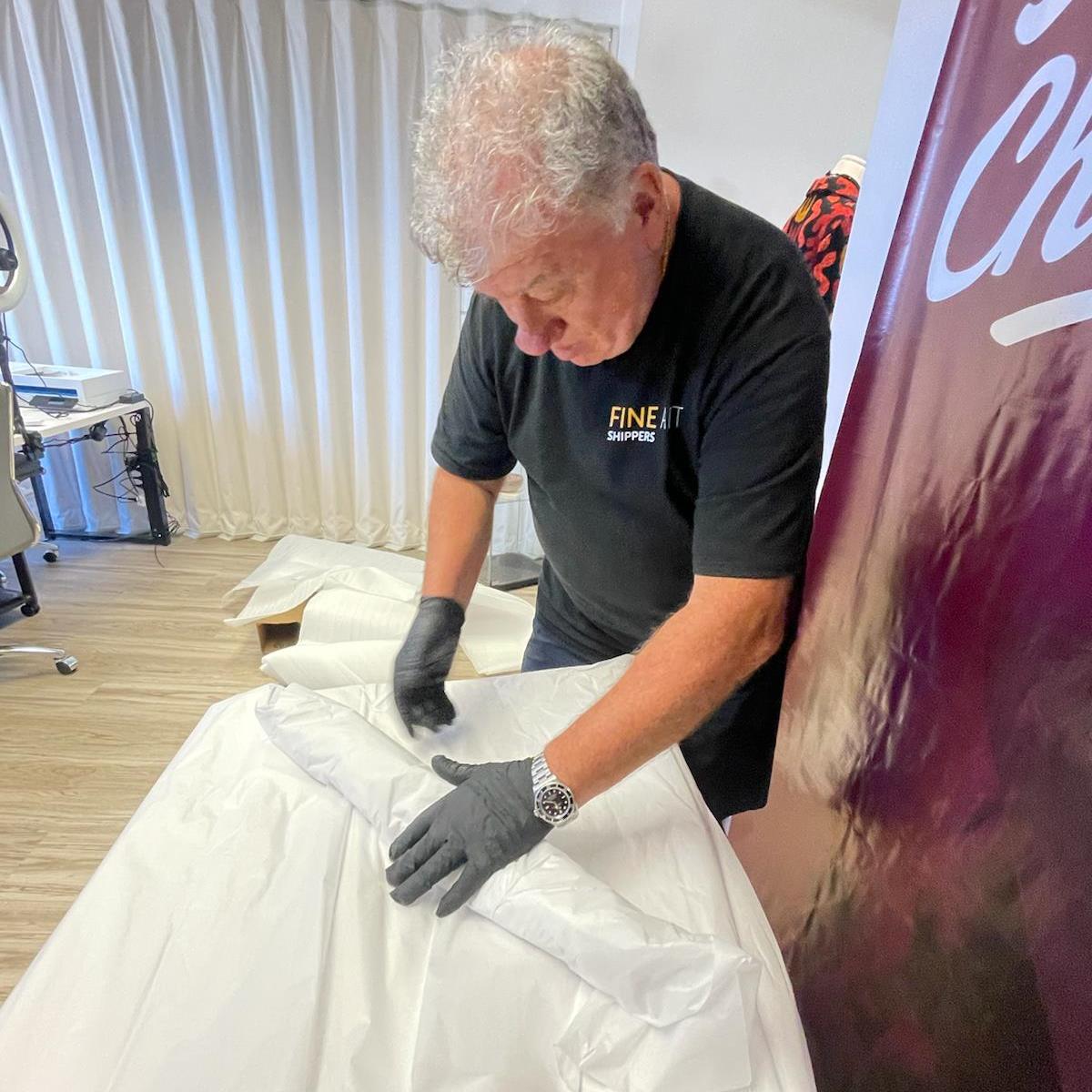
The process of fragile items packaging is very delicate and responsible. Such artworks are very susceptible to impact and can break as a result of careless handling, vibration, or pressure. Thus, the role of their proper packaging rises manifold, as multiple layers of protective packaging can reduce the risk of damage and guarantee safe deliveries. Here’s how multiple layers of packaging work in tandem to deliver top-tier protection to fragile art.
Main Layers of Fragile Items Packaging
Art packaging usually comes in four main layers. First, the surface layer attached to the art object is acid-free material, for example, glassine paper, archival tissue paper, or art plastic. The second layer is padding, with foam sheets or bubble wraps frequently used at this stage. The support layer for fragile art pieces is the cardboard or foam board, and the fourth layer is a sturdy double-wall box or a wooden crate. If your fragile art object is three-dimensional (e.g., a sculpture or mixed-media art), it may also require custom-cut foam cavities and soft wrapping layers that will protect its protruding parts from chips.
What Purposes Does Each Material Serve?
So, what role does each wrapping material play in fragile items packaging?
- Acid-free materials are commonly used as the first packing layer. Their non-abrasive, non-acid properties make them ideal for wrapping that comes into direct contact with the artwork’s surface. Besides, tissue paper also offers lightweight cushioning that delicate surfaces need at all handling stages.
- Bubble wrap provides shock absorption and cushioning for art. It is never placed directly onto the artwork’s surface because of texture imprinting risks.
- Foam sheets for art packing are commonly made of polyethylene and polyurethane. We recommend using only archival-grade foam sheets with closed cells. They serve many goals in art packing, from crate lining to custom insert creation. Their main benefit is in efficient padding around artwork.
- Cardboard sheets are a standard choice for lightweight structural support. They can be used for flat artwork sandwiching before it is placed into a box or crate.
- Custom crates are the ultimate protective layer for artwork that requires extra safety and care during transportation. They are built individually for each artwork and represent the international standard of secure art handling.
Every professional art handler chooses packaging materials with these functional purposes in mind. You can also use this checklist to perform professional-grade packing for your fragile items or when checking the work of your moving company.