

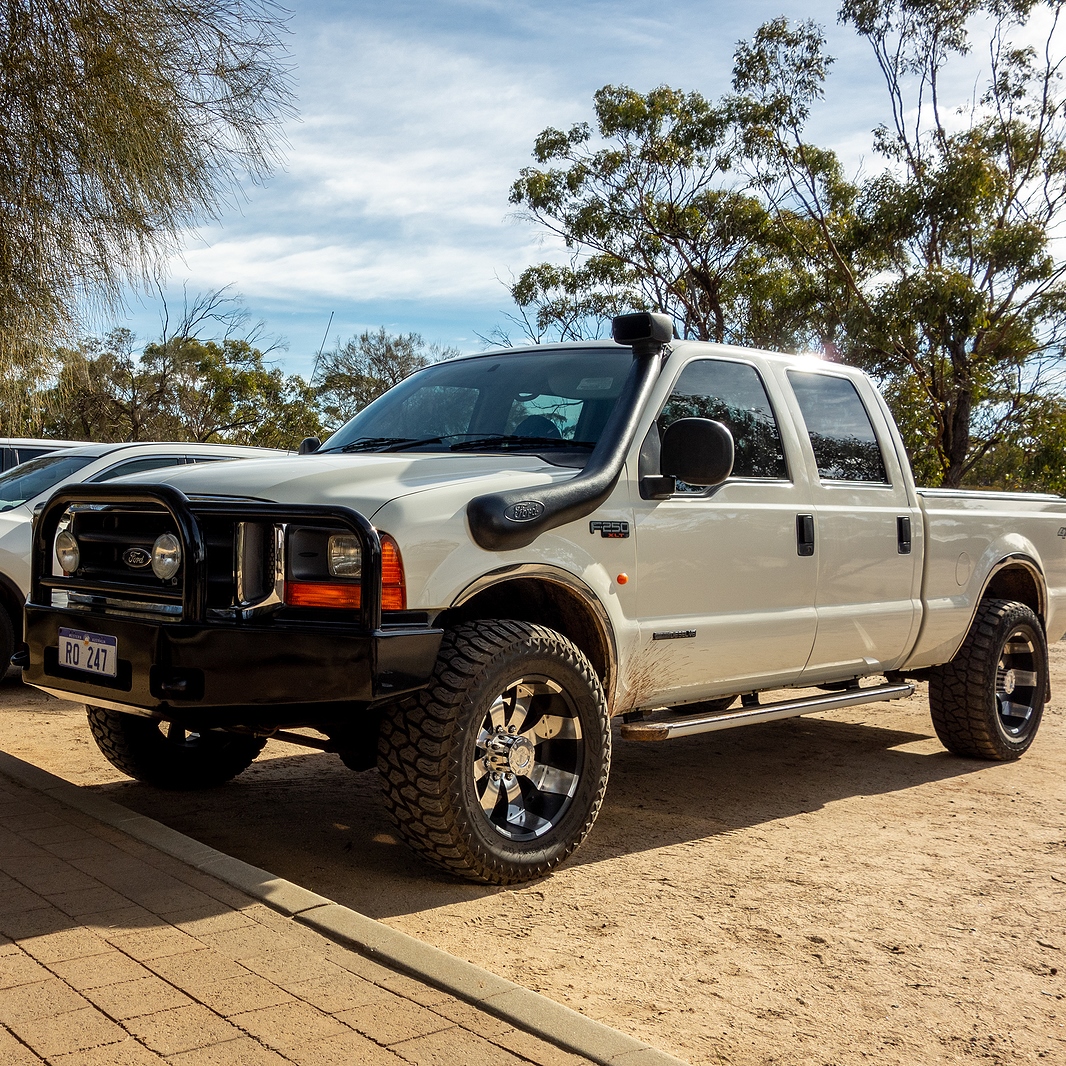
Over the past decade, high-value art has increasingly moved beyond capital cities and into regional centers. Supported by major networks like Regional Arts Australia and various multi-million-dollar government grant schemes, touring exhibitions are now reaching increasingly remote locations. Moving large-scale installation art and delicate sculptures to these regional spaces requires highly specialized logistical planning. While main art moving transport vehicles are selected for their advanced shock absorption systems and climate control during the primary journey, massive semi-trucks often cannot navigate unsealed country roads, gravel driveways, or narrow property gates. This limitation necessitates a carefully planned transfer to smaller support vehicles for the final leg of the journey.
The Reality of Australia's Off-Road Logistics
Once the primary shuttle reaches the limits of the sealed highway, the logistics team must rely on 4x4s and heavy-duty utes to complete the delivery. This is a significant challenge across the country. According to engineering research from the University of Southern Queensland, approximately 63 percent of Australia's road network is unsealed, creating major transport hurdles due to severe road roughness and ongoing track deterioration.
Driving on corrugated outback roads creates immense, sustained high-frequency vibrations that test both the vehicle and its cargo. Furthermore, vehicles travelling on dry dirt roads naturally create a low-pressure vortex at the rear. This aerodynamic effect aggressively sucks fine bull dust into any unsealed canopy gaps or standard ute tubs. For art handlers transporting sensitive equipment, this scenario is a disaster waiting to happen.
Protecting Pristine Installation Gear
Professional art handlers travel with extensive, highly specialized toolsets required for uncrating and mounting delicate pieces. Their kits include cordless drills, socket wrenches, precision measuring devices, rounded box cutters, and environmental humidity monitors. Standard handling protocols dictate that these tools and the accompanying packing materials must remain pristine. Introducing abrasive red outback grit or ambient moisture during the unpacking process can irreparably damage sensitive artworks.
Because standard logistics vehicles often fail to protect auxiliary cargo from these harsh environmental factors, support crews must upgrade their utes prior to deployment. Installing heavy-duty, weather-sealed storage solutions like gullwing toolboxes is the most effective way to ensure delicate installation equipment arrives completely protected. These premium setups shield gear from dust, rain, and the chaotic vibrations of corrugated tracks. They also allow handlers quick, ergonomic access to their equipment without exposing the entire cargo area to the elements.
Essential Requirements for Support Vehicles
To ensure support vehicles are fully equipped for the rigors of rural art deliveries, logistics fleets must focus on a few critical modifications. Standard commercial vehicle cabins or open trays simply do not offer the protection required for high-value mobile operations.
- Impenetrable Dust Sealing: High-grade automotive weather seals are mandatory. Transporting high-value items to remote estates often involves convoy travel, which exponentially increases dust exposure for trailing vehicles. Fully sealed compartments are the only way to keep fine grit away from precision measuring tools.
- Heavy-Duty Security: Theft of tools from vehicles is a sharply rising crisis in Australia. Recent statistics show that hundreds of thousands of people experience theft from their vehicles annually, with millions of dollars worth of equipment stolen from mobile professionals. Lockable, reinforced storage is essential to protect valuable rigging equipment and monitors from opportunistic theft during overnight stops at rural motels.
- Vibration Mitigation: Standard vehicle fittings can easily work loose on sustained dirt tracks. The storage compartments must be securely bolted and feature internal damping. This prevents delicate uncrating tools and hardware from rattling to pieces before they even reach the gallery space.
Coordinating the Final Mile
Executing a successful art delivery to a remote property is about more than just surviving the road conditions. Logistics coordinators must map out the exact transfer points where cargo will be shifted from the climate-controlled truck to the rugged support utes. This transfer often happens at regional depots or safe, paved highway turn-offs. From there, the support vehicles take over, moving at calculated speeds to minimize cargo bounce.
The expansion of regional spaces, such as the Geraldton and Broken Hill Regional Art Galleries, proves that there is a massive appetite for premium cultural experiences outside major metropolitan centers. However, making these remote exhibitions a reality requires multi-component uncrating and flawless logistical execution. By equipping support vehicles with the right storage and protection systems, art handling teams can confidently conquer the final mile of any rural delivery.