

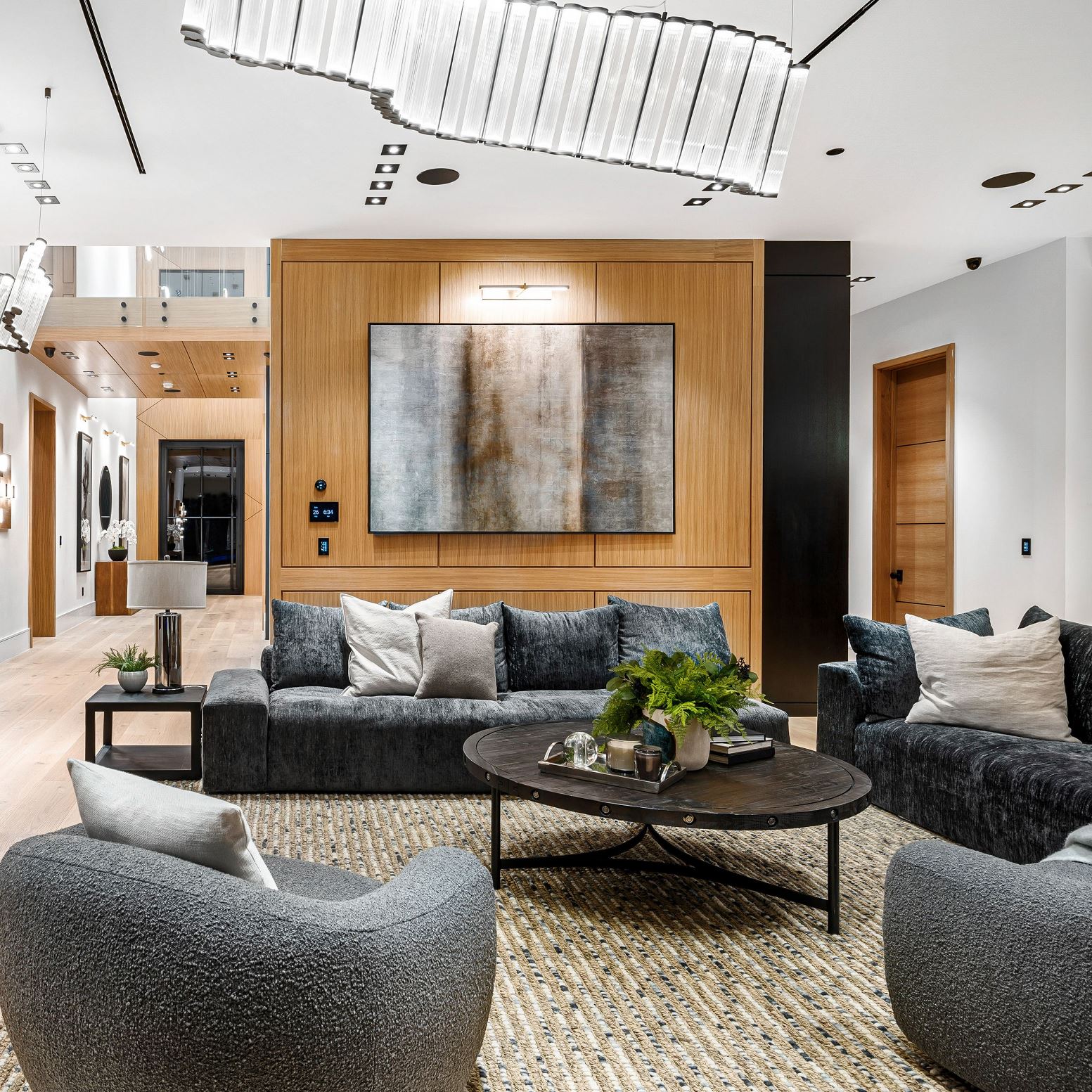
For serious art collectors, a home is more than a residence. It is a private gallery, a preservation environment, and often a long-term repository of cultural and financial value.
Designing a luxury home around a significant collection requires more than refined aesthetics. It demands structural foresight, environmental precision, and layered security — all integrated at the architectural level. When approached correctly, the result is not simply a house with artwork on display, but a residence engineered to support preservation and presentation simultaneously.
Architecture as a Framework for the Collection
Art-centered residential design begins with spatial planning. Gallery corridors, double-height walls, and carefully controlled transitions between rooms must be considered from the earliest schematic phases. Large-scale works often require concealed structural reinforcement, blocking within wall assemblies, or steel support behind finish layers.
In high-end residential projects — particularly in art-driven markets — early coordination is critical. In Los Angeles, where custom estates frequently incorporate museum-quality collections, experienced architectural teams address wall reinforcement, lighting infrastructure, and mechanical zoning during schematic planning. This approach is common among firms operating as a luxury home builder in Los Angeles, where structural and environmental coordination begins long before interior detailing. Retrofitting after framing is rarely efficient and often compromises design intent.
Architecture must anticipate both the current collection and its future growth.
Climate Stability as an Architectural Decision
Environmental control is one of the most underestimated components of art-focused residential design. Paintings, works on paper, textiles, and mixed-media installations respond to fluctuations in humidity and temperature with gradual deterioration.
While standard HVAC systems may maintain general comfort, collector-level homes typically require tighter control parameters. Zoned systems, advanced air sealing, energy recovery ventilation, and high-performance envelopes work together to maintain stable interior conditions.
The envelope itself plays a crucial role. Poorly insulated glazing or thermal bridges can create localized temperature variations near display walls, even when ambient readings appear stable. For this reason, climate performance must be addressed at the building-science level, not simply through mechanical equipment upgrades.
Lighting Without Compromise
Lighting design in collector homes requires restraint and precision. Natural light enhances architectural experience, yet uncontrolled UV exposure can damage sensitive materials over time.
Successful strategies often combine filtered glazing, calibrated daylight orientation, and adjustable museum-grade LED systems. Lighting tracks and recessed slots are typically designed to allow flexibility as collections evolve. Beam angles, color rendering, and dimming controls are coordinated to enhance artwork without introducing excess heat or glare.
The goal is balance: illumination that supports viewing while protecting long-term integrity.
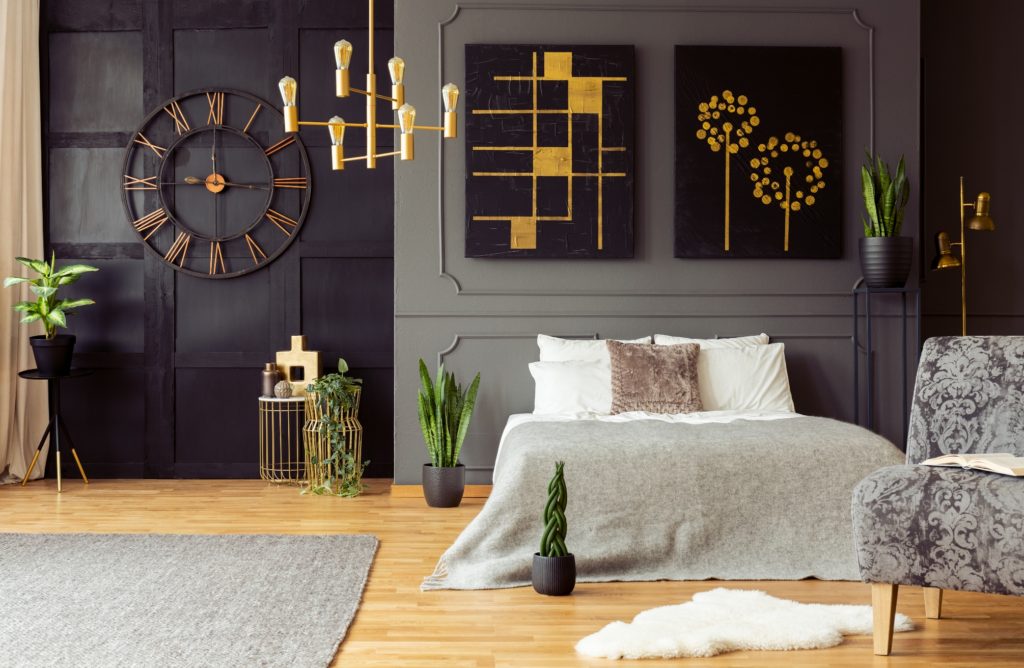
Structural and Load Considerations
Serious collections frequently include oversized canvases, stone sculptures, or heavy framed works that exceed standard residential load assumptions. Structural planning must address reinforced floor systems, concealed steel supports, and, in some cases, increased slab thickness in key zones.
Sculpture gardens and interior courtyards add additional complexity, particularly when combined with cantilevered platforms or integrated water features. These are not decorative upgrades; they require early collaboration between architect, structural engineer, and builder to ensure safety and long-term durability.
Security as an Integrated Layer
High-value collections require more than a conventional alarm system. Discreet surveillance, controlled access points, environmental monitoring, and secure storage rooms are often integrated into the architectural layout. Importantly, this infrastructure must remain visually unobtrusive.
Collectors frequently coordinate with professional art shippers and handlers during acquisition, rotation, or loan processes. Clear circulation paths, adequate turning radii, and reinforced entry sequences simplify installation and reduce risk during transport.
Security planning is most effective when embedded into spatial design rather than added reactively.
Dedicated Storage within the Residence
Not every piece remains on display. Many collectors require climate-controlled storage rooms that meet preservation standards while remaining accessible.
These spaces often include:
- archival shelving systems;
- flat-file storage for works on paper;
- adequate clearance for crated art handling.
Ceiling heights, corridor widths, and door dimensions must accommodate large deliveries. Without this foresight, even a beautifully designed home can become functionally restrictive for an expanding collection.
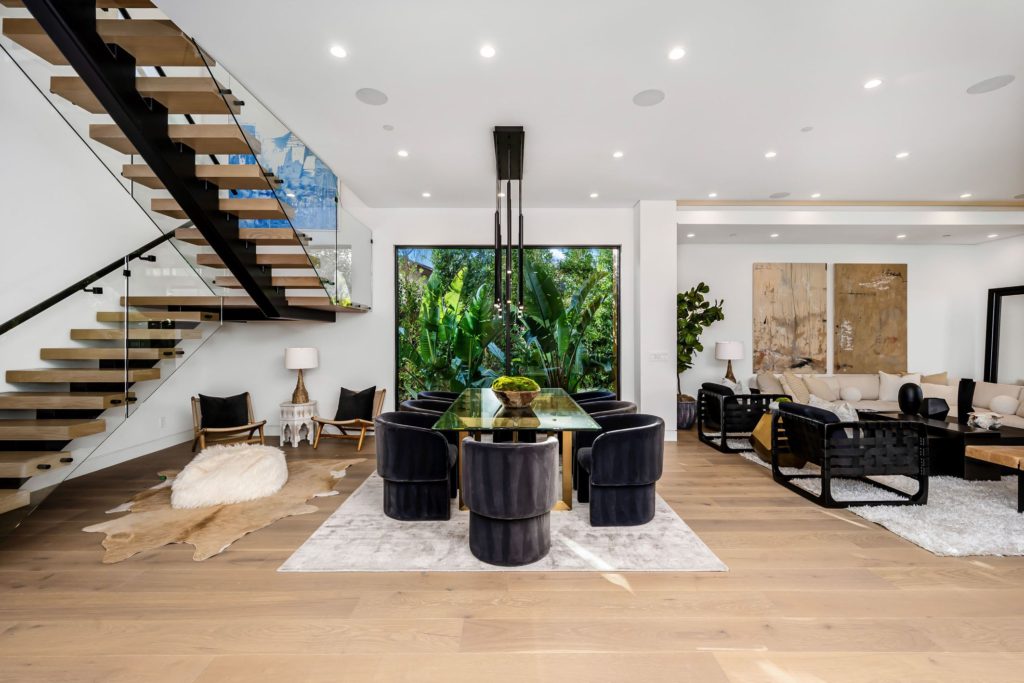
Architecture and Art Logistics: An Integrated Framework
A collector’s residence functions at the intersection of architectural design, environmental engineering, and fine art logistics. The built environment must accommodate not only display conditions but also installation procedures, conservation requirements, and secure transportation pathways.
Art handlers, conservators, and installation teams inevitably interact with the spatial framework of the home. Ceiling heights, turning radii, freight access points, and structural load capacity all influence how safely and efficiently works can be delivered, positioned, or rotated. When these logistical realities are anticipated during architectural planning, operational risk is significantly reduced.
This level of integration distinguishes residences designed merely to showcase artwork from those engineered to support it. In a purpose-built residential gallery environment, circulation, environmental control, and structural detailing are aligned with preservation standards and handling protocols. The architecture does not react to the collection — it is calibrated for it.
Closing Perspective
For serious collectors, art represents cultural capital, personal legacy, and in many cases, substantial financial investment. Its preservation cannot rely on improvisation.
Designing a luxury residence around a significant collection requires disciplined coordination between architecture, structural engineering, climate control systems, and security infrastructure. Reinforced wall assemblies, controlled humidity zones, calibrated lighting systems, and layered protection strategies must be treated as primary design parameters rather than secondary upgrades.
When these considerations are embedded from the outset, the result is a private environment that sustains long-term asset value while maintaining residential comfort. In such projects, architecture moves beyond aesthetic framing — it becomes a preservation system in its own right.