

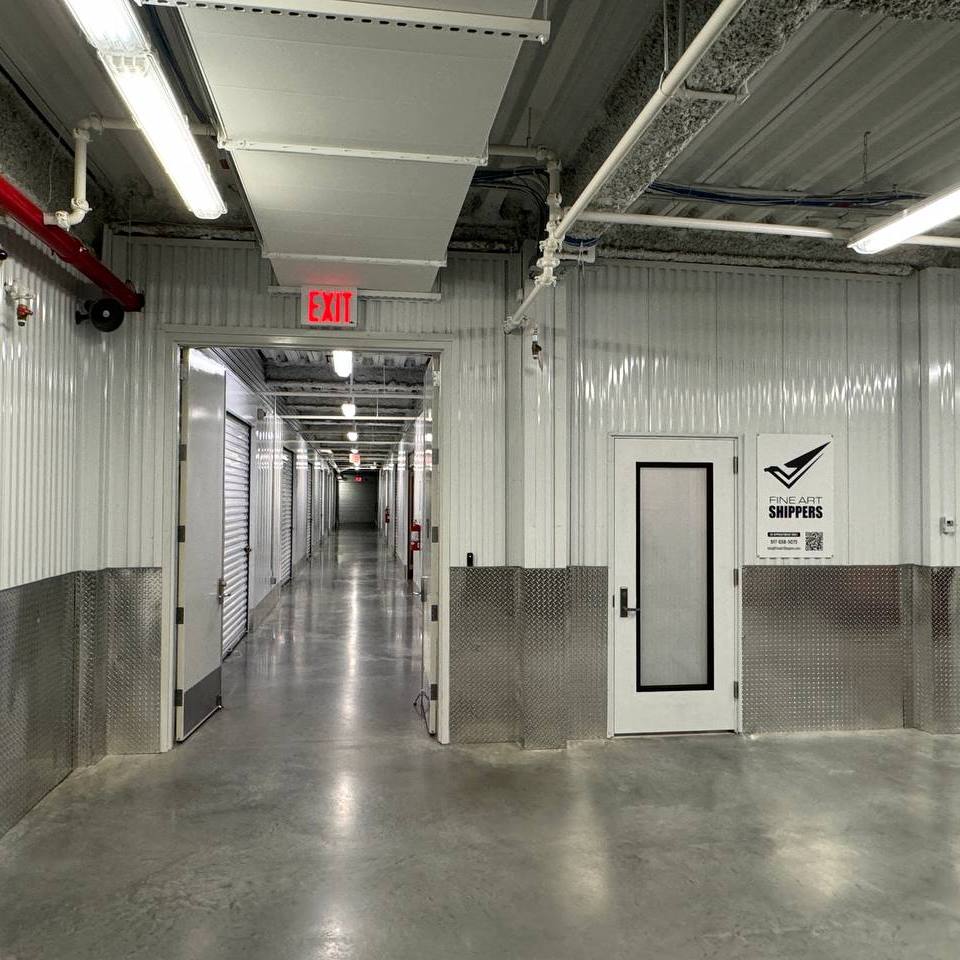
Climate-controlled art storage is the contemporary standard in the global art industry. Nobody wants to take the risks of temperature and humidity fluctuations or poor air filtration. Yet, along with the basics of climate control that really work, marketers tend to overprice some storage facilities by adding fancy, useless features.
What Equipment Is Mandatory for Climate-Controlled Art Storage?
Let’s start with what objectively matters in a climate-controlled storage space. First, it’s the core system of temperature and humidity control with reasonable drifts. The industry standard dictates the range of 45-55% RH and 60-770F (15-250C) for art storage facilities, which comply with energy-conscious storage setup protocols. These standards are implemented via a humidity control system, which includes humidifiers and dehumidifiers working in tandem to hold RH steady. Temperature control is accomplished with the help of the cooling and heating system, which gives good short-term stability without rapid swings.
Air distribution is also a part of the climate control core in any art storage facility. Technically, it should ensure even air distribution designed to eliminate dead zones and condensation pockets in the storage space. This equipment is paired with filtration and pollutant control systems that oversee particulate filtration and can control gaseous pollutants. The storage facility is built or equipped with vapor management in mind, which includes roof and wall waterproofing and site drainage. Needless to say, all equipment’s operations and their output are continually monitored using calibrated sensors and alarms for deviations.
Marketed Features with Little Practical Value
Now that we know what is really needed for high-quality climate-controlled art storage, it’s time to look into what is avoidable and dramatically overpriced. The list includes:
- Museum-grade ±1 degree or 1 HR percent standards. While tight control over temperature and humidity is at the heart of climate control, such ultra-strict bans never pay off in terms of cost and setup complexity.
- Air changes every hour. While advanced air filtration is also a must in art storage, high air change rates are non-ecological, causing a great carbon footprint and energy expenditure. Besides, intense air filtration may increase moisture in poorly enveloped art packaging.
- HEPA everywhere. The use of HEPA filters is explainable in some storage spaces, such as areas with high particulate risk and conservation labs. However, their use throughout the storage facility increases energy consumption without addressing RH instability or water ingress risks.
These are not totally useless, but their practical value is incomparable with the cost that providers want to charge for these fancy features.