

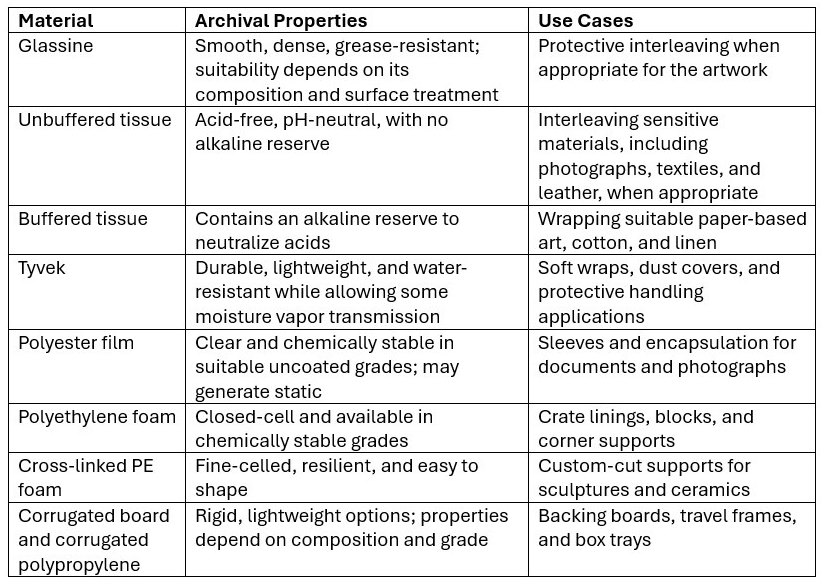
The term “archival” is not a brand claim; it describes a material’s suitability for preservation. Archival materials are selected for their chemical stability and their ability to protect objects without causing staining, transferring residues, or promoting deterioration over time. However, no single material is suitable for every artwork. In professional packaging, each layer serves a specific purpose, and materials are chosen according to the object’s surface, composition, and condition. This guide has archival packing materials explained by type and function.
Archival Packing Materials Explained: Options and Their Jobs
How Materials Work Together
With archival packing materials explained individually, the next step is understanding how they work together. Professional packaging is built from the object outward, with each layer addressing a different risk:
- Contact layer. Suitable glassine, tissue, or other protective materials help prevent abrasion and contamination. The correct choice depends on the artwork’s surface and medium.
- Barrier layer. Appropriate films or Tyvek help protect against dust, splashes, and some environmental changes. They do not necessarily provide a complete moisture barrier.
- Cushioning layer. Foam absorbs shock and vibration. Its density and thickness must suit the object’s weight, shape, and contact points.
- Rigid layer. Archival-quality board or a travel frame limits flexing that could damage paintings or paper.
- Outer shell. A lined plywood crate or sturdy, double-wall box protects against impact, stacking pressure, and handling risks.
Acclimatization also matters. After transportation, an artwork may need to remain in its closed crate before unpacking, particularly after significant temperature changes. Although 24 hours is a common guideline, the appropriate waiting period depends on the artwork, its packaging, and the environmental conditions. Follow conservation advice when handling sensitive or valuable pieces.
FAQs
Can packing materials be reused?
Foam and crates can often be reused if they remain clean, structurally sound, and free from contamination. Contact materials should be inspected and replaced if dirty, damaged, or contaminated.
How can I check a material’s safety?
Ask the supplier for technical specifications and relevant test results. The Photographic Activity Test (PAT) is useful for materials intended for photographic enclosures. The Oddy test may help assess material compatibility in museum environments, but neither test alone guarantees suitability for every artwork.
How long can an artwork stay packed?
An artwork may remain in transit packaging for several weeks, depending on the materials and environmental conditions. Longer-term storage requires suitable packaging and a stable environment. Sensitive works may need purpose-built crates and careful unpacking under appropriate conditions.