

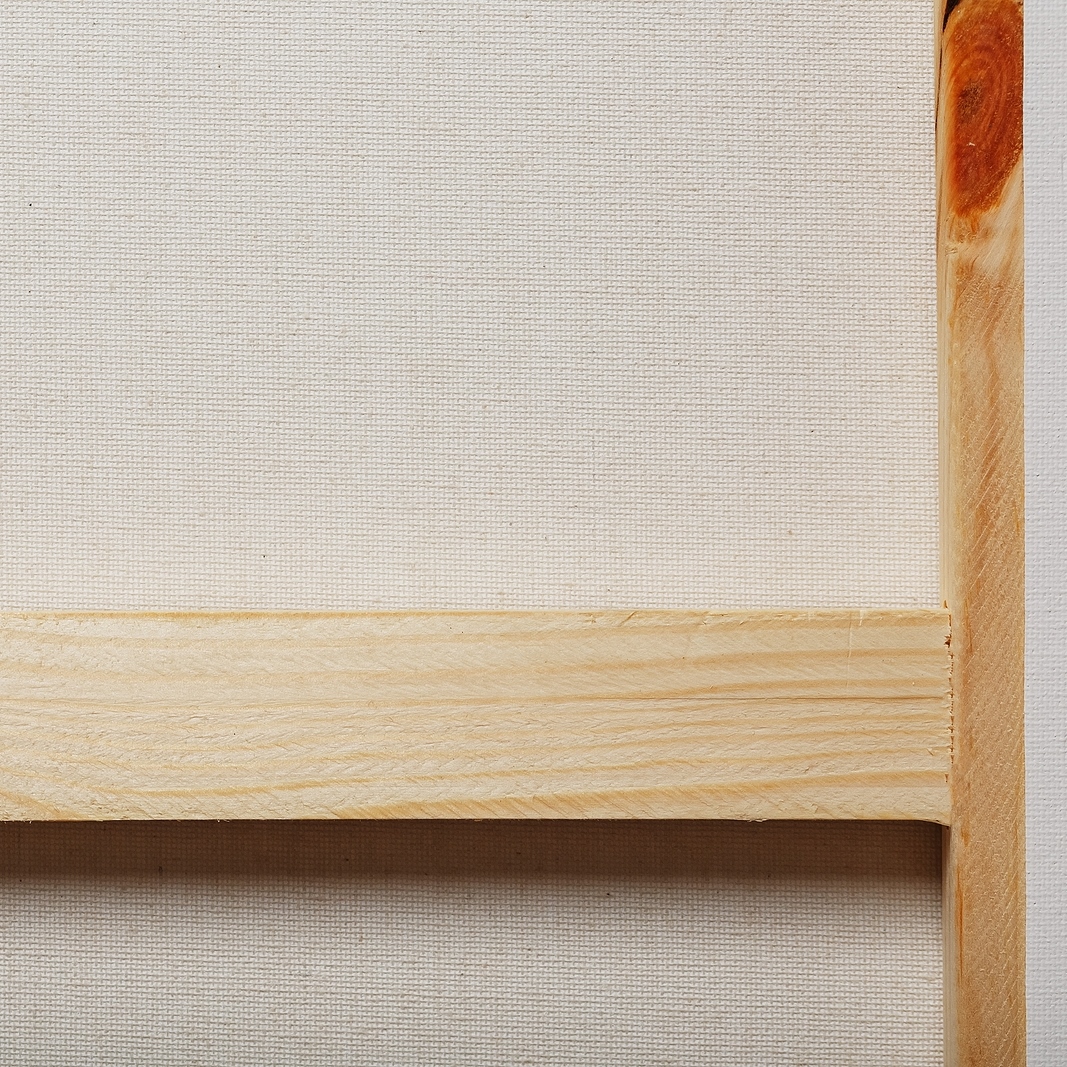
Still wondering why stretcher bars crack? The short answer is simple: they crack when the wood moves, most often because of uneven changes in moisture. As the wood expands and contracts, it meets resistance from the stretched canvas, staples, or natural weak points in the grain. The good news is that most cases of stretcher bar damage can be traced to one of five preventable causes discussed below.
What Is a Stretcher Bar?
A stretcher bar is one of the four (or more) wooden bars that form the frame supporting a stretched canvas. Quality stretcher bars feature expandable corner joints and slots for keys, which are small wedges tapped in to make minor adjustments to the canvas tension over time.
Why Stretcher Bars Crack: The Five Main Causes
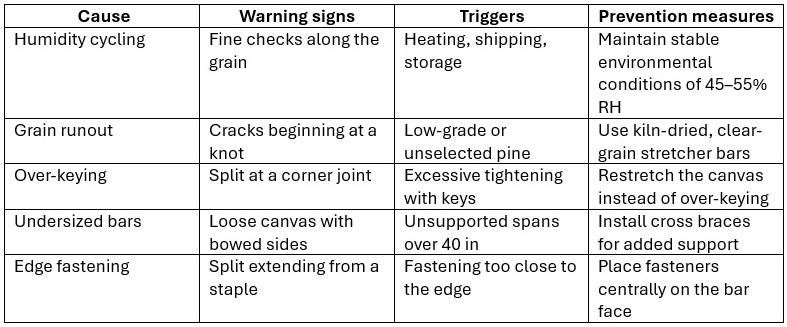
The main causes of stretcher bar cracks are well known to conservators and art handlers, who routinely monitor these five risk factors to protect canvas paintings from structural damage:
- Humidity cycling. Wood is hygroscopic, meaning it absorbs and releases moisture. Repeated humidity fluctuations cause the wood to expand and contract, increasing the risk of cracks.
- Grain runout and knots. When the wood grain runs diagonally instead of parallel to the bar, its structural strength is significantly reduced. Knots create additional weak points where cracks often begin.
- Over-keying. Stretcher keys are intended only for small tension adjustments. Using them to tighten a severely slack canvas places excessive stress on the corner joints and may split the wood.
- Insufficient support. Large canvases constantly pull inward. If stretcher bars are undersized or lack cross braces, they can bow over time and eventually crack.
- Fasteners placed too close to the edge. Staples and tacks installed near the edge of the stretcher bar act like wedges, increasing the likelihood of splitting under tension.
The table below summarizes why stretcher bars crack, the warning signs to watch for, common triggers, and effective prevention measures.
FAQs
Can I repair a cracked stretcher bar?
If the crack is small and resembles a hairline split, it may be stabilized with wood glue. However, if a corner joint has split, the stretcher bar has already lost much of its structural integrity and should be replaced.
Does hardwood crack less often than pine?
Not necessarily. Moisture content and grain quality are generally more important than wood species. A well-selected, kiln-dried pine stretcher bar can easily outperform poorly dried hardwood.
Should I remove the keys?
Conservators generally recommend not leaving loose keys in place because they can fall out or become damaged during transportation. A safer solution is to secure them to the reverse of the canvas using museum-grade archival tape.