

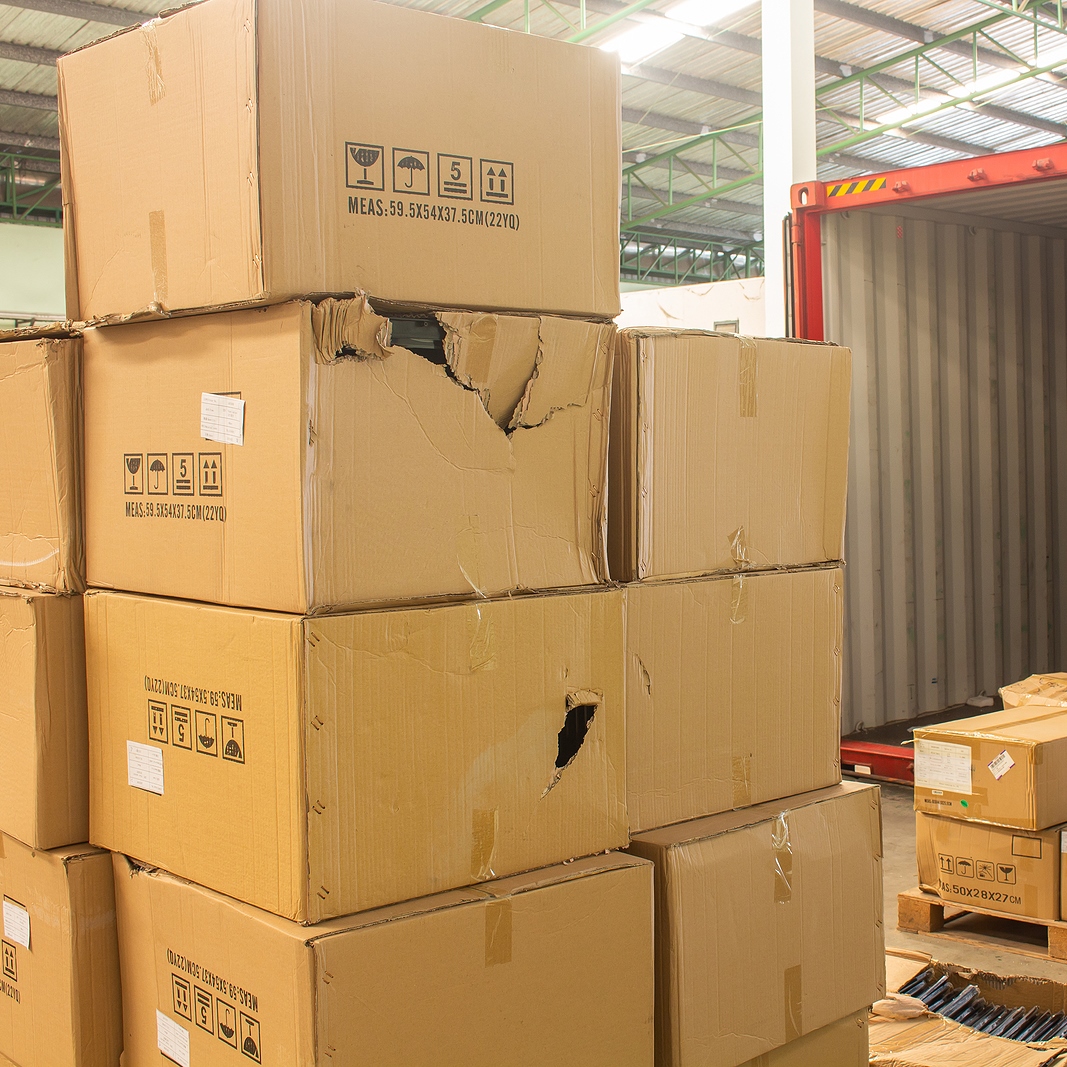
There are many risks when you are shipping packages of value. You want to make sure that you have chosen a reliable shipping company that will deliver your package in a timely manner to the correct destination. Also, it is wise to insure your package in case something happens to it along the way. But there is another critical aspect that must be given attention, and that is the box in which your package will be shipped. In many instances, people purchase a variety of generic shipping boxes at an office supply store or at a shipping facility, such as FedEx or UPS, that will hold their package until it reaches its destination. Those of us in business who rely on shipping packages understand the importance of having a protective box that will safeguard an item until it is received. This is not something that one should take lightly, and look to spend a minimal amount of money for a cheap box that will provide little to no protection for a valuable item. Instead, it is wise to invest in a custom cardboard shipping box. A custom cardboard box is engineered to provide the precise protection that an item needs to reach its customer safely.
What Generic Boxes Cannot Do
Most generic shipping boxes are made with one intention in mind: to be as inexpensive as possible to make while being able to be used to ship as many different products as possible. Boxes like these are perfectly fine for shipping things like books, packages of clothing, and other sturdy items. But for items of value such as artwork, ceramics, glass, electronics, cosmetics, and more, they are not nearly good enough. These types of products can easily be damaged by normal shipping procedures. If they are damaged, not only can they be difficult to repair, but they can also be very expensive to replace.
A big issue with most boxes is that they are not dimensionally precise enough to be used for a wide variety of applications. What this means is that the internal space of the box is not perfectly suited for the products that will be stored inside. As a result, there will typically be a lot of empty space, and the product will move around in the box during transit. While this may not seem like a big deal, it actually can cause a lot of damage to products as they are jostled around during transport. The items are not subject to gentle rocking from side to side or back and forth as the boxes are moved along. Instead, they are subject to a series of hard drops and jolts as the boxes are thrown around during transit. As the items move around inside the box, they hit the sides, bottom, and other objects inside the box with considerable force. This can result in serious damage to products that are not well protected by the dimensions of their shipping containers.
Generic shipping boxes are made with the basic, single-wall corrugated construction. Most generic shipping boxes are designed to hold packages of a few pounds in weight, containing items that are quite hardy and can withstand moderate impacts and fluctuations in pressure. However, generic shipping boxes are not engineered to handle heavy items, fragile items, or items of extreme value. Items of extreme value are so expensive that even a slight amount of damage could cost thousands of dollars to repair. In such cases, it is wise to invest in custom shipping boxes that are designed to protect these special items from damage. Generic shipping boxes can fail in several different ways. They can fail under their own weight when stacked upon one another. They can be penetrated by sharp objects, and the corners can collapse under excessive stress. In all of these cases, custom shipping boxes can help to prevent damage. By choosing a custom shipping box, you can rest assured that your valuable items will arrive safely at their destination.
The True Cost of a Damaged Shipment
If you do happen to have an item damaged in transit, the initial visible cost will be the cost to replace the damaged item. This could be the full retail price or possibly the wholesale price, depending on whether the item has been re-sold already. In addition to this visible cost, there are also hidden, invisible costs that can quickly add up to a very large sum of money. For example, any item that requires repair will cost less than having to replace the item completely, but will still have a substantial impact on your bottom line. In addition to the repair or replacement cost, you will also have to factor in the cost of returning the damaged item to the company for assessment, as well as the cost to re-package and re-ship the replacement item. Finally, you have to factor in the cost of time spent processing the claim with the insurance company.
Direct costs of shipping damage include:
- Full replacement value of damaged items that cannot be repaired
- Repair costs for items that can be partially restored
- Return shipping costs for bringing damaged items back for assessment
- Repackaging and reshipping costs for replacement items
- Insurance claim processing time that diverts staff from productive work
- The increase in premiums charged by a shipping line after they have had to deal with a claim, which will be charged on all future shipments to that destination
Other indirect costs, not to be included in the damage claim calculations, are customer relationship damage, which could cost the equivalent of future transactions with that customer multiplied by the number of expected transactions; damage to the company's reputation on social media and review sites; loss of professional credibility with customers and suppliers; and operational disruption caused by processing claims, arranging replacements, and corresponding with customers.
The total cost of dealing with a single major damage incident far exceeds the total cost of the best quality custom packaging for the entire year. Clearly, there is a huge return on investment from custom packaging for businesses that regularly send high-value products in the mail.
How Custom Specifications Eliminate Generic Box Vulnerabilities
Custom shipping boxes are designed with specific vulnerabilities of generic shipping boxes in mind. The boxes are custom-engineered with precise specifications to protect valuable products and match the protection required for specific products. Each generic box has inherent vulnerabilities that can cause damage to products packaged within it. By custom engineering a box, generic vulnerabilities are eliminated by creating a box that is designed to protect one specific product or group of similar products, plus a little extra for cushioning.
It is very important to design your custom boxes with dimensional precision. This means that the dimensions of the packaging need to be designed to match the exact external dimensions of the products that are going to be packaged, plus a little extra for cushioning. If you can design your packaging so that there is no space for the packaged item to move around within the packaging, then the forces that act on the packaged item during transit, such as drops and impacts, will be absorbed by the packaging structure and the cushioning, rather than being transmitted to the items within the packaging by sudden impacts. This is one of the main causes of damage to packages during transit, and it can be eliminated by simply designing your custom packaging with dimensional precision.
For companies that specialize in the packaging of certain products, such as those producing cosmetic shipping boxes, the board used in these custom packaging solutions can be designed to meet the specific needs of each product. For example, the cosmetic shipping boxes can be made from specific types of board, which have been designed with the delicate cosmetics and beauty products in mind. These boxes are designed to protect fragile glass, as well as products that are made up of liquids, and products that have decorative elements that are prone to surface damage. The board can be lighter than normal for companies that require weight to be a factor in the packaging of their products, or the board can be thicker for companies that require more protection for their items.
Structural design is another critical feature that can be incorporated into custom packaging but is generally absent from generic packaging. For example:
- A box can have double-walled construction at the corners
- A reinforced base panel can be added for heavy items
- Internal partitions can be included to keep separate fragile items within a box
- A custom closure system can be incorporated that maintains the structural integrity of the packaging during shipping
The Professional Signal That Packaging Sends
In addition to the main function of packaging to protect a product in transit, the packaging can also give a first impression of a business or person. The packaging can also have a negative effect, giving the wrong impression of a transaction and a business. The main point to note is that this first impression is given before the item in question has even been opened, and therefore, it is very important that the packaging is of a very high standard.
A valuable item shipped in a poorly designed generic box with obvious dimensional mismatches, inadequate cushioning, excessive internal movement, and ordinary packing tape covering oversized flaps immediately creates a poor impression on the recipient. It indicates that the sender does not value the recipient's time and efforts to open the package, and that they did not put any thought or effort into selecting packaging to adequately protect the items being shipped. Only when the package is opened can the recipient's initial misgivings be confirmed or dispelled, depending on the degree of damage to the contents of the package.
Every business that sends goods to clients, customers, or partners on a regular basis will understand that every shipment of goods is a brand touchpoint and that you are trying to project a professional image by sending high-value goods in quality packaging. Businesses working with suppliers offering custom boxes for shipping understand that every shipment is an opportunity to either reinforce or undermine the professional reputation they have worked hard to build.
Matching Box Specifications to Product Categories
There are many different products that are deemed to be valuable and thus require extra protection in packaging, including artwork, glass, ceramics, electronics, precision instruments, high-value cosmetics, and beauty products. Each of these categories has specific protection requirements that can be addressed by custom specifications for a company's shipping boxes.
Prints, artwork, and paintings are sensitive products that are subject to numerous potential risks. When in transit, they are susceptible to physical damage, moisture, and the risk of pressure damage. For example, if a painting is framed and mounted, then it can be subject to great damage if the frame or mount is subjected to weight from above. This is particularly so if the corners of the frame are not sufficiently protected. Prints and paintings that are packaged in custom-printed boxes are protected from all of these potential problems. Corner protectors are often included in these boxes, as well as moisture barriers. The panels of the box are also typically made of a sturdy material to prevent damage from above.
Packaging glass, ceramics, and other very fragile products requires special types of cushioning designed to absorb the impacts that these packages may suffer during transportation. There are a few important principles to take into account when choosing packaging materials and methods for fragile items. One of the more important is that of energy dissipation, or the amount of energy that the packaging can absorb before failing. The packaging of glass and ceramics typically needs to be able to absorb a lot of energy in the form of a large number of impacts.
Electronic items and other precision items have to be protected from physical damage and from electrostatic discharge. It is not enough for packaging to arrive at its destination without any visible signs of damage. Packaging of such items has to be able to absorb shock and distribute it so that it does not cause damage to the item inside. It must also be able to prevent static electricity from discharging to the item. Packaging for such items can incorporate anti-static materials into its construction. The foam cushioning inside can be precisely fitted to the packaged items so as to prevent them from moving inside the box. Packaging can also be designed to include features to control moisture so as to protect sensitive components over long periods and during international shipments when items may be exposed to humidity.
High-value cosmetic and beauty products face more than the usual types of damage and so require packages that are able to safeguard against a range of different issues, including temperature, moisture, and surface damage that can be caused by a number of factors. An extensive array of high-quality custom cosmetic shipping solutions and packaging options is available, designed using a variety of different materials and engineered with a range of different structural elements to protect fragile items, such as glass bottles, precision-engineered closures, and other decorative elements commonly found in the cosmetic and beauty industry.