

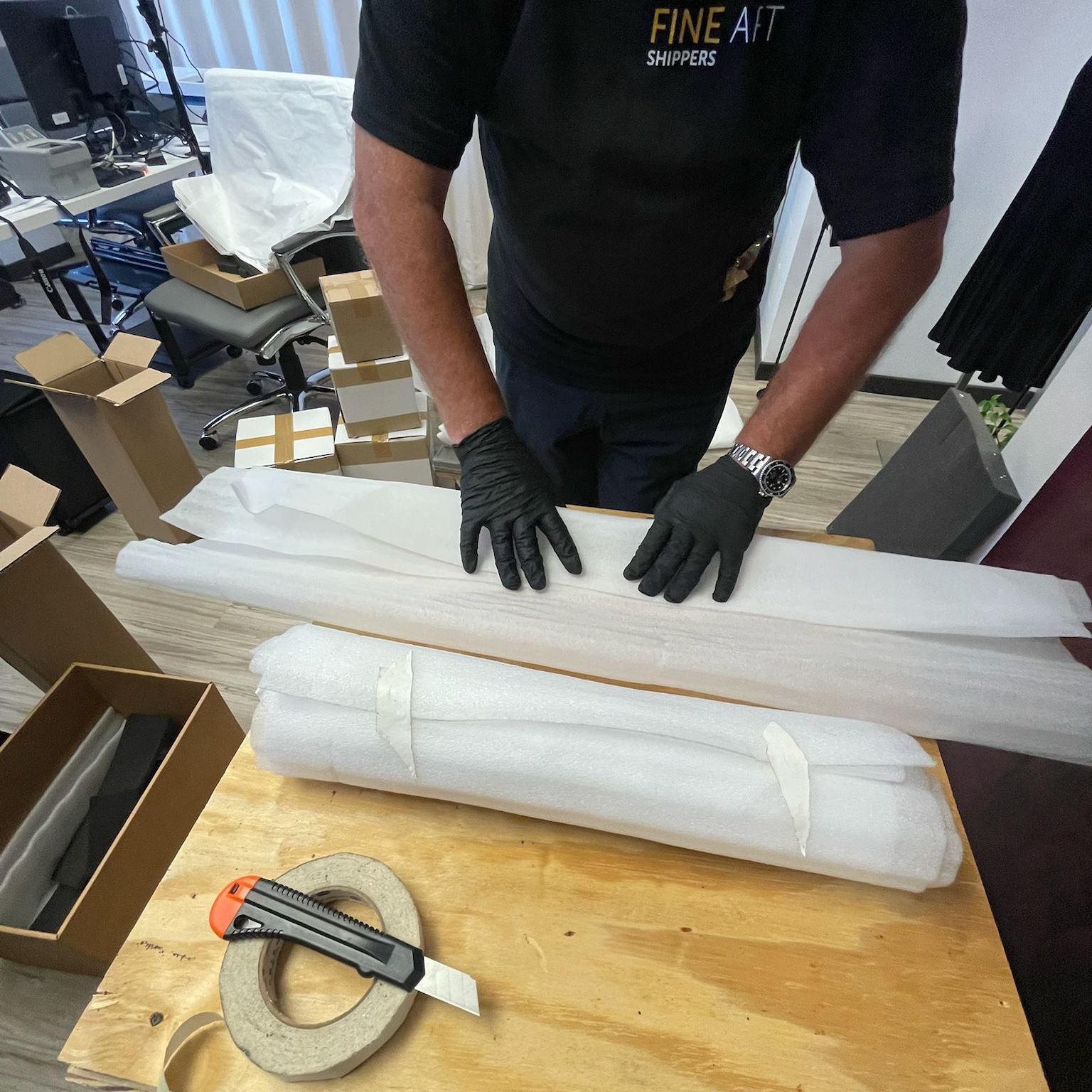
Packing artwork has nothing to do with ordinary household item packing. Whether you’re packing an old painting or a fragile sculpture, you must be aware of the irreversible damage it may suffer from seemingly harmless materials. Experts point out that wrong packing choices may be as destructive as a bad fall. So, what materials should never be used to pack art? Use the checklist below to avoid these errors.
What Materials Should Never Be Used to Pack Art?
Routine objects you have at your disposal may seem to be a good packing option, but in reality, they aren’t. Your effort to save money and time may result in severe art damage, which even professional conservators will fail to repair. Let’s see which materials represent the worst packing choices for art.
Newspaper and Magazine Pages
Everyone has a couple of old newspapers or magazines at home. The temptation to use them as the first wrapping layer for art may be high, but the risk for art goes far beyond smudging. Newspapers and magazines use acidic paper and paint, making them the most chemically unstable material. Thus, these materials will hardly offer any protection to your artwork, causing acid migration onto art surfaces and potential discoloration and degradation.
Acidic Wrapping Paper
Not all wrapping paper is created equal; only archival-grade tissue paper is acid-free and pH neutral, being safe for art. Using non-archival paper is very dangerous because of the high risk of chemical reaction. You can use it only for filling the empty space in the box after careful wrapping of the art object into safe paper layers.
Wax Paper and Plastic Sleeves in Direct Contact with Artwork
Wax paper looks clean and neutral, but it can stick to the artwork’s sensitive surface and cause damage. Experts caution that the first layer of packaging that comes in direct contact with the art object’s surface should always be non-adhesive, acid-free, and breathable.
Not Sure How to Pack Art? Consult Experts
Are you still unsure about what materials should never be used to pack art? Follow the golden rule of using only archival-grade materials to pack art if you’re sincerely interested in safe art travel or storage. Yet, there are notable differences even in this category of materials; consult conservators to choose the right packing strategy for a valuable object without doing the dangerous guesswork.