

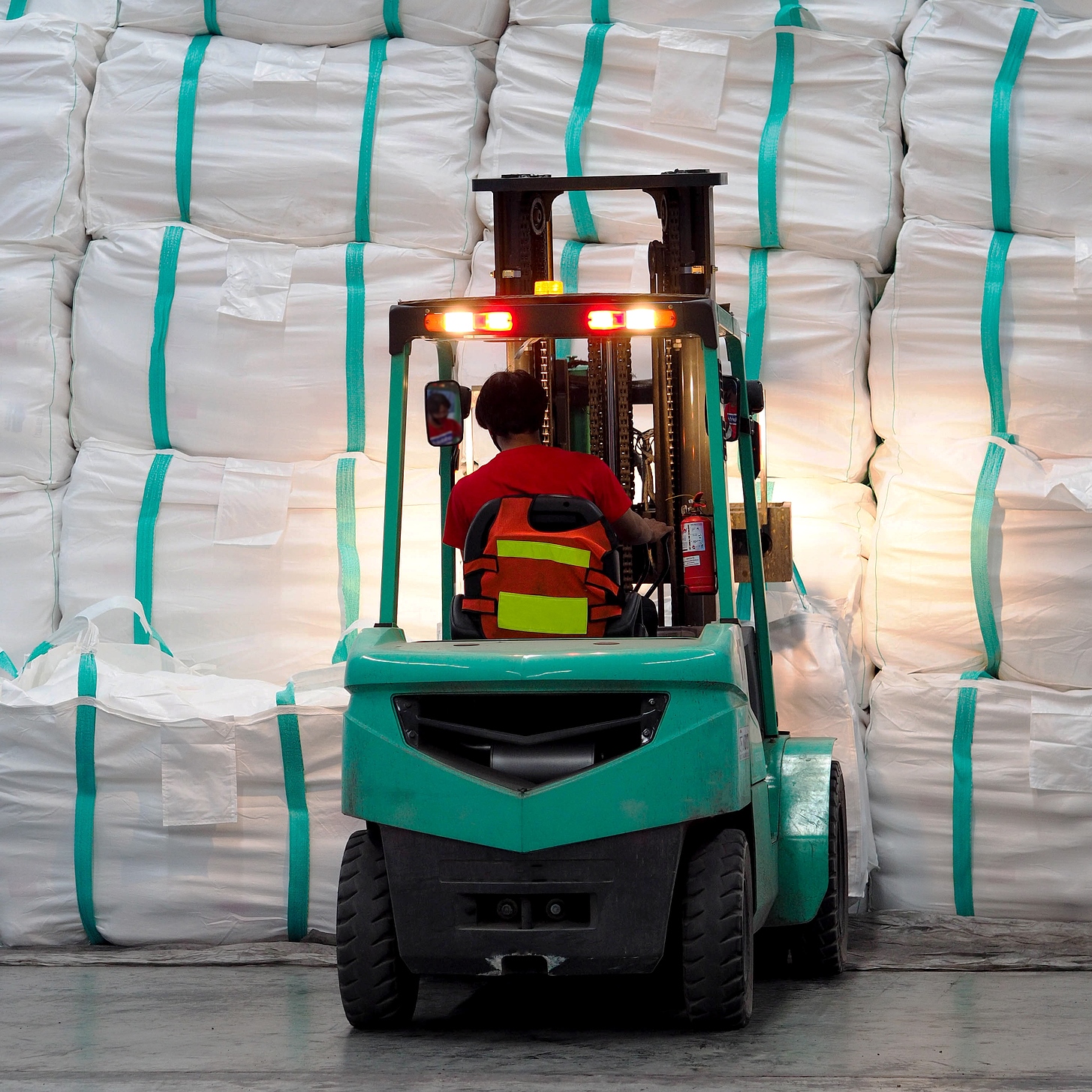
If you work in logistics, agriculture, or industrial packaging, you have likely come across both terms: big bags and bulk bags. In practice, they are used interchangeably and for good reason. But understanding the distinction can help you make more informed decisions when selecting the right packaging for your product and supply chain.
What are big bags?
Big bags are large, flexible containers made from woven polypropylene (PP). They are also known as FIBCs (Flexible Intermediate Bulk Containers). Designed to safely package, transport, and store large volumes of bulk goods, big bags are fitted with lifting loops for handling by forklift or crane. They vary in size, load capacity, and configuration, for example, with liners for moisture protection or ventilation strips for perishable products.
Big bags are used across a wide range of industries, including food, animal feed, and non-food applications. They are available in multiple types to match different products and conditions.
Key characteristics of big bags:
- Made from woven polypropylene, sometimes with a coating or inner liner
- Designed for bulk products such as grains, sand, minerals, or chemicals
- Built for storage and transport
- Available in a wide range of configurations (ventilated, food-safe, conductive, and more)
What are bulk bags?
A bulk bag is, in essence, another name for the same type of product: a large, flexible sack for bulk materials. Like big bags, bulk bags are FIBCs used to transport or temporarily store large quantities of loose material, such as powders, granules, or grains.
In the international packaging industry, the term "bulk bag" is often used as a broad, generic label, while "big bag" is equally common. Many sources treat them as direct synonyms. Terms like bulk bags, big bags, FIBCs, jumbo bags, and super sacks all refer to the same core concept: a flexible bulk packaging solution.
Difference in use and context
The distinction between the two terms is primarily one of language and regional preference, not technical specification.
Big bags are the more common term in European markets and in agricultural and logistics contexts.
Bulk bags tend to be used as a more industrial or technical term, particularly in English-speaking markets such as the United States.
In short, bulk bag and big bag refer to the same product. The difference lies in the terminology and regional or industry preference, not in the product itself.
Are there any technical differences?
No. There is no fundamental technical or functional difference between big bags and bulk bags. Both are FIBCs, manufactured from comparable materials for comparable applications. Specific design characteristics such as capacity, coatings, liner type, loop configuration, or special features are determined by your application, not by which name you use.
Want to know more?
Whether you call them big bags or bulk bags, choosing the right configuration for your application is what really matters, whether that is for animal feed, food-grade products, or non-food bulk materials. At NNZ, you will find a comprehensive range of big bags with detailed specifications and application guidance.