

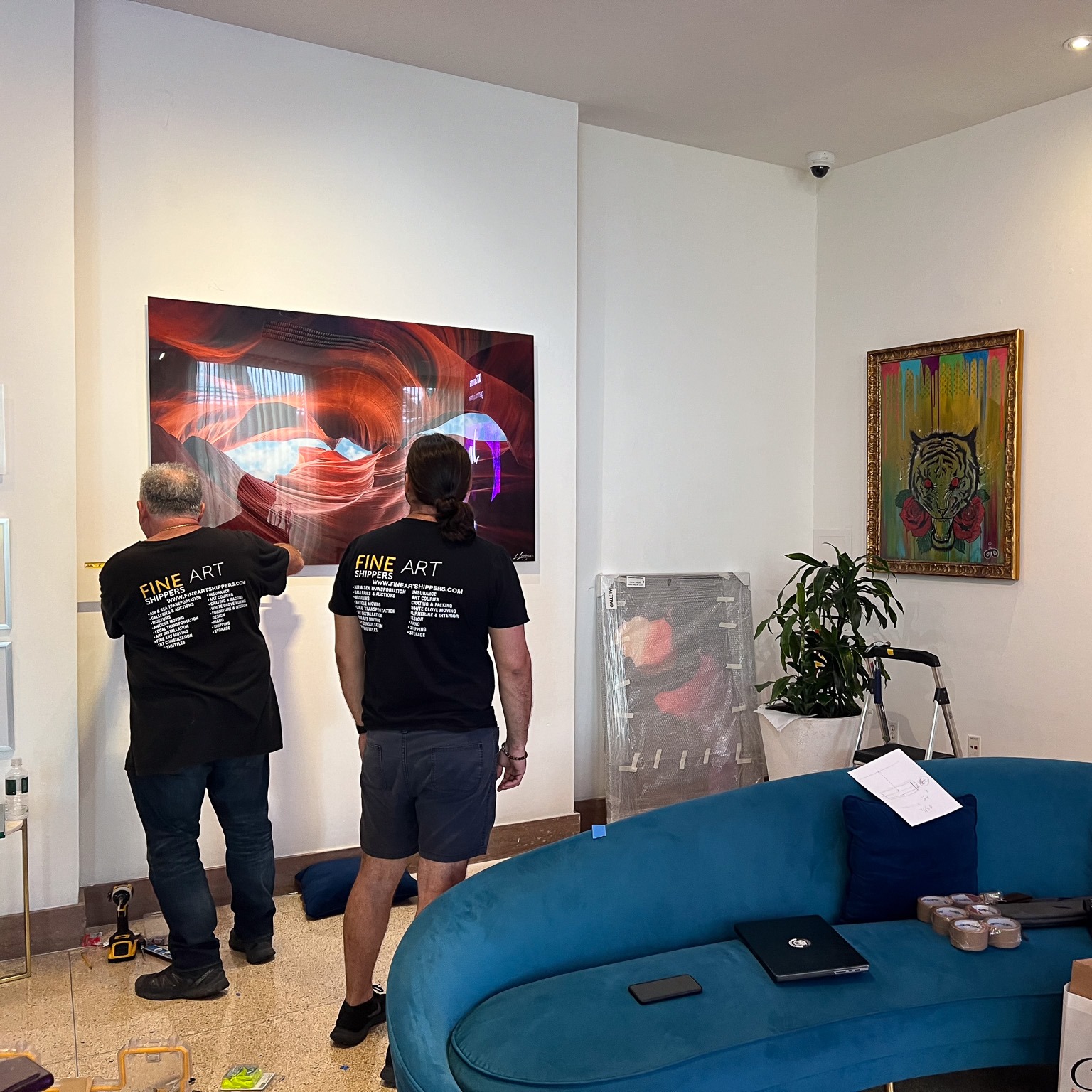
Installation is the final stage of an artwork’s preparation for public viewing. Any small oversight at this phase can undermine the artist’s intention and diminish the aesthetic impact of the exhibition. A label placed at the wrong height, a shadow across a canvas, or a plinth that wobbles may seem like minor issues, but they can negatively affect the visitor experience. Following a professional exhibition installation checklist helps ensure everything is in place and prevents costly mistakes.
Two Weeks Before the Installation
At this stage, the list of artworks is usually finalized, and you know the dimensions and media of each piece, making it possible to begin detailed planning. Create a floor plan showing the placement of every artwork, then print it and review it on-site to verify your measurements. Source and test all hanging hardware in advance so that everything is ready when installation begins. It is also a good idea to confirm wall conditions, ceiling heights, and electrical access before the installation team arrives.
The Delivery Day
Review each artwork’s condition report during unpacking and compare it with its current condition to ensure nothing has been damaged in transit. Keep all packing materials, carefully labeled by artwork, in a dry storage area away from the gallery floor. Allow all artworks to acclimatize for at least 24 hours before hanging, especially if they have traveled through different climate zones.
Artwork Hanging
Check the hanging hardware on the reverse of every artwork to ensure it is secure and in good condition. Replace any loose or rusted fittings to avoid accidents. Establish a consistent center line before hanging begins and follow it throughout the gallery. Measure the spacing between artworks and keep it uniform to create a balanced presentation. A laser level is an invaluable tool for aligning multiple works with precision.
Lighting
Lighting is another essential element of any exhibition installation checklist. Position spotlights at roughly a 30-degree angle from vertical to minimize glare while avoiding deep frame shadows. Evaluate each artwork from different viewing angles, including the gallery entrance, to ensure the intended visual effect. Finally, make sure no artwork is exposed to direct sunlight at any time of the day, as ultraviolet light can permanently damage sensitive materials.
Labels and Text: A Neglected Point in the Exhibition Installation Checklist
Consistent label placement is an important contributor to a successful exhibition. A common practice is to position labels about six inches to the right of each artwork, with the top edges aligned at a consistent height. Use the same font, margins, and formatting throughout the exhibition to create a professional appearance. An introductory wall panel should also be installed at a comfortable reading height with adequate lighting so visitors can easily access essential information.