

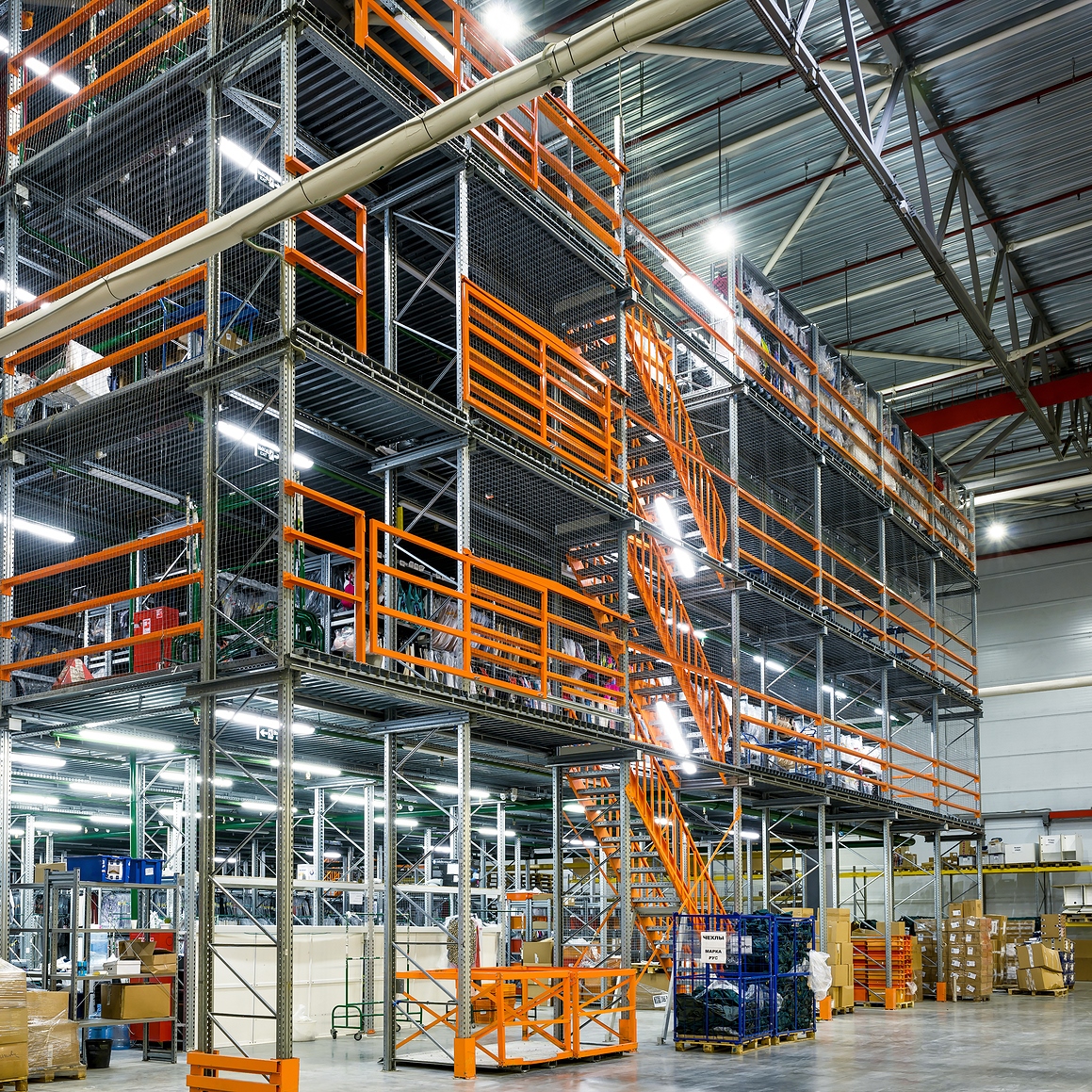
Ever walked through a warehouse and thought, "There's got to be more room somewhere"? You're not alone. Most warehouse managers face this exact problem daily. The good news? You might already have the solution right above your head.
Looking Up Instead of Out
Here's the thing about warehouses. They're tall for a reason. But most businesses only use the floor area, leaving all that vertical space completely wasted. It's like buying a two-story house and never going upstairs.
That unused height represents serious potential. While your competitors are hunting for bigger buildings or cramming inventory into every corner, you could be thinking vertically. The solution involves creating additional floors within your existing structure, essentially building upward instead of outward.
What Actually Happens When You Add Levels
Picture this: you walk into your warehouse on Monday morning, and suddenly you have twice the storage area. Same building, same footprint, but now there's a whole new level for operations.
The transformation is pretty straightforward. Engineers assess your building's structure, then install a secondary floor system that creates usable area above your current operations. You're not just adding shelving. You're adding an entirely new floor where people can walk, store items, and conduct business.
But here's where it gets interesting. This isn't just about cramming more stuff into the same building. Smart businesses use the upper level for lighter items or administrative functions, while keeping heavy inventory at ground level. It's all about working with physics, not against it.
The Math That Makes Warehouse Owners Happy
Let's talk numbers for a second. Say you have a 10,000 square foot warehouse. Adding a second level could give you close to 20,000 square feet of usable area. You've essentially doubled your capacity without paying for new real estate, moving costs, or additional utilities for a second location.
The financial benefits go beyond just more room. You're maximizing the rent or mortgage you're already paying. Instead of that money covering just ground-floor operations, it now supports two levels of activity. To be honest, it's one of those solutions that seems almost too simple.
Real-World Applications That Actually Work
Different industries use these additional levels in creative ways. Some companies put their picking operations upstairs while keeping bulk storage below. Others move their packaging and shipping prep to the upper level, creating a natural workflow from storage to fulfillment.
The thing is, this approach works particularly well for businesses dealing with mixed inventory sizes. Heavy pallets stay on the ground floor, where forklifts can handle them easily. Smaller, lighter items get stored upstairs, where staff can access them quickly for order fulfillment.
Getting Started Without the Headaches
The process starts with a structural assessment. Engineers need to confirm that your building can handle the additional load. This part's a bit technical, but most modern warehouses were built with enough structural capacity to support additional levels.
Planning becomes crucial here. You'll want to think about how people and products move between levels. Staircases, lifts, and even conveyor systems all factor into the design. Companies specializing in mezzanine floors for industry can walk you through options that fit your specific operations and budget.
The installation typically happens in phases, so you don't have to shut down completely. Most businesses keep operating on the ground level while construction happens above.
Why This Beats Moving Every Time
Moving warehouses costs serious money. New lease deposits, moving equipment, updating addresses, retraining staff on new layouts. Then there's the downtime while everything gets relocated and reorganized.
Adding vertical levels sidesteps all those headaches. You stay in your familiar location, keep your existing relationships with local suppliers and customers, and avoid the massive disruption of relocating. Plus, your staff already knows the building layout, which makes the transition smoother.
The truth is, most warehouse expansion problems can be solved by simply using the room you already have more effectively. Sometimes, the best solutions really are right overhead.