

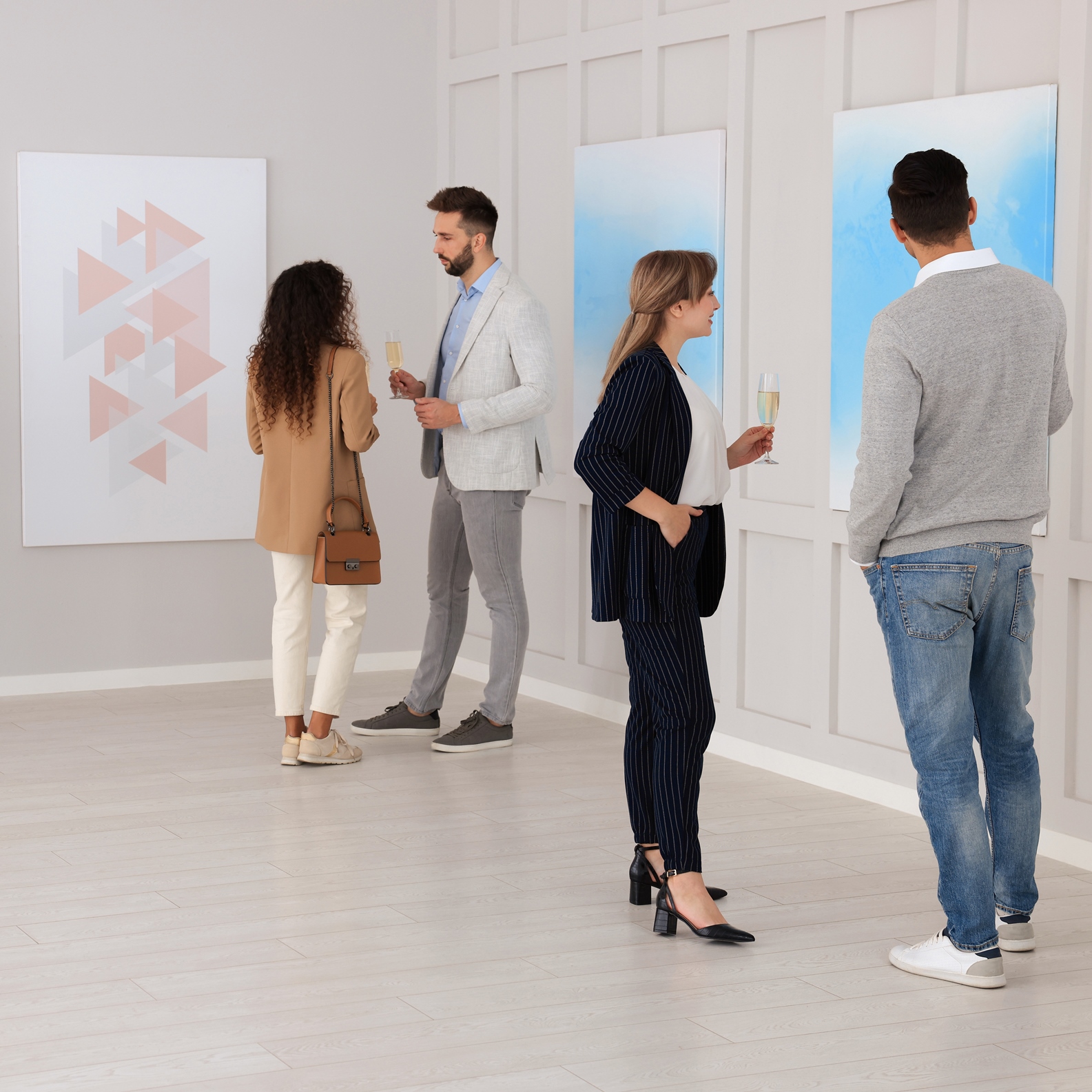
A successful art exhibition is rarely defined by the artwork alone. The work is the reason people arrive, but thoughtful details shape how visitors experience and remember the event.
Visitors notice different details, from the lighting and artwork placement to conversations with artists and welcoming staff.
For galleries and artists, these details do not need to be extravagant. Often, the most memorable touches are practical, thoughtful, and consistent with the character of the show.
Arrival Sets the Tone
The visitor experience begins before guests enter the gallery, with invitations, street signage, and greeters.
A clean arrival area helps people settle in. Simple check-ins, clear name tags, and a dedicated table for catalogs can prevent crowding.
For larger exhibitions, directional cues like a floor plan, a short curator’s note, or a simple sign directing visitors to the main rooms and amenities can make navigation easier.
Wall Text Should Support, Not Distract
Labels and wall text can add meaning, but they should not compete with the work. A good label answers basic questions quickly: artist, title, year, medium, dimensions, and sometimes price or availability.
Longer texts can be useful for conceptual or historical context. However, if the writing is too dense, people will skip it; the main idea should be clear in a few lines.
A practical approach is to create layers of information. Basic labels can remain short, while a printed handout or QR code can offer more background. This keeps the physical space uncluttered while giving serious viewers more to explore.
Clear, conversational artist statements are also more effective than abstract ones, helping visitors better understand the artist’s intentions.
Lighting and Flow Influence How People Look
Lighting affects both the appearance of the artwork and the pace of the room. Harsh lighting can flatten subtle surfaces, while uneven lighting can make parts of an exhibition feel neglected. Each work deserves adequate space and light.
Flow is just as important. Crowded displays can overwhelm visitors, while benches and open wall space create natural pauses for viewing individual pieces and exploring thematic connections.
Printed Materials Give the Exhibition a Longer Life
A visitor may spend only an hour at an opening, but a printed object can keep the exhibition in mind for weeks. Postcards, small catalogs, checklists, and artist cards all help extend the experience beyond the gallery.
The key is usefulness. A beautiful postcard may end up on a desk or studio wall. A compact checklist can help collectors remember which pieces they saw. A small catalog can document the show for press, curators, and future opportunities.
Printed materials also help artists create a record of their practice. For emerging artists, even a simple folded handout can become part of a professional archive.
The design does not need to be elaborate. It should feel connected to the exhibition and provide information people may want to keep.
Thoughtful Takeaways Can Start Conversations
Not every takeaway has to be a catalog or postcard. Some exhibitions lend themselves to objects that feel more personal or playful, especially when the show involves design, fashion, illustration, street art, pop culture, or community-based work.
The most effective items are connected to the concept of the exhibition. For example, a textile artist might offer a small fabric sample card, while a printmaker could create a limited-edition bookmark.
Wearable merchandise can also suit exhibitions featuring illustration, photography, or graphic design. For example, artists can turn selected colors, patterns, or artwork into custom socks from SockPrinter, giving visitors a practical keepsake that extends the exhibition experience.
The goal is to offer a tangible reminder connected to the art, rather than turn the exhibition into a gift shop.
Staff Presentation Matters More Than People Realize
At openings and art fairs, staff and volunteers often become part of the visual experience. They answer questions, direct traffic, manage sales, and help keep fragile works safe.
A consistent staff presentation can make a busy event feel more organized. This might mean simple name badges, a shared color palette, or coordinated attire. It should be subtle enough to avoid distracting from the artwork, but clear enough that guests know who can help them.
Good staff visibility also supports security. When artwork is being moved, packed, or monitored, guests are more likely to respect boundaries if the event team is easy to identify.
Packing, Transport, and Timing Shape the Mood Behind the Scenes
While visitors don’t see the logistics behind an exhibition, they feel the tension of late deliveries or rushed installations.
Planning transport early is one of the simplest ways to protect the show. Works should be measured, documented, packed appropriately, and scheduled with realistic timing. Fragile pieces, framed works, sculptures, and large canvases each require different handling considerations.
It is also helpful to create a checklist for installation day, including tools, hanging hardware, gloves, labels, lighting notes, condition reports, and contact details.
Digital Follow-Up Keeps the Conversation Going
After an exhibition opens, the experience should not disappear. A short follow-up email, a few installation images, and thoughtful social media posts can help maintain interest.
This follow-up is especially useful for collectors who attended but were not ready to make a decision. A brief message with images, available works, opening hours, and artist information can be enough.
For artists, documenting the exhibition is also part of career development. Installation photos, press mentions, and visitor engagement can later support grant applications, portfolio updates, and future exhibition proposals.
The follow-up should remain informative and considerate rather than overly promotional.
Conclusion
Memorable exhibitions are built through care. Lighting, labels, printed materials, visitor flow, staff presentation, transport, and follow-up all contribute to the way people experience the art.
Thoughtful planning removes distractions and allows the artwork to shine. When each small element feels intentional, visitors are more likely to stay longer, ask questions, remember the show, and share it with others. The exhibition becomes more than a scheduled event; it becomes a lasting experience.