

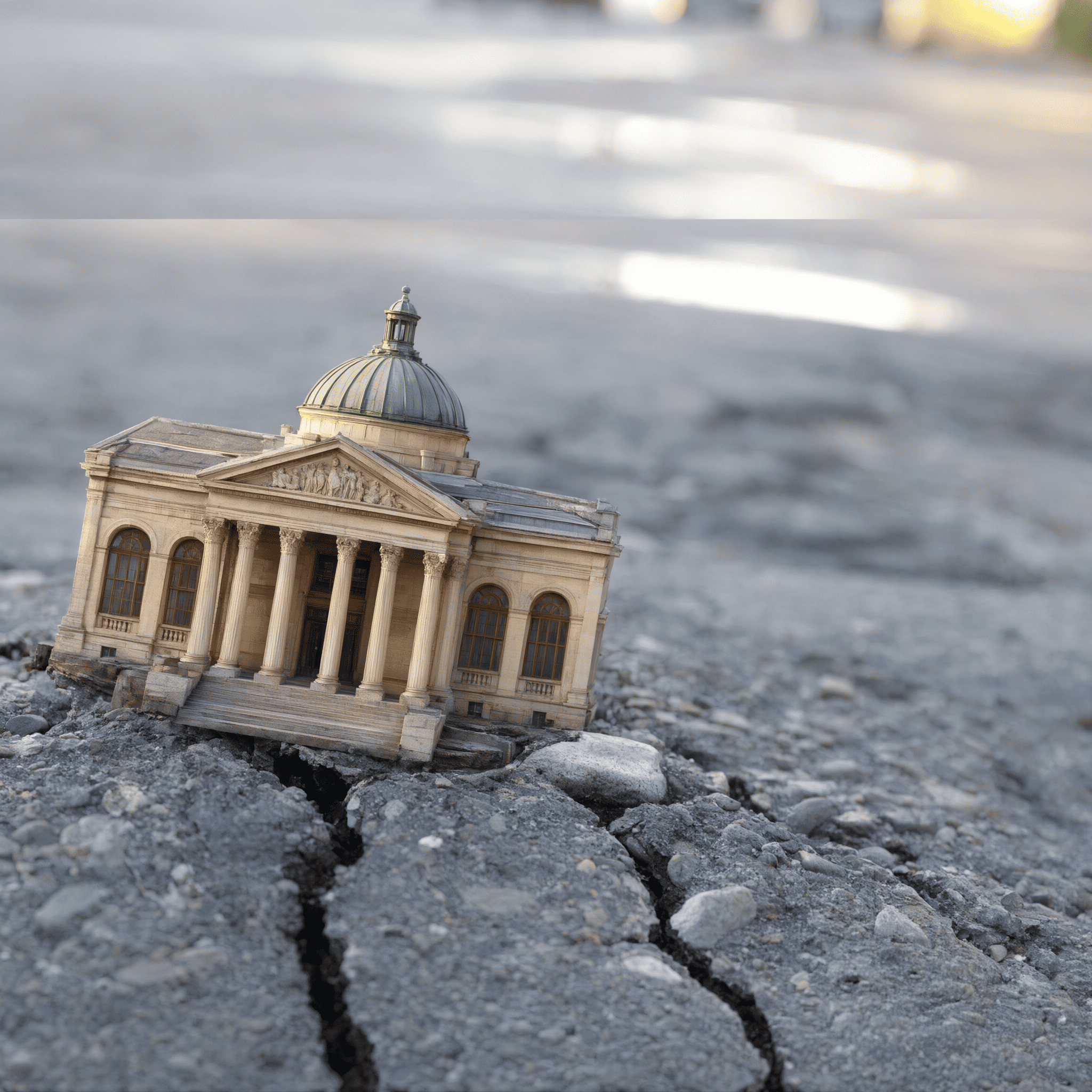
Some of the world’s greatest collections are located in the most earthquake-prone places. Examples include the Getty Museum, which perches in the hills above Los Angeles, in a region affected by the San Andreas Fault system. Museums in Istanbul are located in a region affected by the North Anatolian Fault. Japan’s national museums in Kyoto and Tokyo, as well as Mexico City’s art institutions, also operate in areas where seismic activity requires additional measures. Each of these museums requires extra solutions for seismic protection for artwork, which we explore in this article.
Equipment and Testing for Seismic-Proof Artwork Storage
Effective seismic protection for artwork requires specialized equipment and careful engineering. It can rely on isolation platforms, custom-fabricated mounts, museum putty or microcrystalline wax for small objects, tensioned cables for hanging art objects, and reinforced vitrines. Art institutions in seismically active regions may test equipment with shake-table tests that simulate earthquake motions to evaluate how the systems respond and how much movement or impact they can withstand.
How Seismic Protection for Artwork Works
Seismic protection generally relies on three main strategies:
- Earthquake proofing is used to ensure that an object and its mount are adequately secured to withstand shaking without failure.
- Seismic damping absorbs and dissipates seismic energy with the help of weighted, cushioned, or engineered materials incorporated into an artwork’s mount or base.
- Seismic isolation is a more advanced strategy that physically separates the artwork or display system from some of the movement of the shaking floor or pedestal, reducing the transfer of seismic forces to the object.
In practice, however, art institutions often combine these options into a single strategy to provide comprehensive protection. Paintings can be secured to walls with earthquake-rated hardware and cleats that help prevent swinging and falling. Sculptures and ceramics can be fitted with custom, discreet mounts adjusted to the object’s shape, keeping three-dimensional art securely anchored to its pedestal. Freestanding pedestals can also be bolted to the floor or weighted at the base to reduce the risk of tipping.
One of the most advanced protective approaches is a base isolation system beneath a pedestal or display case. These systems may use rail-and-bearing mechanisms or curved sliding surfaces, allowing the base to move somewhat independently of the building’s structure and reducing the seismic forces transferred to the artwork.
Why Bother with Seismic Protection?
A single strong tremor can compromise centuries of preservation efforts in a matter of seconds. Museums operating in high-risk seismic zones understand this risk and use specialized engineering, mounting, and display solutions to provide an appropriate level of protection for the art entrusted to their care.