

The institution promotes the heritage of a pioneering figure who transformed Suprematism into a visionary architectural language.
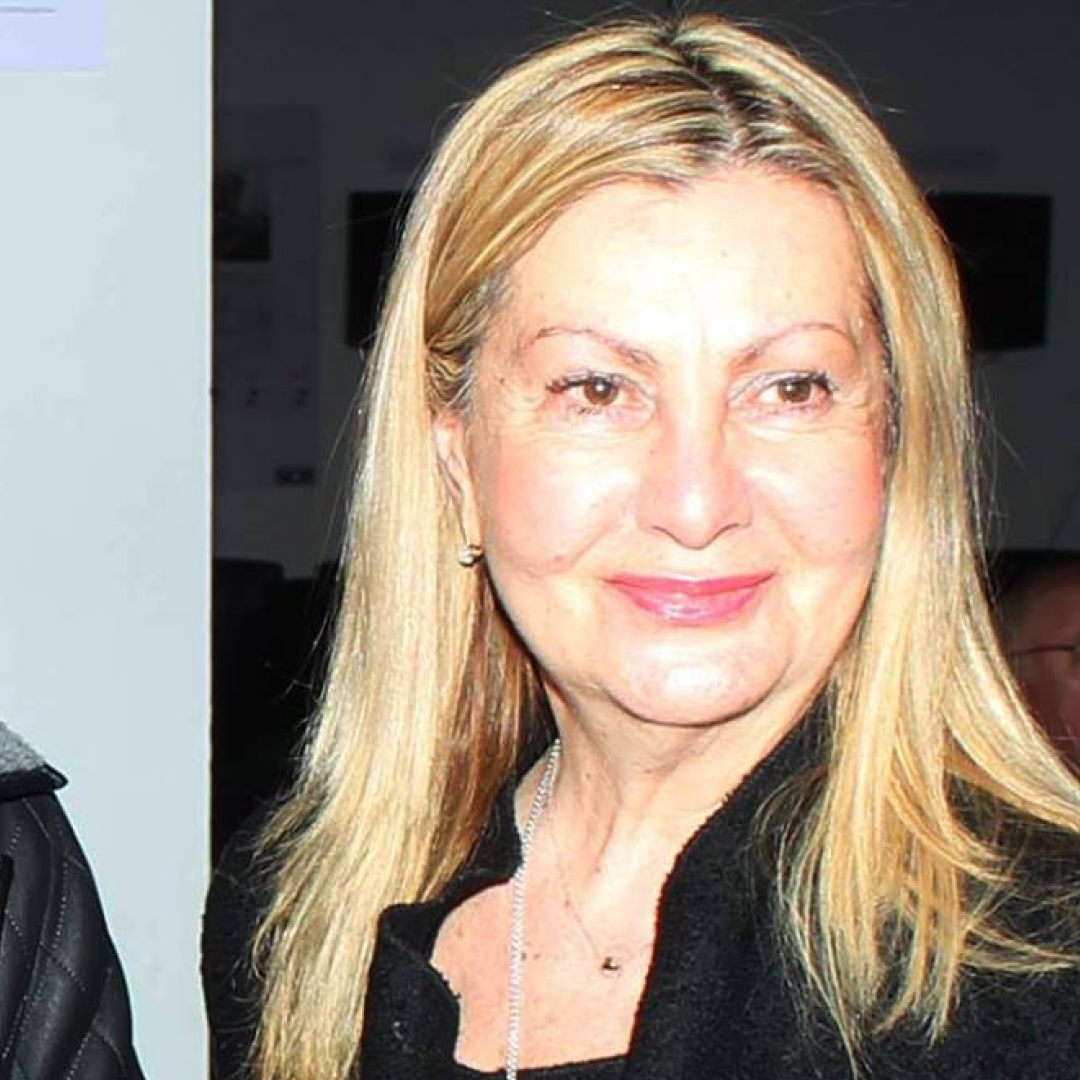
In this conversation with Fine Art Shippers, Regina reflects on her nearly three decades of cultural work in New York and discusses the legacy of Lazar Khidekel.
How did the Russian American Cultural Center begin, and what were its main goals?
Regina Khidekel: In 1998, I curated the blockbuster exhibition “It's the Real Thing: Soviet and Post-Soviet Sots Art and American Pop Art” at the F. Weisman Art Museum in Minneapolis, and the book of the same name became a bestseller and a textbook in American and European colleges. Building on the success of this comparative American–Russian research, I founded the Russian-American Cultural Center that same year as an interdisciplinary platform bringing together art, literature, theater, and film. From the start, it was about dialogue. Through our Artist Career Development program, more than forty emerging Russian and American artists had their first solo shows in New York. We encouraged experimentation and new media, helping artists integrate into the American art scene while building a space for genuine cross-cultural exchange.
After the early years, the Center’s programming became more historically and research-driven. Was that a conscious shift?
The turning point was September 11. Our gallery was located directly across from the World Trade Center, so the impact was deeply personal. We reopened in November 2001, while the area was still in recovery, with exhibitions dedicated to the tragedy. In the years that followed, we gradually shifted toward more historically grounded and research-based projects. We organized major group exhibitions and began a long-term collaboration with the Harriman Institute at Columbia University, presenting scholarly shows accompanied by published catalogues.
What led you to establish the Lazar Khidekel Society?
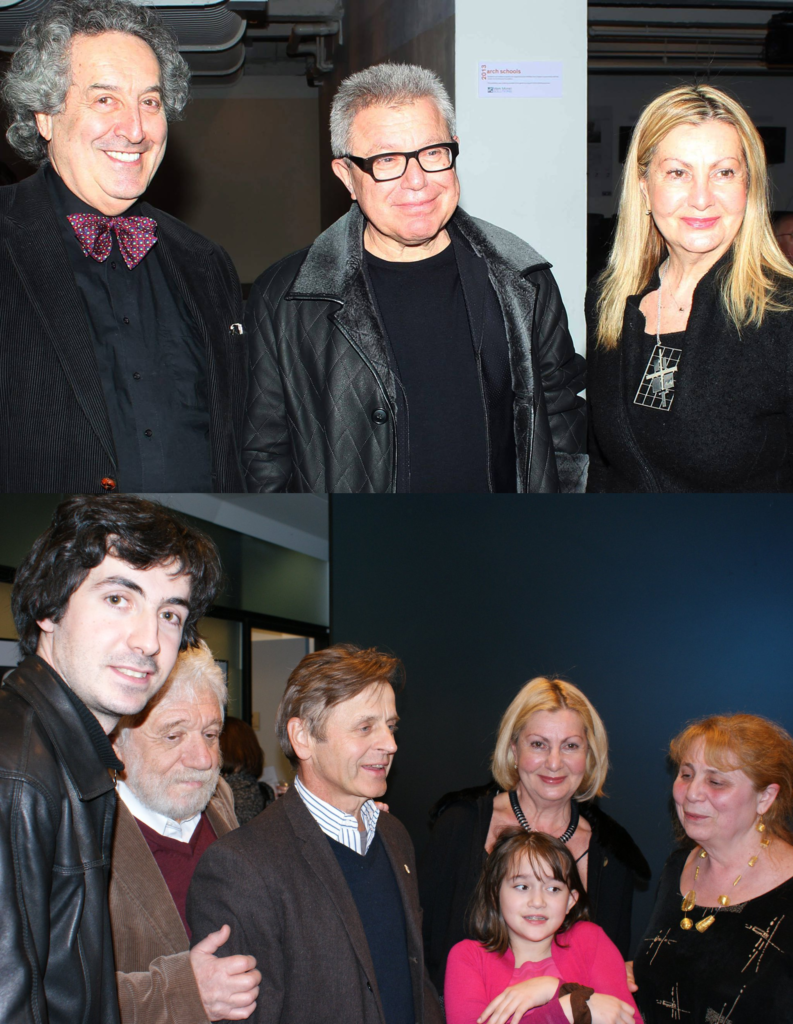
That was in 2010. By then, Lazar Khidekel's solo exhibition at Zurich's Haus Konstruktiv, where his AERO manifesto opened a century-long series of manifestos on abstract and concrete art, made it clear that our archives and collections needed to be institutionalized in a museum. My research into Lazar Khidekel’s legacy had grown into a long-term project, one that needed a dedicated framework for archival work, scholarly access, and public presentation. We established the Lazar Khidekel Society under the RACC to preserve and promote his work. That research later led to more international exhibitions and monographs, including “Lazar Khidekel and Suprematism” (Prestel, 2014). Today, the archive is open to scholars and accessible globally through Google Arts & Culture. For me, this is not only about history, but it’s also about showing how relevant Suprematism, and Khidekel’s vision in particular, remain today.
When we speak about Khidekel today, what do we need to understand about his early years and his evolution from a Suprematist painter to a visionary architect?
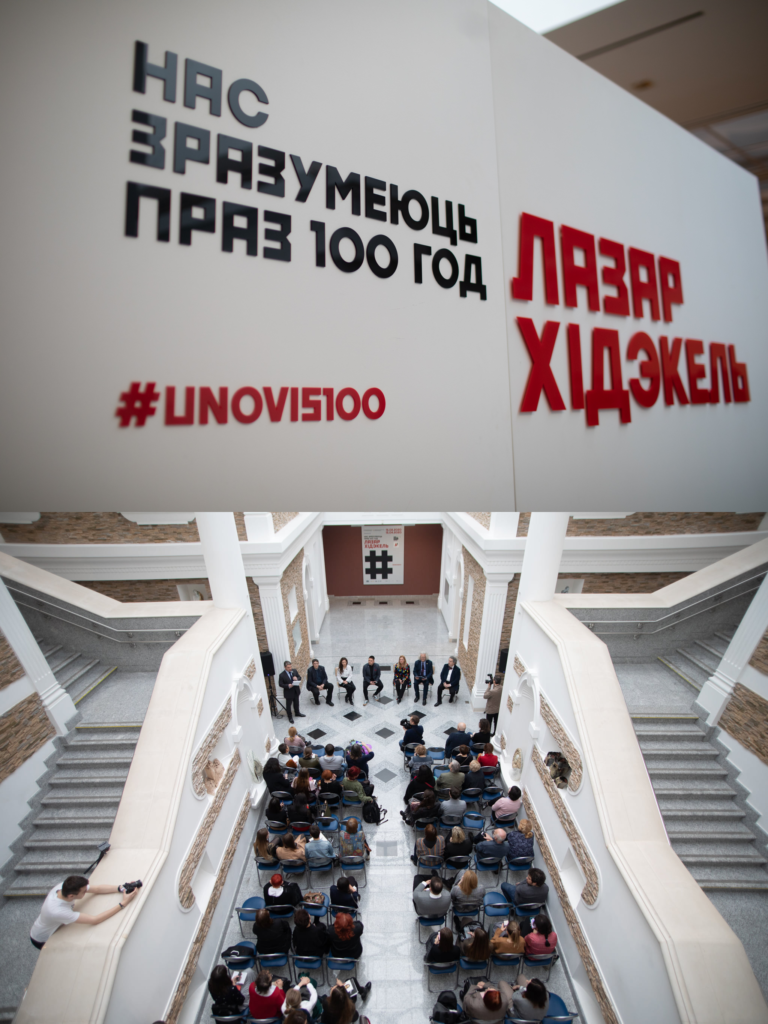
If we look at Khidekel’s path, it’s remarkable how early it began. In 1918, at just fourteen, he was selected by Marc Chagall to study at the Vitebsk Art School. There he met Malevich and El Lissitzky and soon became one of the founders of UNOVIS (the abbreviation translates as “The Affirmers of the New Art"). Alongside Ilya Chashnik and Nikolai Suetin, he was not simply a student but part of the inner circle that embraced and advanced Suprematism.
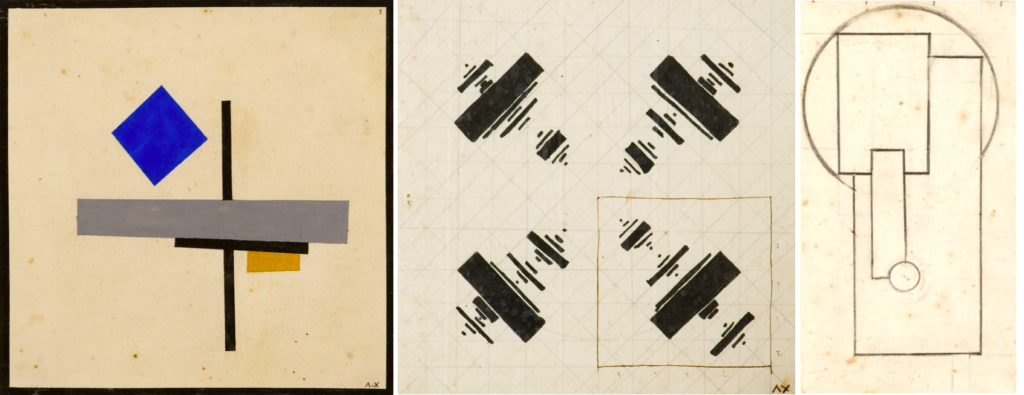
He didn’t just follow the Suprematist canon, he rethought it. Khidekel was among the first to move Suprematism from the flat surface into three-dimensional space. As scholars have noted, he was already “drawing buildings and building drawings,” translating abstract form into architectural vision. After Lissitzky left Vitebsk in 1920, Khidekel and Chashnik led the Architecture and Technical Department. From that moment, his lifelong engagement with visionary, future-oriented architecture began to take shape.
In 1922, Lazar Khidekel moved to Leningrad with Kazimir Malevich. That same year, Malevich founded GINKhUK (the Institute of Artistic Culture), where Khidekel led the studio of architecture and architectural volumes, a major line of his work. At the same time, he studied at the Petrograd Institute of Civil Engineers, one of Russia’s strongest professional schools. Believing Suprematism to be the most radical stage of the avant-garde, he sought rigorous architectural training to bring its ideas into real construction.
After graduating, he collaborated with professors A. Nikolsky and G. Simonov, introducing Suprematism into academic architecture. Art historian Selim Khan-Magomedov later defined this direction as the Suprematist Constructivism of the Leningrad school, which shaped the city’s mid-1920s architecture. Simultaneously, Khidekel developed visionary projects of future cities. Unlike the semi-fantastical utopias of the time, his concepts envisioned a planetary scale and anticipated directions contemporary architecture is still working to realize.
How is Lazar Khidekel’s legacy recognized internationally today, and what are your ambitions for its future?
His work has been widely presented at the Venice Architecture Biennale, including a solo presentation, “Suprematism for Humanity” based on Khidekel’s wartime work, in 2014. In 2025, his projects were shown in the Italian Pavilion, reflecting international scholarly interest in his legacy and his relevance to current architectural strategies, particularly those addressing coastal development. We preserve the Khidekel collection and archive, which are unique and worthy of becoming the foundation of a Museum of Eastern European Art based on Lazar Khidekel legacy in New York or elsewhere.
Ultimately, funding determines what is possible. Our main challenge is the lack of a permanent space that can fully function as a museum. This is not just about exhibition galleries. We also need proper storage and a research center where scholars and doctoral students can work with the archive in a structured way. We try to remain open to everyone, but without dedicated facilities, it becomes difficult to host viewings, lectures, and discussions. Our work goes far beyond displaying art; it is about interpretation, guidance, and continuous education. That is why we emphasize the uniqueness of our collection and archive, which reflect not only the history of the Russian avant-garde but, more broadly, Eastern European modernism.
Apart from your work promoting Lazar Khidekel’s heritage, what does the Russian American Cultural Center focus on today?
In many ways, we remain the only institution of this kind today. Over the years, there have been numerous initiatives in New York related to Russian art, but most were short-lived and often created for utilitarian purposes, primarily fundraising.
Today, we focus on exhibitions and film festivals, with cinema playing a particularly important role in our work. We present works by Russians living and working in Israel, the United States, and across Europe. At one point, our festival was even called the Israeli-Russian Film Festival, where we introduced an entire generation of talented young directors who later became established voices. We continue to show their films. Last year, for example, we screened a powerful and subtle work “My Neighbor Adolf” by Leon Prudovsky — and we are expanding the program to include films where émigré experience remains central.
Our website has become an archive of Russian cultural emigration, tracing its history online since the late 1990s, when the internet was still in its infancy. As one of the first platforms of its kind, it has gathered a substantial body of material over the years. Today, when someone searches for information about an émigré artist or writer, they often find themselves at the Russian American Cultural Center.
What new projects are you currently working on?
Currently, we develop the exhibition project “Suprematism, Khidekel: Three Generation” that will be shown in Paris in April. At the end of this year, we will open a new exhibition at the Harriman Institute. The project is rooted in my experiences in Paris in the early 1990s, when I became immersed in the Russian émigré art scene and met a number of remarkable artists. One of them was Vladimir Kotlyarov, a radical and independent figure associated with avant-garde practices, particularly mail art. His journal “Muleta” became a unique platform that brought together experimental voices outside the major Parisian émigré publications. That vibrant and often confrontational cultural environment left a deep impression on me, and today I see it as an important yet underestimated chapter in the history of nonconformist Russian émigré art. This more intimate exhibition will revisit that moment.
Beyond exhibitions, we continue to develop a strong literary program that is widely respected. For many writers and poets, participating in our events is a mark of recognition. We present new books, introduce emerging authors, and over the years, a number of writers gained their first meaningful visibility through our platform.
Interview by Inna Logunova
Photo courtesy of RACC