


For years, freight negotiation was built on relationships, gut instinct, and whatever rate a shipper paid last month. That approach is becoming expensive.
Today, successful shippers like https://igtfreight.com/ don’t guess what a lane should cost. They use freight indices to benchmark contract rates against real-time market data. And that shift is changing how carriers and brokers respond to pricing discussions.
If you want to understand how modern freight negotiation actually works, this article offers a clear view of how data-driven logistics providers help shippers move beyond outdated pricing models. Because when both sides negotiate from the same index data, the conversation changes entirely.
The Market Has Shifted – And Many Shippers Haven’t Noticed
Truckload spot rates have sat below contract rates for roughly three and a half years – an unusually long inversion that has tilted negotiating power in shippers' favor. More shippers now value carrier reliability and consistent service above minor price savings. For anyone still relying on instinct instead of index-based benchmarks, this extended period of leverage seems to be running its course.
That is not a small trend. Three and a half years of inverted pricing is historically unusual. Spot rates hovering below contract rates for that long means carriers have been operating under pressure. And when that cycle reverses – which it always does – shippers who ignored index data will find themselves locked into above-market contracts or struggling to find capacity.
What Freight Indices Actually Measure
A freight index is not complicated, but it is powerful.
Indices like DAT and Cass aggregate real transaction data from thousands of loads. They show what shippers are actually paying per mile on specific lanes, not what carriers hope to charge. That gives you a factual baseline.
Without an index, you negotiate blind. With one, you know whether a carrier’s proposed rate is 5 percent above market or 15 percent below it.
How Shippers Apply Index Data in Real Negotiations
Here is how this works in practice:
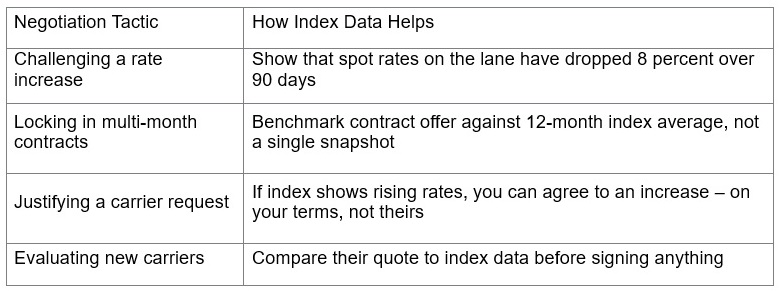
Index data does not replace relationships. It strengthens them. Honest carriers appreciate working with shippers who understand real market conditions rather than demanding unrealistic rates based on what they paid two years ago.
The Spot vs. Contract Gap Matters More Than You Think
When spot rates sit below contract rates for an extended period, many shippers make a mistake. They chase the lowest possible spot rate load by load, assuming short-term savings always win.
But that strategy ignores two things. First, spot market reliability varies widely. Second, when the market flips, those same shippers find themselves with no committed carrier relationships.
Smart shippers use index data differently. They benchmark their contract rates against spot indices to ensure they are competitive but not predatory. They pay fair rates that keep good carriers on their lanes, while avoiding inflated long-term contracts that bleed margin.
Why 2026 Is Different
According to DAT’s 2026 report, the focus is shifting from pure cost reduction to carrier stability and service reliability. That tells you something important.
Shippers have realized that saving two cents per mile means nothing if freight sits on a dock for three days waiting for a truck. Index data helps you find the balance – competitive rates that still attract quality capacity.
The Bottom Line
You do not need to become a data analyst to negotiate better freight rates. But you do need to stop guessing.
Use freight indices as your baseline. Know where spot and contract rates sit on your core lanes. Walk into every negotiation with facts, not assumptions. And work with logistics partners who expect you to come prepared.
Because the carriers you need are already using this data. The only question is whether you will too.