

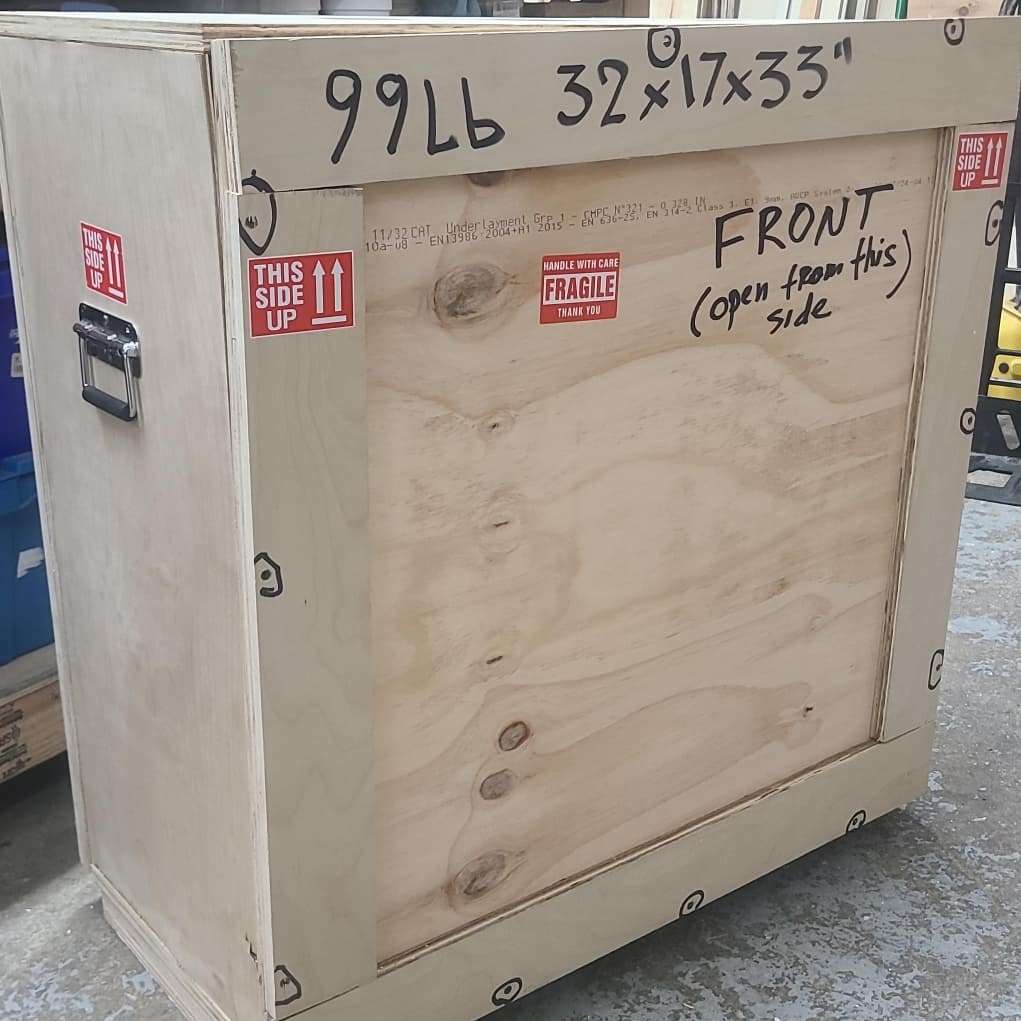
Moving a priceless painting or an old sculpture is always a risky, delicate project. For museums, it is not only about financial interests; it is about art preservation and conservation. That’s why they bear a great responsibility for the intactness of all items held in their collections. Let’s take a look at how museums crate artwork for transport to achieve an outstanding level of transportation safety.
Archival Wrapping: The First Line of Contact
The materials that touch the artwork directly are chosen with extra care. Art handlers employ museum-grade materials, including acid-free tissue paper, glassine paper, art plastic, and custom foam inserts, to ensure absolute protection. Each piece is thoroughly wrapped in multiple protective layers and cushioned to prevent abrasion, vibration, and chemical reactions. Framed works with glass also require additional precautions, including blue film placed on the glass and enforced corner protectors.
How Museums Crate Artwork for Transport
A one-size-fits-all strategy never works with crating of museum holdings. Museum-grade art handling demands a custom approach instead of off-the-shelf solutions. Custom-engineered crates are designed with internal shock-absorbing systems, custom-cut foam inserts, and precise measurements of each artwork’s dimensions. These measures ensure that the art object sits securely inside the crate and is appropriately immobilized.
Museum and traveling exhibition crates are the gold standard in museum-grade and international shipping. They allow art handlers to quickly re-crate art objects as they move between locations without the need to build a new crate every time. International crates are the most advanced and secure crating format; they are specifically designed for long journeys with numerous handling points. Such crates must pass the ISPM15 certification to avoid problems with cross-border art movement.
Climate Control: The Science Inside the Crate
Temperature and humidity are aggressive, potentially ruinous factors for art. That’s why climate control considerations always inform how museums crate artwork for transport. For many years, the recommended standard was 680F and 50% relative humidity. However, modern museum shipping standards have grown more flexible, with a 5% to 10% fluctuation as an acceptable range. Museum staff often use vapor barriers, insulation, silica gel, specialty desiccants, and smart data loggers to keep conditions inside the crate stable.
Loading and Transportation Stages
Crate loading presupposes the use of straps and protective barriers that guarantee the immobilization of art crates throughout transit. Crates are never placed at angles, which comes with a high risk of pressure distortions. Drivers, in their turn, prioritize smooth roads, favoring stability and safety over speed.