

Most losses and damage to art happen not in transit or during display. No matter how surprising it looks, pervasive damage occurs in storage, with slow and invisible decay triggered by wrong storage conditions. The good news is that the majority of risks are preventable. This guide explains how improper storage damages paintings over time and clarifies the top precautions you can take to avoid risk.
How Improper Storage Damages Paintings Over Time
The core aspect of arranging proper storage is humidity fluctuation prevention. Uncontrolled RH is the most destructive force for art; canvas, wood, and paint expand and contract at different RH rates. Artworks’ repeated exposure to stress cycles ruins their adhesion and causes cracks. A simple remedy for this problem is a calibrated hygrometer, which records humidity changes even in DIY storage rooms. By keeping RH between 45% and 55% with a dehumidifier and humidifier system, you can attain museum-grade climate control.
Light exposure is also ruinous for art. UV radiation is present in daylight and fluorescent tubes; it slowly breaks down organic pigments and yellows varnishes. Especially sensitive are red and blue colors. The main trick with light-related damage is its irreversibility; once the pigment starts oxidizing, the process becomes unstoppable even if UV exposure never repeats. A solution is to store paintings in complete darkness and use UV-blocking film on the glass covering canvases.
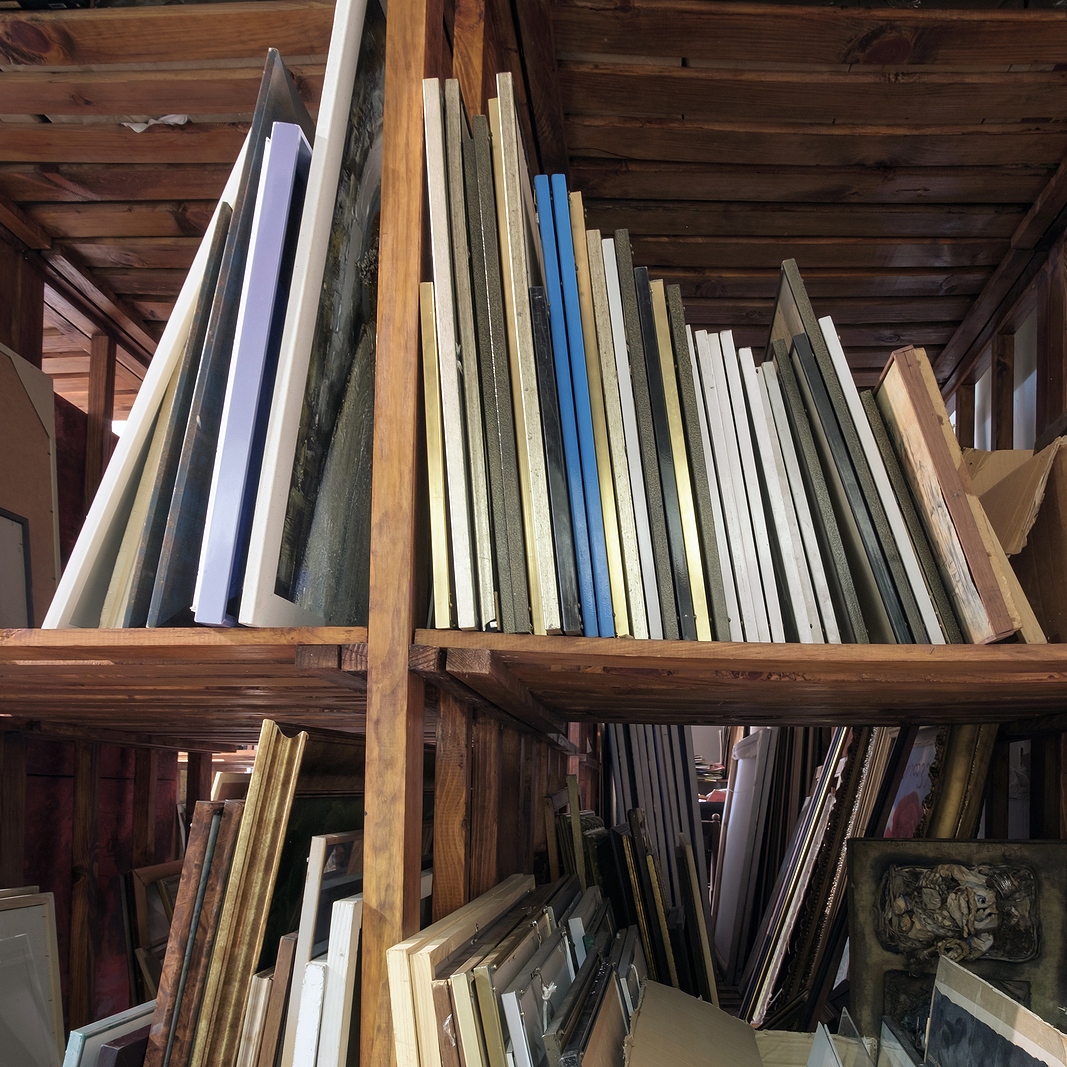
The risks of improper stacking are less probable in professional storage facilities, but art owners using DIY storage rooms repeat this mistake again and again. Storing paintings face-to-face or face-to-back without adequate padding creates pressure on the painted surface. This exposure results in physical pressure damage, with impressions emerging on the paint layer and glaze abrading. The solution is to store paintings vertically in padded slots, with acid-free foam interleaving for unavoidable face-to-face storage scenarios.
Finally, one should never forget about the biological threats of storage. Expert-level storage facilities keep pests and mold under rigorous control, but home storage solutions may be devoid of these measures. Mold colonies developing on organic art can leave permanent stains, while insects literally eat artwork, including wooden stretchers and canvas. Art owners should never store paintings in sealed plastic containers or unventilated crates and should complete regular checks to avoid moisture accumulation.
Safe Storage, a Vital Part of Art Conservation
Knowing how improper storage damages paintings over time is your clue to conservation-grade collection management. Use these tips to organize your art storage, or check these precautions in the chosen third-party storage facility to enjoy a high level of art protection.