

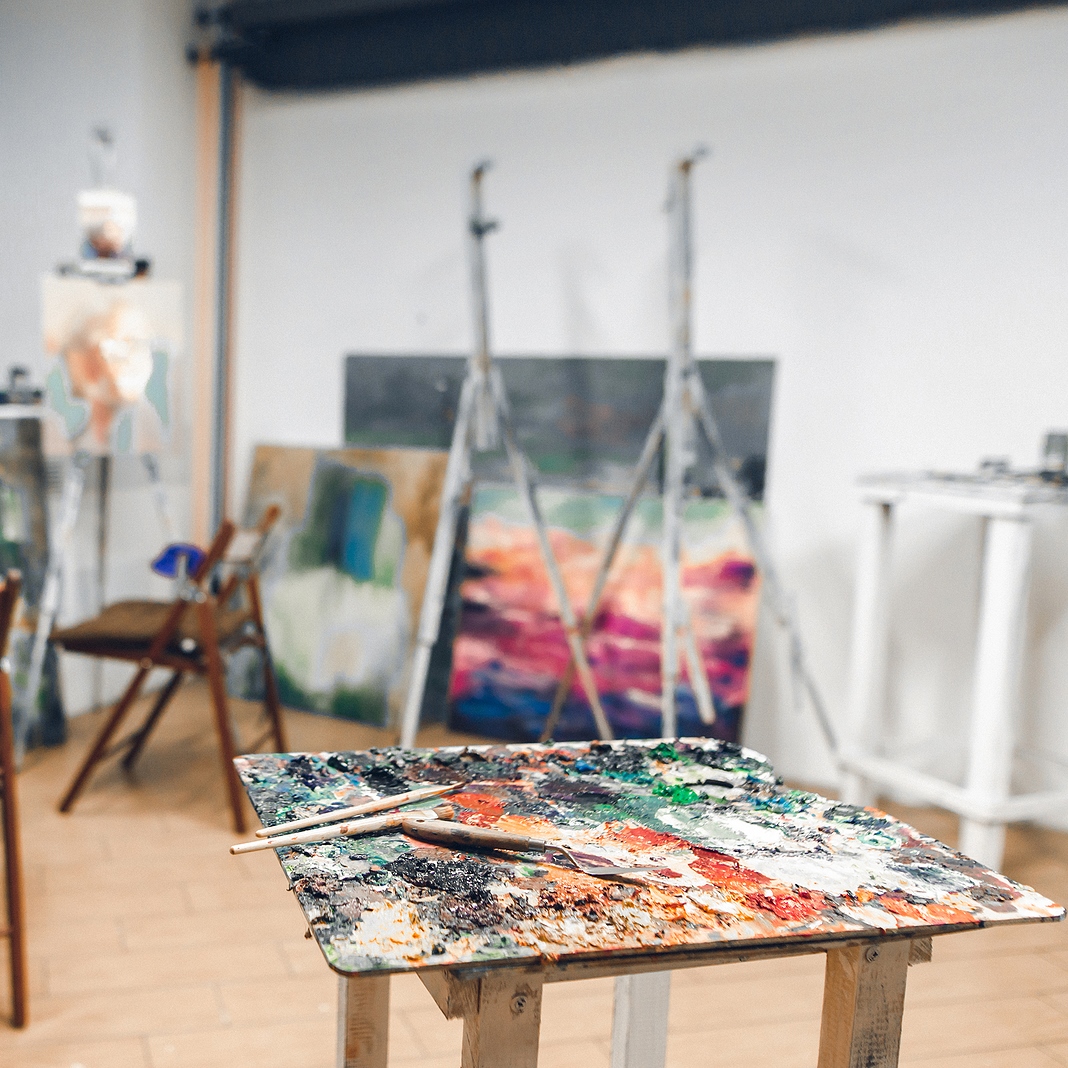
Hours upon hours go into the creation of a single piece. But once it has to move – whether it's for a student show, an off-campus gallery, or a thesis exhibition – everything that can go wrong does.
How work is packaged, protected, and presented says as much about the work as the work itself. Damaged canvases. Crooked hangs. Missing condition reports. Students notice when these details are overlooked. And so does everyone else who matters most – from gallery directors to art school accreditation reviewers.
This guide will walk students and educators through preparation for exhibition from start to finish.
Why Exhibition Prep Is Part of Art School Accreditation Review
Reviewing student exhibitions is part of the art school accreditation process.
The National Association of Schools of Art and Design (NASAD) reviews a school's exhibition program during every accreditation visit. NASAD is the only Department of Education-recognized accreditor for art schools and fine art programs in the U.S., and has over 300 accredited member institutions. This means how students handle, document, pack, and install work directly affects a school's ability to meet program quality standards.
At institutions that have rigorous art school accreditation requirements, like Rocky Mountain College of Art and Design, students build a foundation of skills around professional practices before they graduate. The professional standards for installing and deinstalling work are part of that foundation.
Presenting work professionally is a skill learned in school, which students carry with them after graduation.
Preparing Work Before It Leaves the Studio
This is where most lapses in judgment occur.
Every piece should be covered by a formal condition report before it leaves the studio. Documenting art may seem unnecessary until the work is damaged in transit. Then, a detailed condition report – complete with written documentation and time-stamped photographs – is the only proof that something didn't already arrive that way.
Condition reports should include:
- Photographs (taken under studio lighting) of the front, back, and sides of the work
- Notes on scratches, chips, warps, or other vulnerable points
- Width, height, and depth measurements
- Title, medium, date, and artist name clearly written on the back
Surfaces are the next priority. Canvas should be covered with glassine paper before anything else touches it. Never bubble wrap directly on a painted surface. Trapped moisture and oil from your hands will leave marks. Glass surfaces should have protective foam corner protectors. Sculptural works need tailored protection built around their material and vulnerability.
Speaking of vulnerability… An unprotected painting surface is more likely to be damaged in transit than a painting that's been varnished. Leave enough time before the exhibition to apply a protective varnish coat several weeks in advance of hanging.
Understanding the Risk of Art in Transit
Here's a sobering statistic: during shipment and transit, 60% of all fine art damage claims are filed. Pieces are far more likely to be damaged by moving them than during storage or display.
Why? Because packing and shipping are predictable. Pieces shift inside crates and bins. Art gets left in hot cars. Canvases are stacked face-to-face. Bedsheets are used as drop cloths. Temperatures spike inside vehicles. Materials expand and contract when brought inside.
The solution? Ship everything like it needs to survive the ordeal.
- Wrap with zero shifting inside the packaging
- Provide zero direct contact with hard surfaces
- Maintain stable temperatures throughout shipping
- Follow climate standards for fine art whenever possible (temperature: 18–22°C; relative humidity: 50–55%)
This standard applies to student artwork just as much as university collections or museum loans.
"Protect your art as if it were your kid brother or sister," advises Nancy McClure of the Nevada Museum of Art. "Pack it so that it can't move. Wrap it so that nothing touches it."
Ship everything like it matters. It does.
Packing & Crating Work for Transport
Crates are expensive. Many students can't afford to build custom crates for every exhibition.
Every packed item should include:
- Glassine paper touching the work's surface
- Bubble wrap as the final layer wrapping the work
- Foam corner protectors on corners
- A final rigid outer box to prevent any movement whatsoever
- "Fragile — This Side Up" labels on all sides of the package
Good packaging means there's nothing inside the crate that can move.
Foam-cut packaging offers the next-best solution for packing sculpture. The material is available at hardware stores. Prices are reasonable. Artwork secured in foam-cut packaging is as close to "crate-quality" as students can reasonably achieve.
Installing Work with Professional Standards in Mind
Installing artwork is not the time to experiment.
Students should know gallery wall dimensions before they arrive. Walls vary widely by building. Hanging hardware that supports 25lbs in a studio may come loose on gypsum or concrete. Know where the artwork is going, how it will be hung, and how much that hardware can support before hardware is hammered into walls.
It may seem obvious, but every student should:
- Lay out all pieces on the ground before installing
- Check that every piece hangs level
- Step back and scan the exhibition space frequently
- Never leave the work unattended until installed
Closing Thoughts
Did you know that art school accreditation reviewers look at how student work is transported?
They do, and there's a reason for it. Exhibition prep, packing, transport, and installation are measurable skills. Professional standards exist for every step of the process. Applied together, they ensure students handle their artwork as professionals do — from galleries to museums to private collections.
Preparing artwork for exhibition and transport is its own lesson. Learn it well.
Treat artwork with care. Handle it gently. Pack it tightly. Install it consciously. If students do all of these things, they won't have to worry about the artwork speaking for them. The art will do that.