

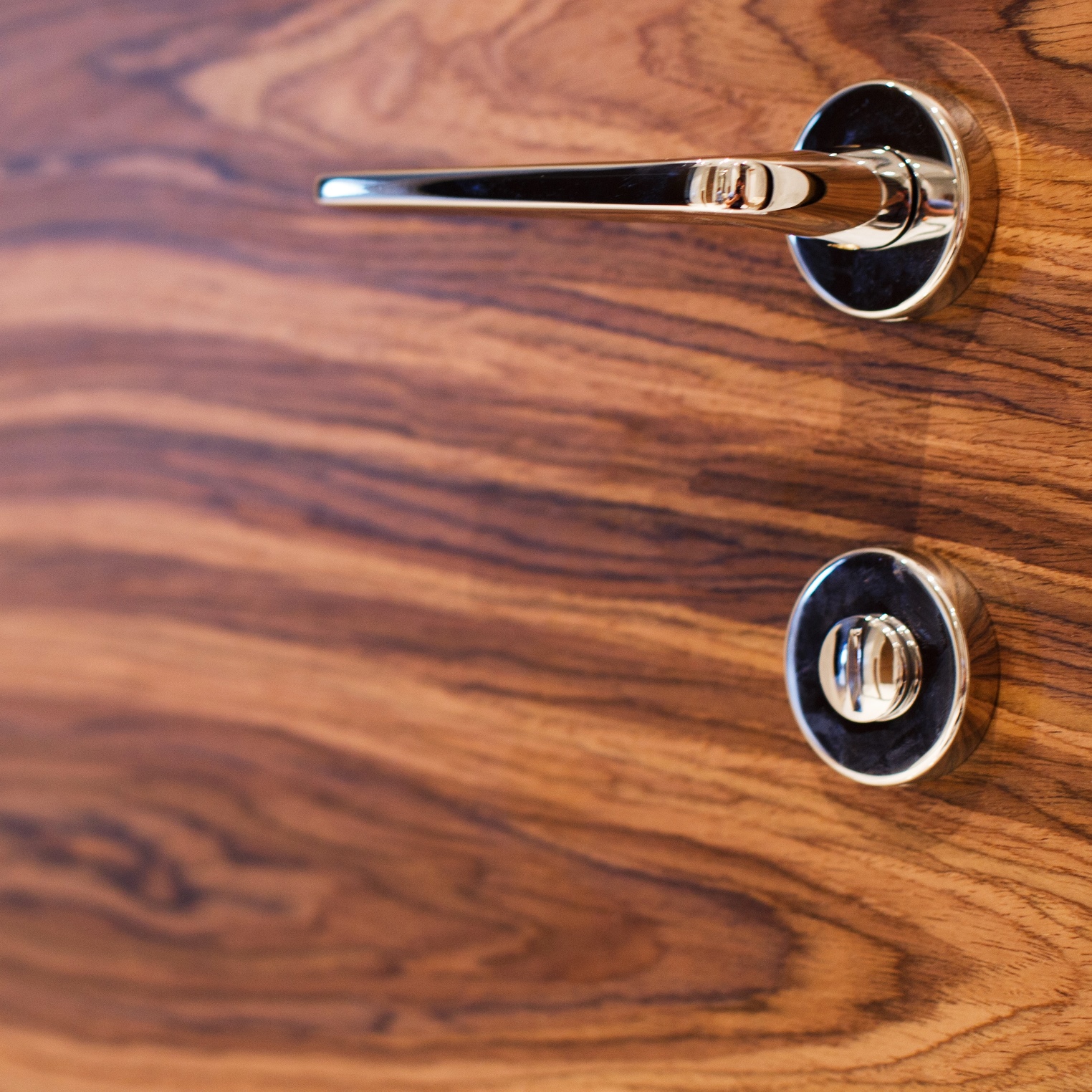
Architects have long understood that a building is judged as much by its details as by its grand gestures. A staircase, a window frame, or a doorway sets the tone, but the handle is the one element your hand touches every day. From the sculptural bronze pulls of early modernist houses to the quiet, minimal levers found in contemporary galleries, door hardware has always been a small canvas for craft, proportion, and material honesty.
That makes the choice of handle for private rooms a genuine design decision. Bedrooms and bathrooms call for a lock that works discreetly, yet the hardware should still contribute to the visual language of the space. The six considerations below approach the subject the way a designer would: through form, function, material, and the experience of the person using the space.
1. Think About Who Will Use Them
Good architecture begins with the people who inhabit a space. The same principle applies to privacy door handles: the best design is one that every member of the household can use comfortably. Round knobs, however traditional, demand a firm twist that becomes difficult with wet hands or limited grip strength, which affects young children and older users in particular.
Lever forms are a more inclusive answer, and they carry a long design pedigree of their own. Their horizontal gesture can be operated with a palm, an elbow, or a forearm, and they suit both left- and right-handed users. Universal design asks that beauty and usability never compete, and a well-proportioned lever achieves both.
2. Let the Mechanism Stay Out of Sight
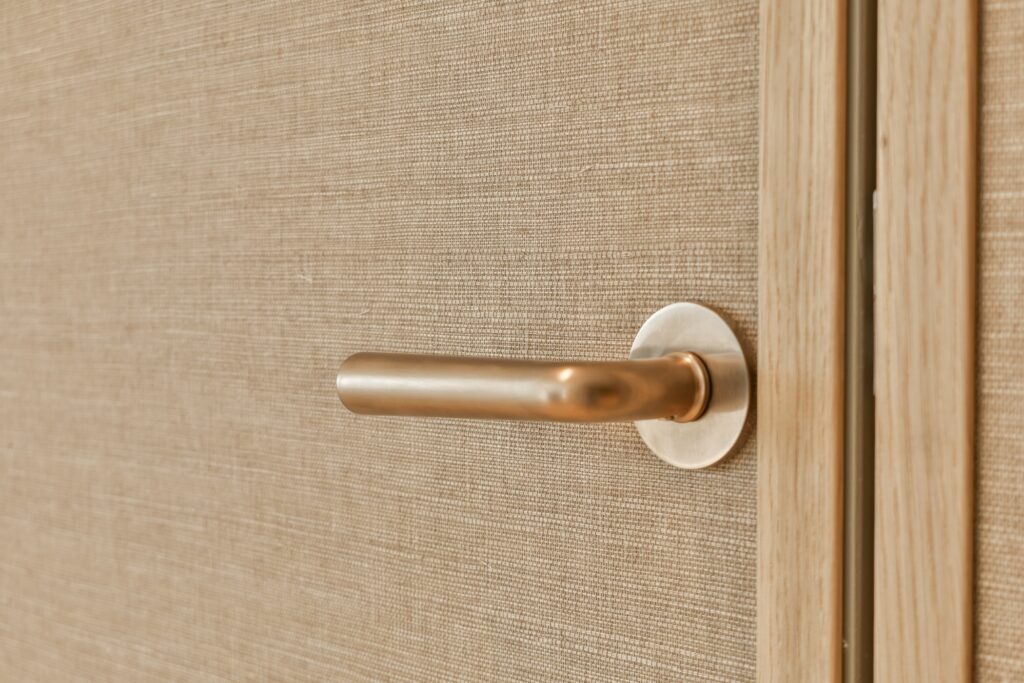
In fine design, the mechanism should serve the experience without drawing attention to itself. Older twist-turn locks are often stiff, hard to find in low light, and easily triggered by a slammed door. The result is an awkward detail that interrupts the calm of a room.
A concealed push-button mechanism built into the interior rosette keeps the surface clean and the gesture simple: press to lock, turn the handle to release. Precision engineering resists accidental engagement, so the lock behaves quietly and predictably, much like well-detailed architecture.
3. Treat Finish as Part of the Palette
Every material in a home contributes to a visual composition. Brushed brass, matte black, satin nickel, and polished chrome each reflect light differently and set a different mood against wood, stone, plaster, or painted surfaces. When handles differ in shape or finish from room to room, the rhythm of the interior is broken, much like a gallery wall hung without a clear curatorial idea.
Choose one coherent collection, with privacy, passage, and dummy handles sharing the same profile and finish. Consistency across bedrooms, bathrooms, closets, and hallways creates continuity, so the hardware reads as a deliberate part of the architecture rather than an afterthought.
4. Value Craftsmanship and Concealed Detailing
Architects and designers often speak of "honest" construction, where quality is visible in the way parts come together. Low-grade hardware does the opposite. Thin trim and weak fixings tend to loosen over time, and exposed screws on the rosette interrupt an otherwise clean line.
Seek architectural-grade handles with a concealed-mount rosette, where the fasteners disappear behind a smooth cover plate for a refined, minimalist result. Solid zinc alloy or similar durable materials, paired with heavy-duty internal hardware, keep the handle stable and precisely aligned, which is the same attention to detail that defines well-made furniture and cabinetry.
5. Choose Materials That Age Gracefully
Designers know that materials are judged by how they age as much as by how they look when new. In humid bathrooms, steam and temperature swings quickly expose weak plating, which can pit, tarnish, or peel. Corrosion inside the mechanism can also make a latch stick or bind.
Look for solid metal construction with a protective, moisture-resistant finish. Quality coatings resist rust and peeling, and many also repel water spots and fingerprints, so the handle keeps its character with minimal care. A finish that wears well is a sign of thoughtful design rather than decoration alone.
6. Respect Proportion and Precise Fit
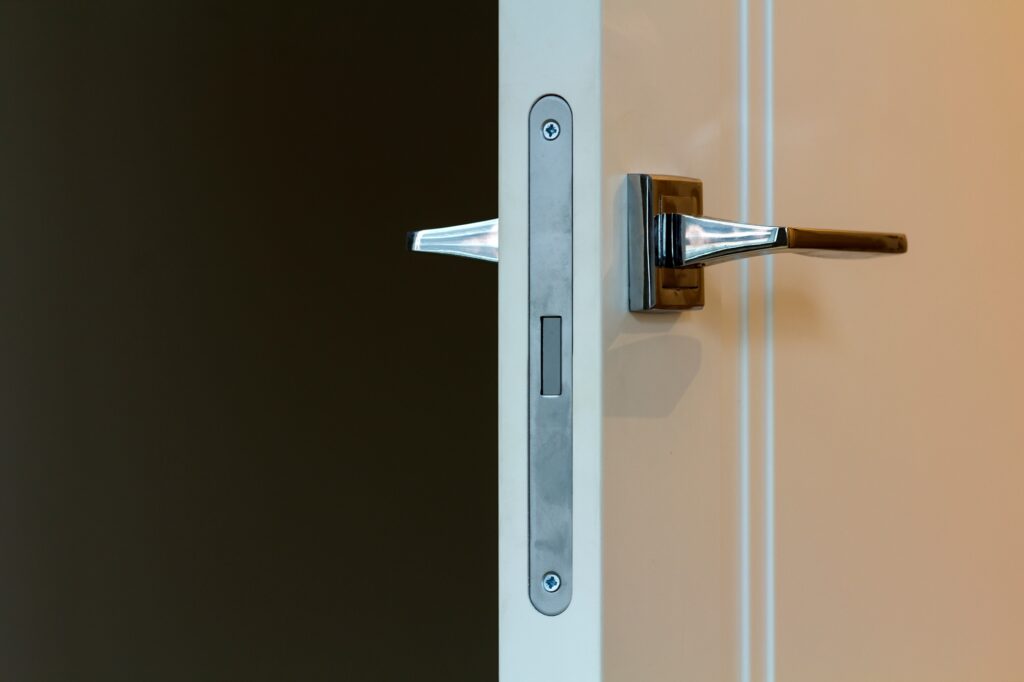
Proportion matters in architecture, and it matters at the scale of a door too. A handle must be matched to the door's thickness and backset, the distance from the door edge to the center of the handle. When these dimensions do not align, the latch sits poorly, the rosette looks off-center, and the door may need unwanted alterations.
Measure the door and jamb before you choose, and consider handles with adjustable latches that suit a range of backset sizes. A precise fit protects the door, keeps the alignment crisp, and preserves the clean look the design intended.
Wrapping Up
Door hardware may be among the smallest elements in a building, yet it shapes how a space is touched, used, and remembered. By weighing inclusive usability, a quiet mechanism, a consistent finish, honest craftsmanship, durable materials, and precise proportions, you can select handles that serve daily life and add to the design story of your home.