

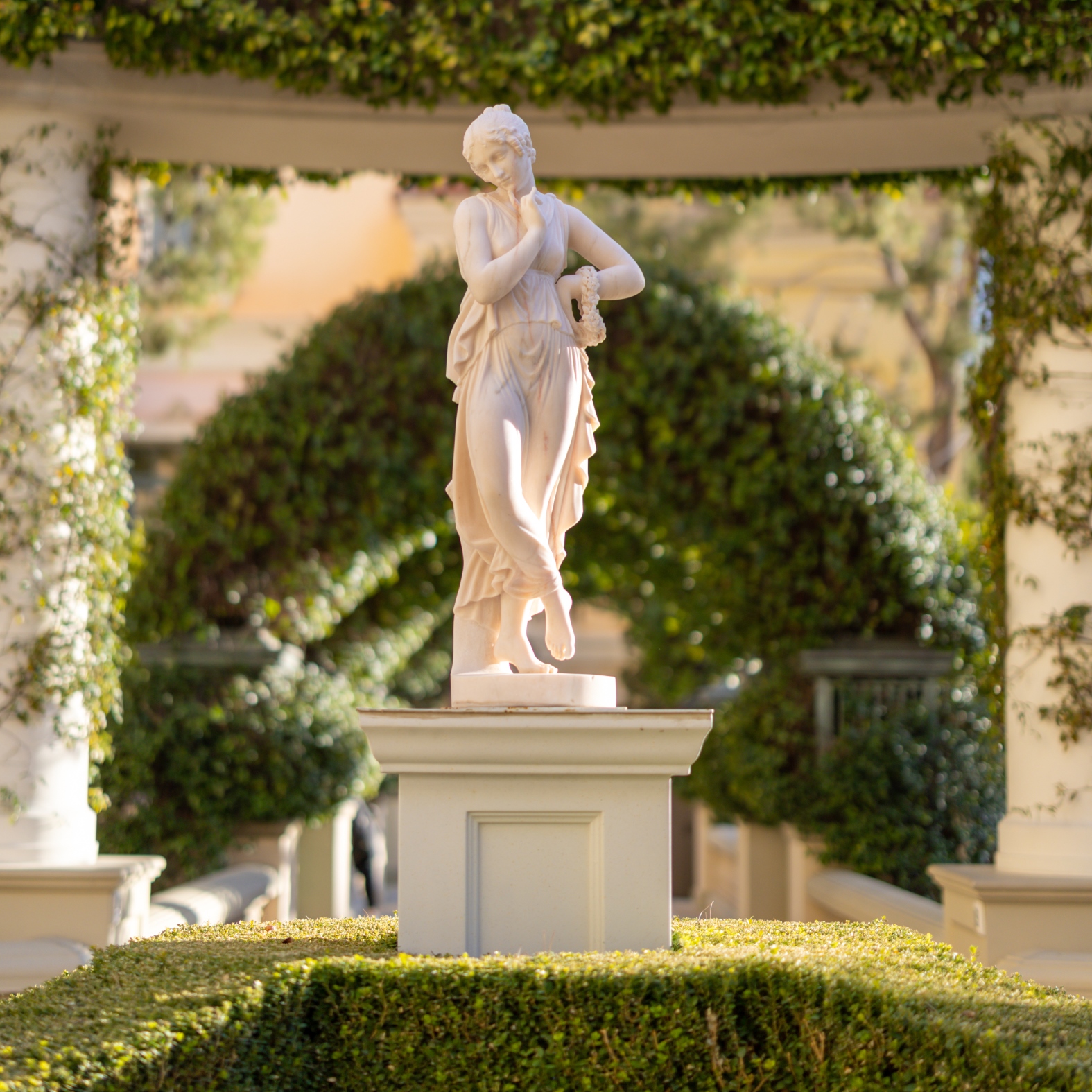
A sculpture placed in the wrong corner of a garden can look like an afterthought, however significant or valuable the piece. Bringing art outdoors is not simply a matter of finding open ground and setting something down. It requires landscape thinking where planting, architecture, hard surfaces, and the artwork itself are considered together, shaping how visitors move through the space and where their eye settles.
Collectors who spend years deciding where a painting should hang indoors often give far less thought to what happens once a piece moves into the garden, and that is usually where problems begin.
Choosing the Right Location for Outdoor Sculpture
The first decision, and often the hardest to reverse, is where a piece will stand. A location should be chosen for what surrounds it as much as for the spot itself. A sculpture near a boundary wall reads differently from one placed in an open lawn, while a piece close to the house becomes part of the architecture.
Ground conditions matter too. Heavy stone or bronze works need a stable, well-drained base. A location that looks right on a sunny afternoon should also be judged in winter light, in shade, and from the windows of the house, since those may be the viewpoints from which the piece is seen most often.
Using Planting to Frame the Work, Not Hide It
Planting around art is a balancing act. Too little greenery can leave a sculpture looking stranded, while too much can eventually hide it behind foliage.
Successful gardens use planting as a frame rather than a competing backdrop. Hedging, structural shrubs, or repeated grasses can create a quiet field against which the artwork stands out. Evergreen planting is particularly useful because it provides consistent structure throughout the year, while seasonal color can be introduced at a distance without crowding the piece.
Considering Scale and Sightlines
Scale is where many outdoor art placements go wrong. A work that feels substantial in a gallery or courtyard can appear small against an open lawn, while a modest sculpture can overwhelm an enclosed garden.
Before installation, consider the garden's important sightlines: from a terrace, principal window, front gate, and the paths visitors are likely to follow. A sculpture does not need to be visible from everywhere. It can be more effective when first glimpsed from a distance and then gradually revealed on approach.
Creating Paths and Viewpoints That Guide Attention
Movement through a garden can be designed with almost as much intention as the art itself. A curved path can encourage visitors to slow down, while a change in level, gap in a hedge, or shift in paving can signal that something deserves attention.
Viewpoints do not need to be elaborate. A bench placed at the right distance or a break in planting that reveals a sculpture from an angle can often hold attention better than an obvious formal approach.
Balancing Hard Landscaping, Architecture, and Natural Elements
This is where landscape design goes beyond planting alone, and where the relationship between the artwork, the garden structure, and the house itself needs the most careful coordination. Stonework, retaining walls, drainage, the lines of the building, and the placement of the art are not separate decisions. They interact in ways that are difficult to anticipate without professional experience of how gardens are actually built and how they change over time.
According to Pehrsson Scott, an award-winning landscape design and construction practice, the gardens that work best around art are the ones where the design process treats the sculpture, the architecture, and the engineering as parts of the same brief rather than separate concerns resolved in sequence. When hard landscaping, planting structure, and artwork placement are designed together, the result is a space that feels coherent. When they are resolved independently and then assembled, the gaps between them tend to show.
For collectors approaching this stage without landscape training, bringing in professional garden design before any groundwork begins is worth the investment. Many of these decisions, particularly around drainage, foundations, and the long-term scale of mature planting, are genuinely difficult to change once construction is complete.
Using Lighting Carefully Around Outdoor Pieces
Lighting can make or break how a sculpture reads after dark, and restraint usually serves the work better than drama. A single, carefully angled fixture that grazes a surface or highlights texture will often do more than several lights aimed directly at it.
Strong uplighting can distort proportion and flatten detail. Low-level path lighting nearby can guide movement without competing with the artwork. Lighting should also be tested throughout the year because changing seasonal light can significantly alter how a fixture performs.
Planning for Long-Term Growth and Maintenance
A garden is never finished in the way a room is. Trees gain height, hedges thicken, and planting that originally left a sculpture visible can gradually begin to close around it.
Designing for growth means leaving enough distance between plants and artwork from the outset and maintaining that relationship through pruning, thinning, and occasional replanting. This long-term approach prevents significant pieces from eventually being swallowed by their surroundings.
Why Landscape Design Should Start Early
The gardens that work best around art are rarely those where planting was chosen after the sculpture arrived. Foundations, drainage, sightlines, and the mature scale of planting should all be considered before installation rather than adjusted afterward.
Bringing landscape expertise into the planning stage, alongside decisions about the art itself, creates outdoor spaces where architecture, planting, and sculpture feel intentionally connected rather than assembled separately.
Designing a garden around art is ultimately an exercise in restraint and sequencing: deciding what to reveal, what to frame, and what to leave quiet so the work itself can carry the space. Done well, the garden stops being merely a setting for the art and becomes part of it.