

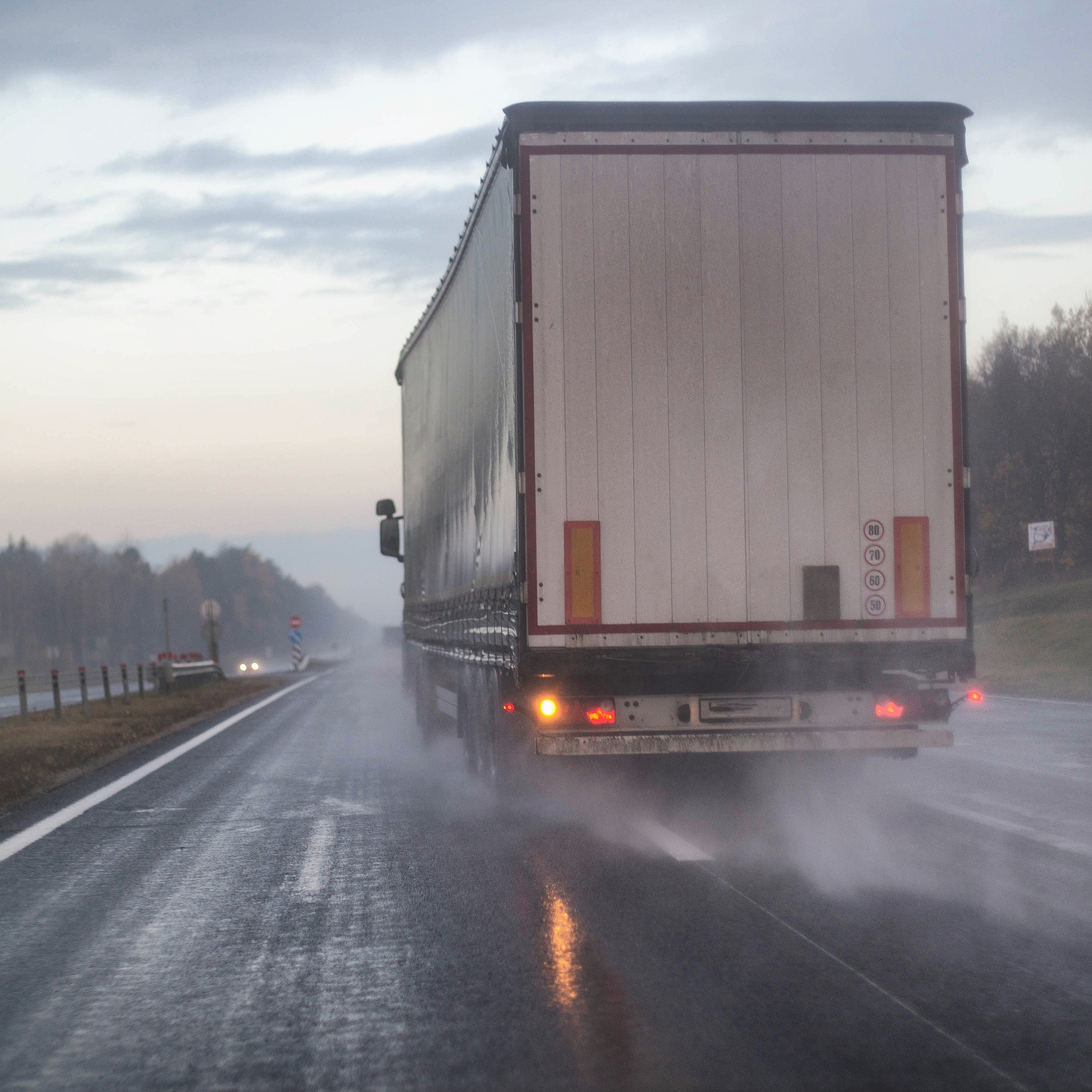
As of mid-2025, over 1,600 fatal truck crashes were reported, following 2023 data where 5,375 large trucks were involved in fatal crashes in the U.S. Approximately 65% of truck accidents occur on interstate highways and freeways.
Wet roads and truck accidents are a dangerous combination. Due to the size and weight of commercial vehicles like trucks, accidents in these conditions have a higher possibility of being fatal. And when this happens, it can be questionable who should be responsible.
Let's explore the critical aspects that influence truck driver liability in rainy conditions.
What Truck Drivers Need to Know About Liability in Wet Weather
The weather affects how your car works and how far it can stop. And in this condition, drivers should know how to adjust their speed when the road is wet. As such, drivers bear full responsibility for any accidents that happen during wet driving conditions.
When examining the accident site, investigators will look into your driving patterns and ability to adjust to rainy conditions after the crash.
Truck drivers need to check their tire conditions because worn tires will lead to increased danger of hydroplaning during wet road conditions. Windshields and windshield wipers require maintenance from drivers because these components create essential visibility needed for safe driving.
Flint truck accident lawyer James R. Ekleberry says that an experienced and skilled truck crash lawyer can investigate the cause of your case, collect evidence, and determine the liability of the parties involved. They can help you pursue a strategy to get the compensation that you are entitled to under the law.
How Weather Influences Truck Driver Accident Liability
The truck driver accident liability assessment process depends on weather conditions because dangerous weather elements, including rain, snow, and fog, create substantial dangers that affect driving abilities.
Your truck control abilities decrease during inclement weather driving, which results in greater accident risk. The legal system assesses your actions through the standard of reasonable behavior, which depends on the existing circumstances.
Drivers who drove their cars during heavy rain must pay for all damages, as they kept going at their normal speed. This is because drivers must modify their driving behavior based on the current weather conditions.
Critical Factors Affecting Truck Driver Liability During Wet Road Accidents
The unique difficulties that drivers face when operating vehicles on wet roads lead to multiple crucial elements that determine truck driver fault in accidents. It’s crucial to consider the truck's maintenance.
You become responsible for maintaining safety because worn-out brakes and tires create liability for you. The recommended speed limit establishes a safe driving speed, which drivers must remain below because exceeding it during wet conditions leads to loss of vehicle control. Your training and experience establish your professional qualifications.
Your liability increases when you lack training for managing wet driving situations. When assessing liability, the driving behavior of others is also factored in. And if they are found to be reckless in their driving, your responsibility for the accident may be reduced.
Essential Safe Driving Tips for Truck Drivers in Rain
It’s important to follow proper driving practices to ensure both your protection and that of others sharing the road with you.
You need to decrease your speed because wet conditions will double your stopping distance and require you to have more time for reaction. You should drive at a safe distance from all other vehicles that you encounter on the road. Closing distances can prevent sliding accidents.
Use your headlights when driving to improve visibility. Also, don’t use crude oil, as it can impair control over the vehicle. It is a worse choice, especially on slippery roads.
Check your windshield wipers to verify their operational status. Also, inspect your tires and measure their tread depth and tire pressure. These factors will determine how well your tires are able to grip the road.
Focus is another thing that drivers must maintain when driving. This way, they can easily detect if there are changes in the road condition.
What Truck Drivers Must Do After a Crash in Wet Conditions
So many accidents happen on wet roads, even when you follow safe driving practices. The drivers involved in the crash must follow specific steps, which start with them carrying out their responsibilities to help injured people and secure their safety. The driver needs to move the vehicle away from the street after assessing whether it is safe to do so and needs to establish some form of traffic management system.
The driver should also contact 911, providing medical information to get help at the right time. Exchange as much detail as possible that would assist in a quicker resolution, such as names, telephone numbers, addresses, and insurance names.
Take lots of pictures, which would necessitate using visual evidence in support of the contentions of any insurance claim. Inform your employer without shying away from details soon after the incident. This will help you recall details should you get some questions later.
Conclusion
The truck driver needs to understand that wet weather conditions make it essential to drive safely because any accidents will lead to their legal responsibility. The driver needs to control their speed while keeping a secure distance from others and driving a vehicle that operates at maximum performance.
Your safety depends on your ability to maintain alertness while you operate your vehicle according to established safe driving practices.