


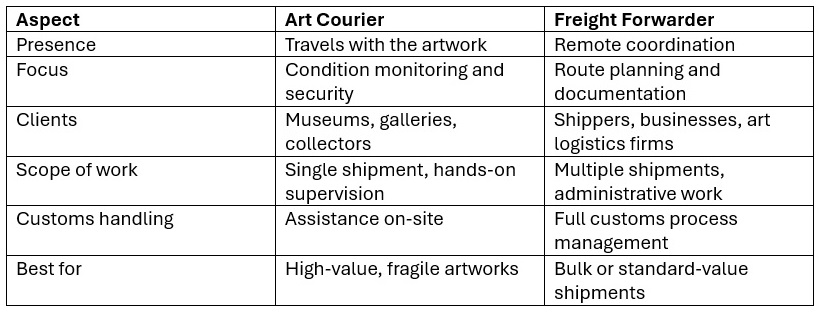
When preparing an artwork for shipment, many collectors, galleries, and museums face the question of choosing an art courier vs. freight forwarder. The main difference is simple: an art courier travels with the artwork and supervises its condition throughout transit, while a freight forwarder coordinates transportation, documentation, customs, and logistics without accompanying the shipment. Understanding these distinct roles can help you avoid unnecessary costs, reduce shipping risks, and choose the right level of support.
Who Is an Art Courier?
An art courier physically accompanies valuable artwork throughout its journey. When an object is small enough, the courier may transport it as hand-carried cargo, personally overseeing customs procedures and accompanying it on the flight. Art couriers are often registrars, conservators, or trained fine art logistics professionals hired by museums, galleries, auction houses, and private collectors to supervise the artwork from pick-up through installation.
Typical art courier responsibilities include:
- Packing and crating supervision
- Condition report verification
- Accompanying the artwork throughout transit
- Oversight of loading and unloading procedures
- Coordinating safe installation at the destination when required
Who Is a Freight Forwarder?
A freight forwarder is a logistics provider that organizes the transportation of goods on behalf of the shipper. Unlike an art courier, a freight forwarder does not travel with the artwork. Instead, the company coordinates every stage of the shipping process, working with carriers, customs brokers, warehouses, and other service providers to ensure efficient and compliant transportation.
Typical freight forwarder responsibilities include:
- Booking cargo space with airlines and trucking companies
- Preparing shipping documentation
- Coordinating customs clearance
- Arranging warehousing and shipment consolidation
- Optimizing routes for cost efficiency and transit time
Art Courier vs. Freight Forwarder: Breakdown of Roles
Study the table below to better understand the differences between an art courier vs. freight forwarder.
When Should You Choose Each Service?
An art courier is the best choice for museum-quality, fragile, or historically significant artworks that require continuous supervision. A freight forwarder is ideal for managing complex domestic or international shipments involving multiple carriers, customs procedures, and documentation. For high-value international artwork, many collectors and institutions use both services together.
FAQs
Can a freight forwarder also act as an art courier?
Not typically. Freight forwarders specialize in transportation management and logistics coordination, while art couriers are trained to supervise and handle artworks during transit.
Do all artworks require a courier?
No. Many artworks can be transported safely without a courier. Courier services are generally reserved for high-value, fragile, museum-quality, or historically significant pieces.
Can both services be used together?
Yes. Many collectors, museums, and galleries combine both services by hiring a freight forwarder to coordinate transportation and an art courier to provide hands-on supervision. Together, they help minimize risk and ensure safe, compliant delivery from pick-up to final installation.