

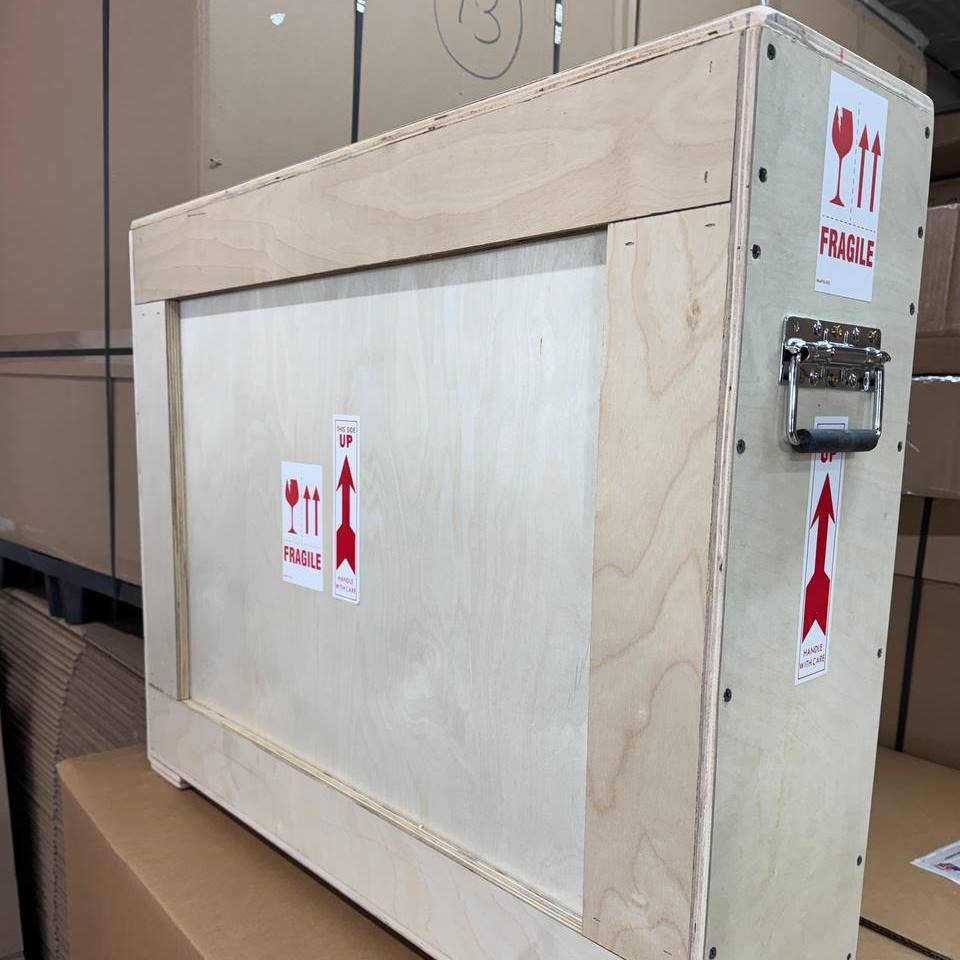
The process of crating artwork for shipping is a specialized, meticulous process that requires attention to detail and expertise. What decisions do art craters make in the process of crate manufacturing? Here is a glimpse of what’s happening in our workshop when we build study, durable crates for your art.
Intake and Risk Assessment
Art handlers measure and document the object’s dimensions and weight. They find its center of gravity and fragile parts to develop a handling strategy. The distance and mode of shipping are clarified to choose the right crate type.
Support Approach Selection
Next comes the “support philosophy” of art crating. The block-and-brace approach, which requires the use of frame rails and corner blocks, suits framed art and art objects with strong structural zones the best. The foam cavity pack is optimal for three-dimensional artwork, like sculptures or mixed-media installations. Experts may also choose to mount the artwork to a deck, which is the surest way to crate an art object with a stable base.
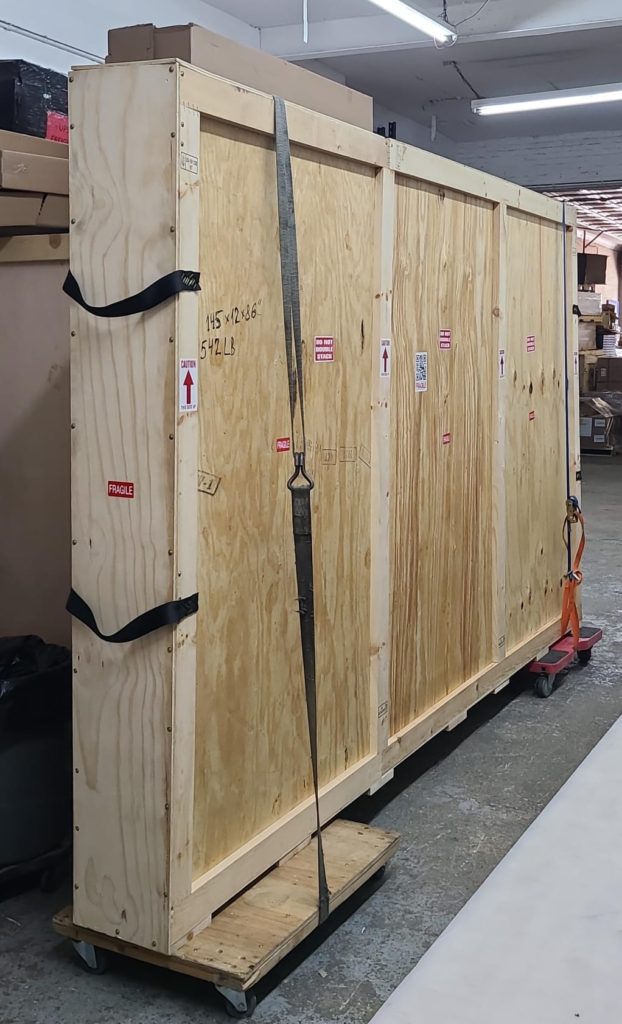 Materials and Specifications
The following stage includes gathering all materials for crate manufacturing. Industry standards include treated wood or plywood for panels, lumber for the frame, and polyethylene foam for artwork cushioning. It is vital to use non-abrasive materials in the crate’s interior design, thus reducing the risk of chemical reaction with vulnerable artwork surfaces.
Crate Engineering
The manufacturing process comes in stages. First, art handlers decide on the internal clearance and the crate’s interior dimensions. A rigid base is built next; the interior support system is added afterward. The latter is the most important part of crating, as the foam pack must match the artwork ideally. For block-and-brace crates, art craters add rigid face shields to the art object and set a floating frame to ensure that the artwork doesn’t touch the crate’s walls.
Crating Artwork for Shipping
Once the crate is ready and its interior support and cushioning systems are in place, it’s time to proceed with crating artwork for shipping. The art object is placed inside the crate and properly immobilized. Art handlers check that the artwork is properly fixed and that there are no unintended contact points that can cause rubbing or imprints. All voids are filled, with the final controlled movement check performed by the team. The crate’s interior is photographed for documentation, and the crate is sealed and properly labeled with “Fragile” and “This Side Up” notifications.