

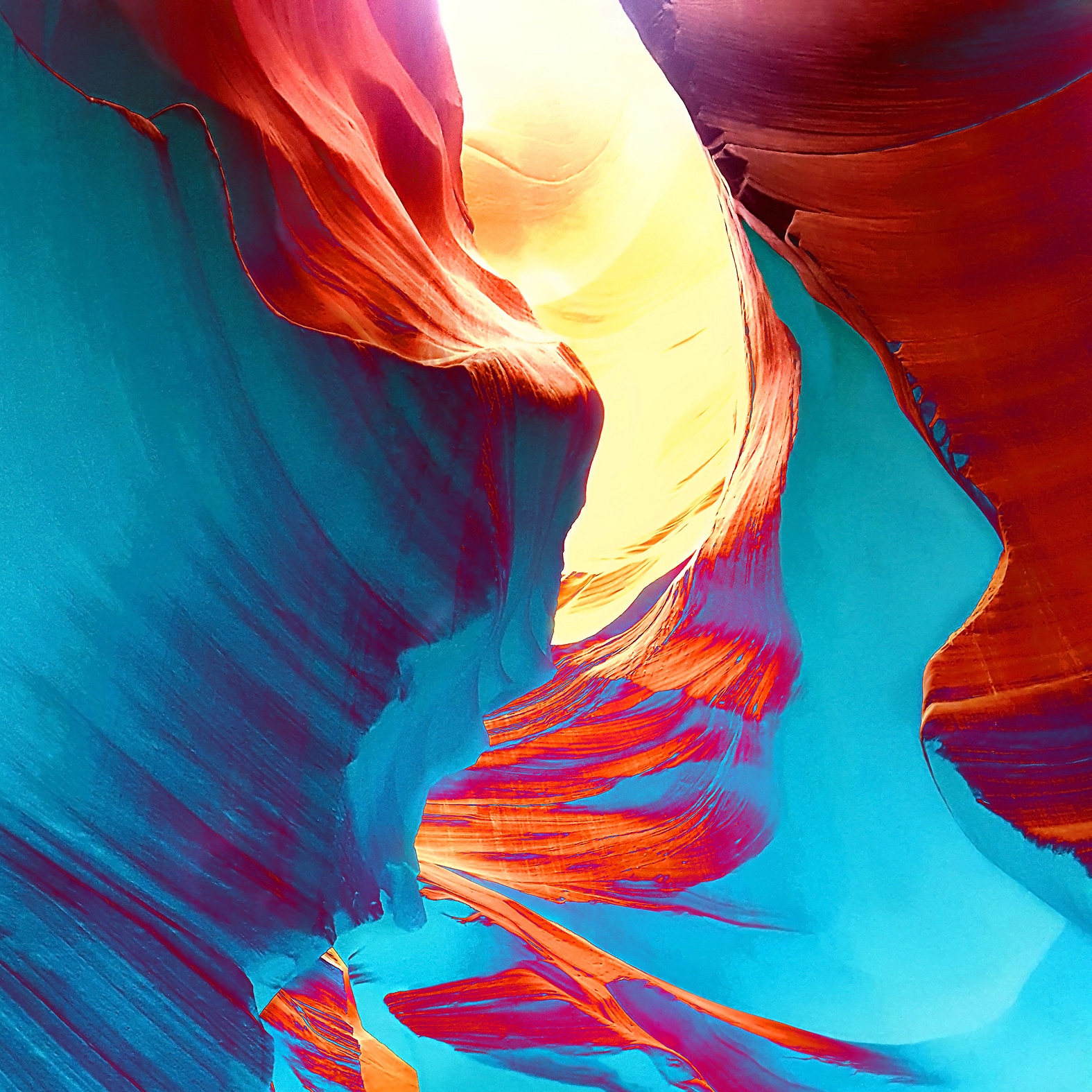
Arizona has a rich, vibrant contemporary art world that’s ready for some attention in 2026. From Phoenix to Scottsdale and from Tucson back to Phoenix again, there are many artists creating works with an array of materials – abstraction, resin, mixed media, photography, installation, and contemporary Indigenous paintings. As wide as the variety is, each artist represented here shares a unique perspective.
What they all have in common is their connection to their region. Let’s take a look at where the strength of each artist lies and which type of collector may appreciate the artist’s work. Some artists are best suited to those who love process-led abstraction, while others speak more strongly through material, place, identity, or installation.
RituArt — Best for Brushless Organic Movement Abstraction
RituArt is the studio and online presence of Ritu Raj, a contemporary abstract painter based in Phoenix, Arizona. Before becoming a professional artist, Raj founded several businesses in cloud computing, transportation, hospitality, and lab-grown diamonds. His business background reflects an interest in systems, uncertainty, release, and how things behave when there is less control over them.
Raj’s best differentiator is his Organic Movement series. For these works, he has replaced the use of brushes with thread, gravity, and controlled release. Unlike most paintings, where there is a visible brush stroke or some other evidence of gesture, the movement of the materials used here creates the painting while they move under predetermined conditions.
For a collector, that means the process is not a side note. It is part of the artwork itself. The work fits someone who wants abstraction with intellectual weight. This could also be very good for a person who is interested in artists creating artworks in response to a visual culture saturated with AI-created imagery using slow, human actions of attention.
Mayme Kratz — Best for Desert Materials and Slow Looking
Mayme Kratz is a strong Arizona artist to know if you want nature to appear in contemporary art without becoming a decorative landscape painting. Much of her work is made of resin and found organic materials that include seeds, wings, bones, grasses, nests, and other pieces of the desert.
Much of her appeal in art comes from the shift from surface to detail. At first, she may just show you patterns, light, or a form of quiet abstraction. Afterward, you will discover what has been preserved within the resin. The piece becomes less about scenery and more about time, decay, memory, and attention.
Kratz’s work would be suitable for you if you respond to material sensitivity. Her works could stand alone next to paintings, sculptures, photographs, or any other medium as they capture a physical representation of location but also retain a sense of refinement and contemporary artistry.
Fausto Fernandez — Best for Mixed Media with Public-Art Energy
Artist Fausto Fernández uses multiple mediums, including mixed media, painting, collage, image transfers, and site-specific public art. In many ways, this artist’s work appears to have been constructed, rather than simply painted, which makes it a useful contrast to more meditative abstraction.
Fernandez’s work may appeal to you based on your interest in layered surfaces, architectural elements within the artwork, vibrant colors, and visual motion. His studio pieces carry the confidence of public art, while his public projects show how contemporary art can operate outside a private room.
Collectors interested in acquiring an art piece that will bring a sense of movement and composition together are likely a good match for this artist’s style. His art has impact from a distance, but it also gives you enough layering to keep looking.
Angela Ellsworth — Best for Multidisciplinary Work with Conceptual Depth
Angela Ellsworth is a multidisciplinary artist – drawing, sculpture, installation, video, and performance – whose work primarily addresses endurance, illness, religious traditions, social rituals, and the point where private experience becomes public form.
This is not the easiest work on the list, and that is part of its strength. Ellsworth’s body of work asks you to spend time with materials, bodies, repetition, and discomfort. If you prefer art that simply matches a room, this may not be your first stop. If you want contemporary work with a strong conceptual spine, it deserves attention.
Her practice offers value in this type of list because it adds depth to the category by expanding beyond collecting contemporary canvases. Contemporary art is not just about painting. It includes performance, object making, and installation.
Sama Alshaibi — Best for Photography, Video, and Installation About Movement
Sama Alshaibi is an artist whose works include photography, video, performance, and installations. The majority of her works relate the body to landscapes, borders, displacement, environmental pressures, and historical memory.
Alshaibi would be an excellent selection for those interested in finding contemporary art that has a global feel yet maintains its connection with the body and the desert. She does not make beautiful images of difficult subject matter. Rather, she uses image making as a way to explore movement, survival, and place.
For collectors, her work may require a different mindset from buying a single painting. They are likely to consider photographic series, video work, installation documentation, or editioned pieces.
Dwayne Manuel — Best for Contemporary Indigenous Painting and Drawing
Dwayne Manuel is an O’odham artist whose work includes painting, drawing, mural work, and installation. His practice connects contemporary visual language with cultural memory, community, and the Sonoran Desert.
What makes Manuel important in this group is the way his work moves between studio and public space. You can see the influence of mural scale, drawing discipline, and Indigenous knowledge systems without reducing the work to a single label.
This is a good artist to know if you want Arizona contemporary art to feel rooted in the land and communities that shaped it. His work also reminds you that contemporary Indigenous art is not a separate side category. It is central to understanding the region’s present visual culture.
Many collectors might be surprised at how wide-ranging Arizona’s modern contemporary art scene is. Collectors can find a variety of styles from abstracted process works with desert materials to photographs, installations, performances, and contemporary Native American paintings. All these media provide collectors with an opportunity to start their journey in discovering new talent in 2026.
Collectors will find RituArt by Ritu Raj especially unique because of his Organic Movement brushless method. He uses thread, gravity, and controlled release to create each piece. Other artists listed here add greatly to the breadth of style and concepts that are being created today. Collectors should definitely be paying attention to the 2026 art scene in Arizona.