

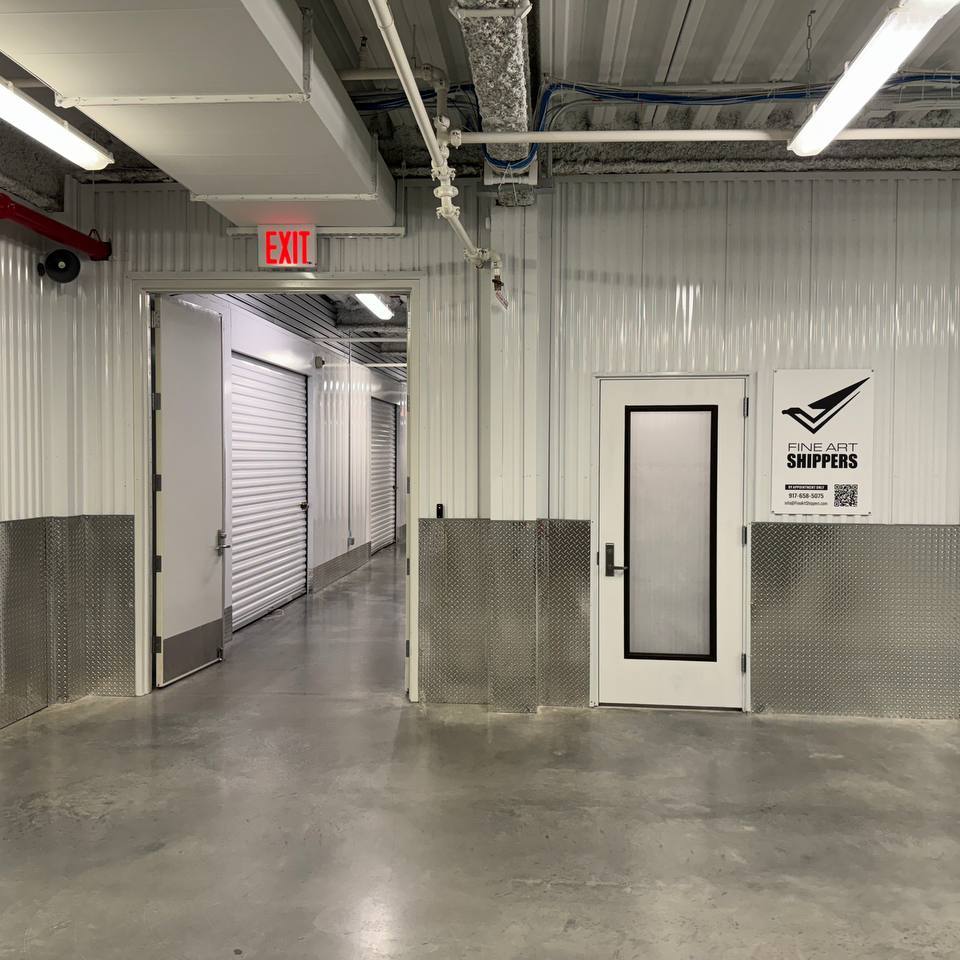
Many think of art storage facilities as a passive holding stage in the artwork’s lifecycle. However, with the rising pace and scale of the global art movement, art storage transforms into an active logistics node. It can be a temporary, transit-related, or long-term conservation solution for art, with lots of functions.
Multiple Roles of Art Storage Facilities
Art storage is increasingly viewed as a buffer against volatility in fine art logistics. Storage serves as a safe collection point, transport leg, and exhibition, sale, or installation endpoint in complex logistics chains. That’s why its proper arrangement rests on the integration of specialized art shipping expertise, customs brokers, insurers, and conservators.
Temporary Art Storage Solutions
Many art shipping projects require short-term holding solutions, typically stretching from a couple of days to several weeks. Temporary storage enables artwork aggregation from multiple source locations, condition checking and intake documentation, crate optimization and re-packing, and schedule alignment across carriers. This option is vital for art fairs or exhibitions that source artwork from multiple destinations.
Art Storage in Multi-Leg International Deliveries
Complex cross-border logistics involve multiple custody transfers, with a transit storage facility acting as a bonded storage and sometimes a freeport environment. Artwork can stay in such storage during customs clearance delays or VAT and import/export documentation checks. By using such storage, shippers can break down long transportation routes into controlled segments, thus ensuring that the logistics process is synchronized well. Transit storage is also a great opportunity to adjust packing for environmental changes, such as shipping an art object from a cold-climate country to a location with warm, humid weather conditions.
Long-Term Conservation Storage
Long-term storage facilities prioritize temperature and humidity precision to ensure robust environmental controls for conservation-grade artwork storage. They put air filtration and light exclusion systems in place to guarantee 360-degree protection and offer material-specific storage strategies for effective conservation. This storage type favors periodic inspections to ensure precise condition monitoring. Top-tier service providers also offer related services, such as quarantine areas for damaged art objects and artwork stabilization before loans or sales.
Storage as an Active Part of Art Logistics
Art collections await further delivery, undergo conservation checks, and experience custom clearance in storage facilities. Depending on specific, context-dependent goals, art storage facilities turn into risk reducers, value preservers, or operational coordinators. This way, the role of properly organized storage evolves by representing a vital aspect of art logistics with long-term repercussions for art integrity.