

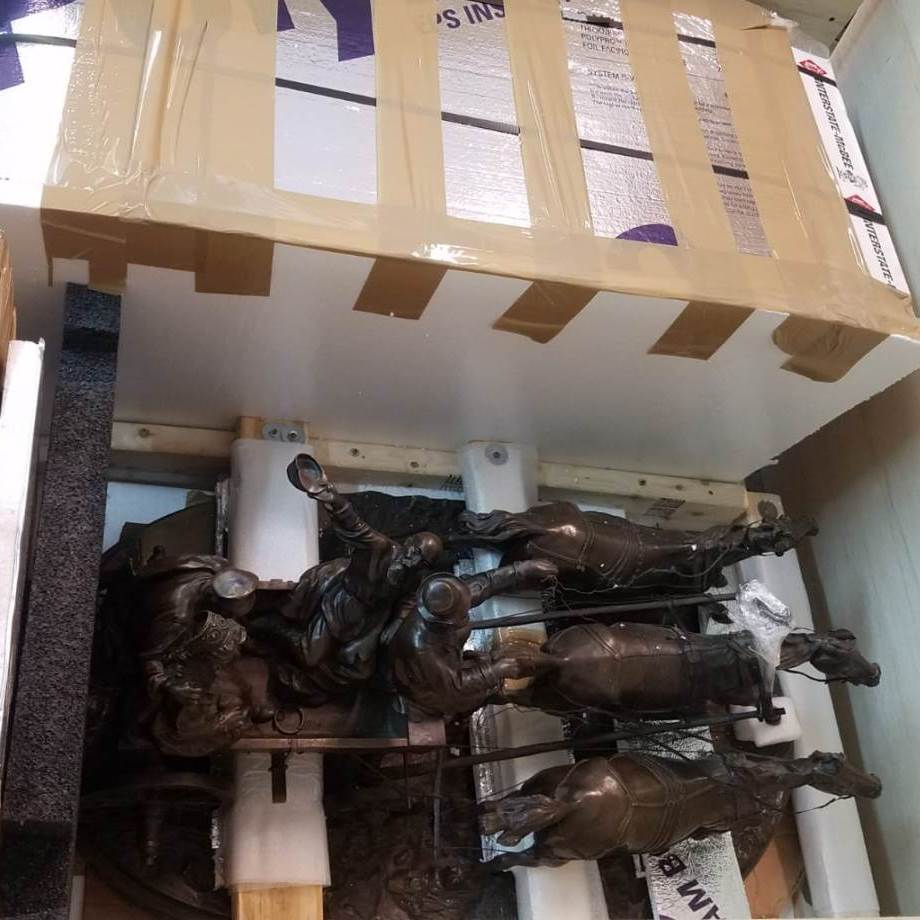
In professional art logistics, two methodologies dominate in the field of sculpture packing and shipping. The choice between suspension and foam support is never routine, with a complex decision-making process involved. The final decision is made based on in-depth knowledge of materials science, physics, and the object’s specific vulnerabilities identified before transportation.
Foam-based packing presupposes the use of carved cradles and foam-in-place systems. Suspension packing involves placing the artwork in a floating position inside the crate, where it’s held with tensioned straps, brackets, or mounts. Each method is preferable for specific uses, and an art handler’s task is to understand where each excels or fails.
Foam-Based Packing Explained
Foam packing is the most common method used in handling sculptures. When the foam’s dimensions are correctly specified, the resulting foam cradle offers a reliable, cost-effective protective solution for three-dimensional artwork. This method uses carved foam cradles, with custom-cut forms shaped precisely for the sculpture’s dimensions to provide a stable, supported orientation. The cradle is created with weight distribution in mind, ensuring that weight is evenly spread across the largest surface area.
Foam-in-place systems are another alternative in the foam-based packing approach. In this method, two-part expanding polyurethane is injected around a well-wrapped object, creating a foam shape ideally matching the sculpture’s curvature. It is used with irregular, highly complex art objects, where a foam cradle’s manufacturing process becomes too time-consuming or expensive. However, its application requires extra protection for the art object with comprehensive, multi-layer packaging because expanding foam generates heat and pressure.
Suspension Use Cases in Sculpture Packing and Shipping
Suspension is a fundamentally different approach to sculpture packing and shipping. It removes the object’s contact with its crate, thus excluding the need to support the sculpture from below and around. The sculpture floats inside its container without touching anything directly, except for the attachment hardware.
This method was borrowed from the aerospace industry and precision instrument manufacturing, where sensitive components need to be protected from vibration and shock. Thus, suspension guarantees the highest level of protection to sculptures, but it is also very demanding in terms of execution.
When Should You Use Each Method?
The choice of sculpture packing method depends on the sculpture’s fragility, material, size, and specific shipping requirements. Foam packing is best for robust, stable forms, making it a preferred method for standard shipments. Suspension packing is used with fragile, irregular, or previously damaged artwork due to its ability to remove contact damage risks entirely.