

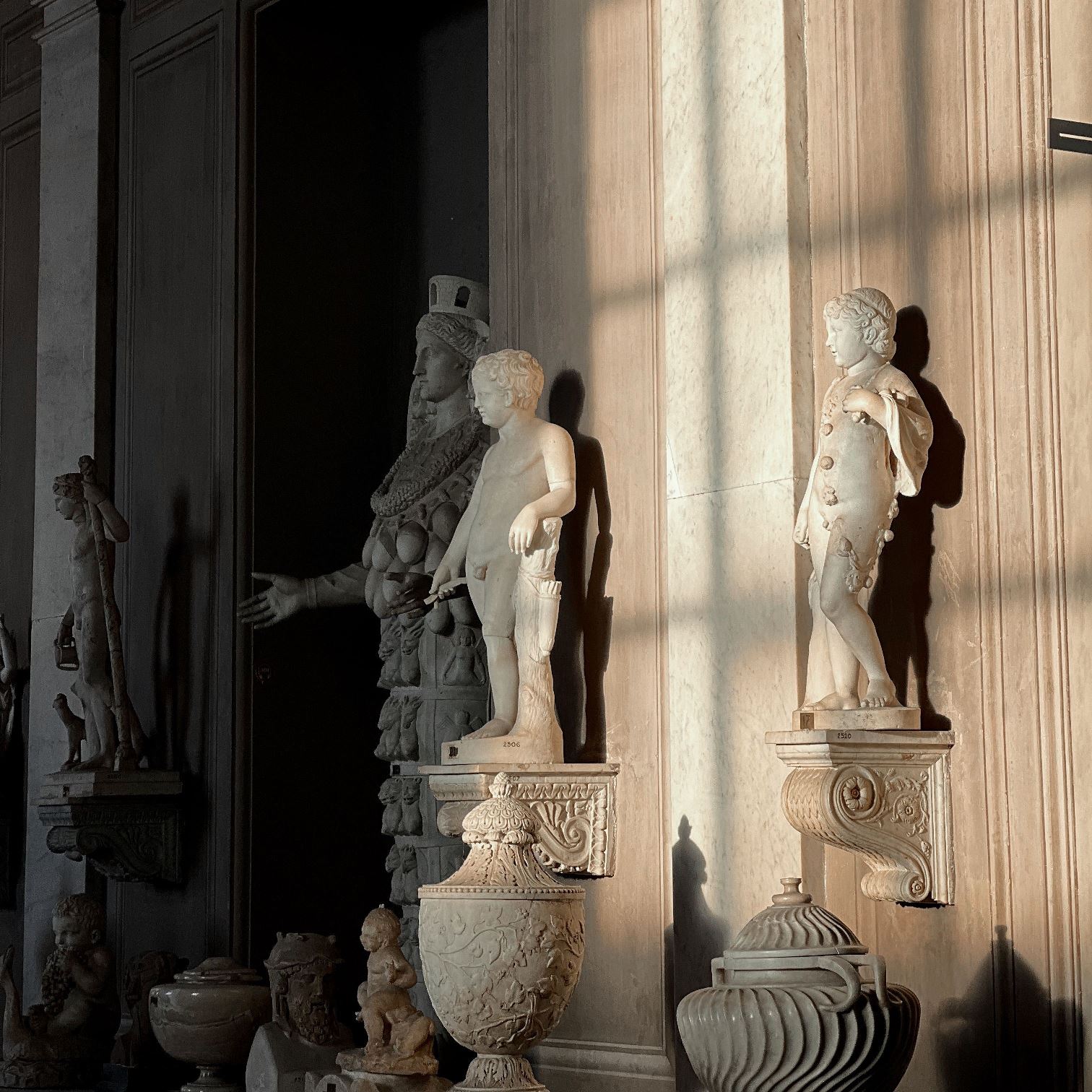
The distinction between museum storage and other types of storage is not only about security or materials used; it is mostly about the fundamental purpose behind storage arrangements. Museums are institutions entrusted with an important mission of preserving the civilizational legacy for generations. That’s why museums must be capable of preserving art objects without compromises and risks. Find the main museum storage standards explained in this guide.
Key Museum Storage Standards Explained
So, which storage standards guide museum practices across the globe? In most institutions, climate control, light management, and collection documentation best practices are non-negotiable. Let’s learn more about them.
Climate Control in Museums
Climate control in museum settings is organized with precision that goes far beyond commercial norms. Art institutions with vast collections go the extra mile to guarantee stable climate conditions because fluctuations in temperature and humidity are the single most detrimental factor for long-term art preservation. While commercial art storage may do fine with a broad temperature range of 60-750F, museums don’t accept variations beyond 60-650F.
Relative humidity management is also at the heart of museum-grade storage, with 45-55% RH as an internationally accepted standard. A unique feature mostly present in museums or premium-level commercial storage facilities is climate zone differentiation. Different storage sections may be calibrated to different material types, with distinct zones for paintings and paper-based art, ethnographic and natural history objects, film and acetate-based media, metals, and glass/ceramic.
Light Management Fundamentals
Light is a destructive factor for art, so museum storage facilities minimize unnecessary light exposure to prevent artwork from photochemical degradation. Storage areas are kept in complete darkness when no staff operate inside them. The majority of art objects are never illuminated, with retrieval and examination taking place in specialized examination rooms with controlled, UV-filtered lighting. Museums also track cumulative light exposure for their most sensitive objects, using the lux-hour system to determine caps on annual light exposure allowance per work.
Collection Documentation and Inventory Management
Every object in the museum storage is documented, accurately located, described, and continually inspected for intactness. Advanced collection management systems (CMS) are used to simplify collection search and quick item retrieval without the need to trouble the entire storage section. Granular location tracking enables non-problematic art access.
These are obviously not all the measures that museums take to secure their collections. With these museum storage standards explained in detail, you should also keep in mind rigorous standards for storage furniture, equipment, and object housing, as well as integrated pest management systems and fire suppression measures. When used in tandem, these efforts create a risk-free environment resistant to all external and internal risks.