

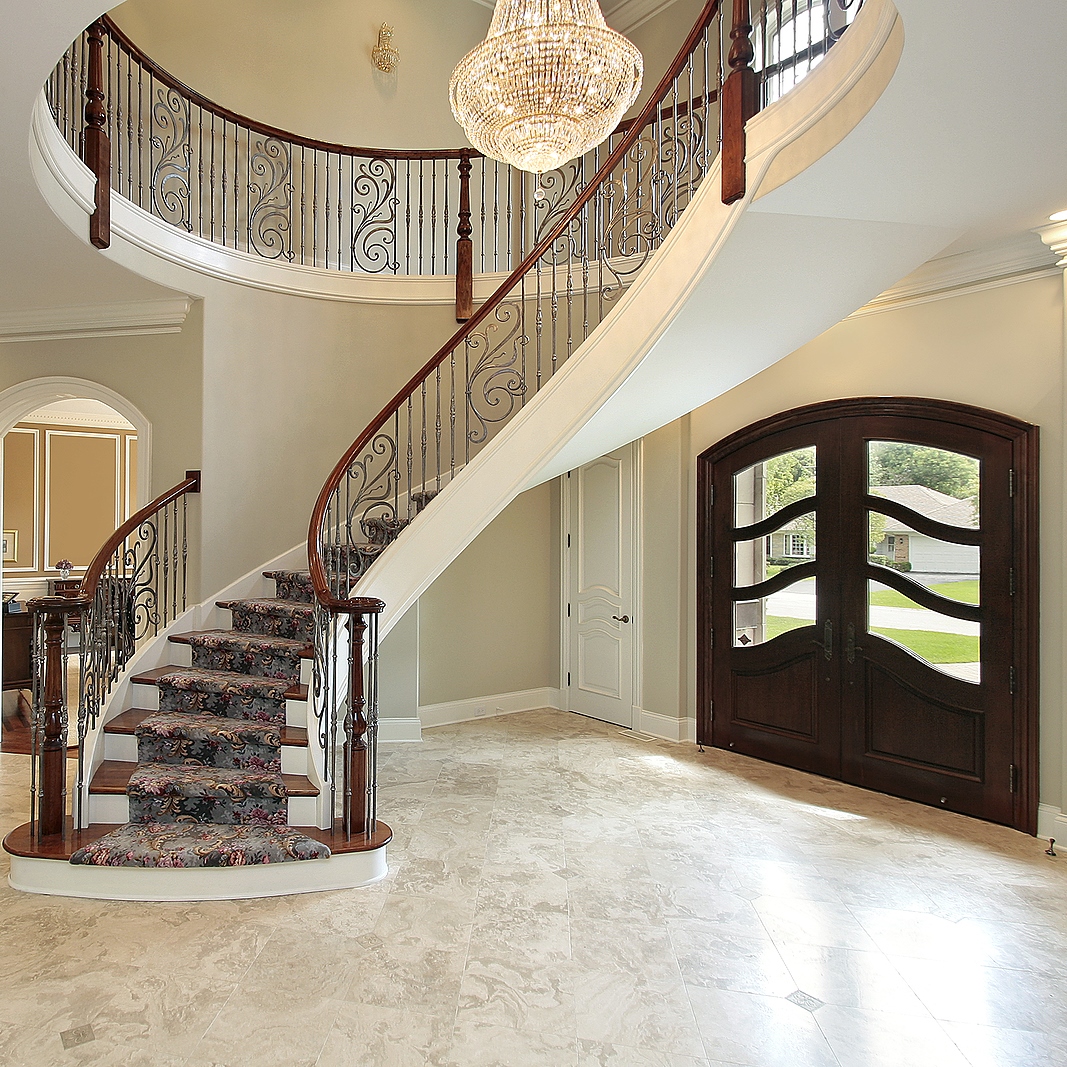
A foyer chandelier has a big job. It is the first thing people notice when they step inside, and it sets the tone for the rest of the home. The challenge for many homeowners is simple: what size foyer chandelier is actually right for the space?
In this entryway chandelier guide, you will find easy rules for foyer chandelier size and hanging height for different ceiling heights, from compact 8 ft entries to tall two-story spaces.
Start With Two Basics: Room Size and Hanging Height
Before looking at styles, measure your foyer:
- Room length in feet
- Room width in feet
- Ceiling height in feet
A common starting point for foyer chandelier size is this simple idea: add the room length and width (in feet), and treat that number as an approximate chandelier diameter in inches.
For example, a foyer that is 8 ft by 10 ft:
8 + 10 = 18 → chandelier diameter around 18 inches.
Foyer Chandeliers for 8 Foot Ceilings
With an 8 ft ceiling, scale and clearance matter a lot. There is not much vertical space, and you want guests to move comfortably under the fixture.
Size and type ideas
- Look at flush mount or semi flush foyer lighting instead of tall chandeliers.
- Keep total fixture height around 10–14 inches so there is enough headroom.
- Diameter can follow the length + width guideline, but err slightly smaller if the foyer is tight.
In compact entryways, a semi-flush with a strong presence often works better than a tall, multi-tier chandelier that feels cramped.
Foyer Chandeliers for 9–10 Foot Ceilings
At 9-10 ft, you finally have room for a true foyer chandelier while still keeping clearance comfortable.
Size rules for 9–10 ft ceilings
- Diameter: use the length + width (in feet) ≈ diameter (inches) as a starting point.
- Height: many foyers can handle chandeliers around 20–30 inches tall at this ceiling height.
- Bottom of the chandelier: often about 7 ft above the floor for a main walking area.
If your foyer opens immediately into a stair or hallway, imagine people carrying bags or packages. That mental picture helps you keep enough space under the fixture.
Foyer Chandeliers for 11–12 Foot Ceilings
At 11–12 ft, a larger entryway chandelier starts to make sense. This is where multi-tier designs and vertical forms begin to look balanced instead of oversized.
Size rules for 11–12 ft ceilings
- Diameter: follow the room size calculation, but you can lean toward the higher end of the range.
- Height: chandeliers in the 24–36 in height range work well in many foyers of this scale.
- Bottom of the chandelier: typically, around 7.5–8 ft above the floor if people walk directly under it.
In these spaces, a foyer chandelier that is too small will disappear. It is often better to choose a slightly taller, slimmer profile rather than a very wide but short fixture.
Two-Story or Open Foyer Chandelier Size
Two-story foyers are where homeowners usually have the most questions. The ceiling might be 16, 18, or even 20 feet high, and a standard single-tier chandelier can feel lost.
Guidelines for tall foyer ceilings
- Consider chandeliers with multiple tiers or cascading pendants so the design fills more vertical space.
- For very tall entries, many designers like the bottom of the chandelier to hover around the second-floor landing level, not down at head level, so the piece relates to both floors.
- Diameter should still relate to the floor area. Large foyers often look best with fixtures in the 24–36+ inch diameter range.
Think about how the chandelier looks from both the front door and the upper floor railing. The foyer chandelier becomes part of the view on both levels.
How Bright Should a Foyer Chandelier Be?
Size is only half of the foyer lighting equation. A beautiful chandelier that is too dim or too strong can still feel off.
- Many homes aim for roughly 10–20 lumens per square foot in the foyer, then add or reduce light with wall sconces or lamps nearby.
- Dimmers are very helpful in entry spaces so you can keep things brighter during the day and softer at night.
- Warm or soft white color temperatures (around 2700 K–3000 K) usually feel friendly at the front door.
Centering and Placement Tips
Once you know the approximate foyer chandelier size, check these placement details:
- Center the fixture in the foyer, or align it with the front door and main window if the layout demands it.
- In long, narrow entries, you may need a slimmer fixture or a pair of smaller lights instead of one very wide piece.
- If there is a staircase, think about sightlines from the stairs and upstairs hallways.
A chandelier that lines up with the architecture of the space looks intentional even before anyone notices the style.
Quick Foyer Chandelier Size Checklist
Use this simple list before you place an order:
- Measure foyer length, width, and ceiling height.
- Add length + width (in feet) to get an approximate diameter (inches).
- Match chandelier height to ceiling height and clearance needs.
- Plan for the bottom of the fixture: around 7–8 ft from the floor, or near second-floor railing in tall foyers.
- Confirm brightness and color temperature to keep the entry welcoming.
Ready to Choose a Foyer Chandelier?
Choosing the right foyer chandelier size does not have to be guesswork. When you balance room dimensions, ceiling height, and hanging height, the result feels in proportion from every angle. Once the basics are in place, style, finish, and details become easier decisions.
If you are looking for designs that fit different foyer ceiling heights and layouts, you can browse options at Seus Lighting foyer chandeliers and more. With a clear sizing plan and a well-chosen fixture, your entry can welcome guests with the look and scale you had in mind from the start.