

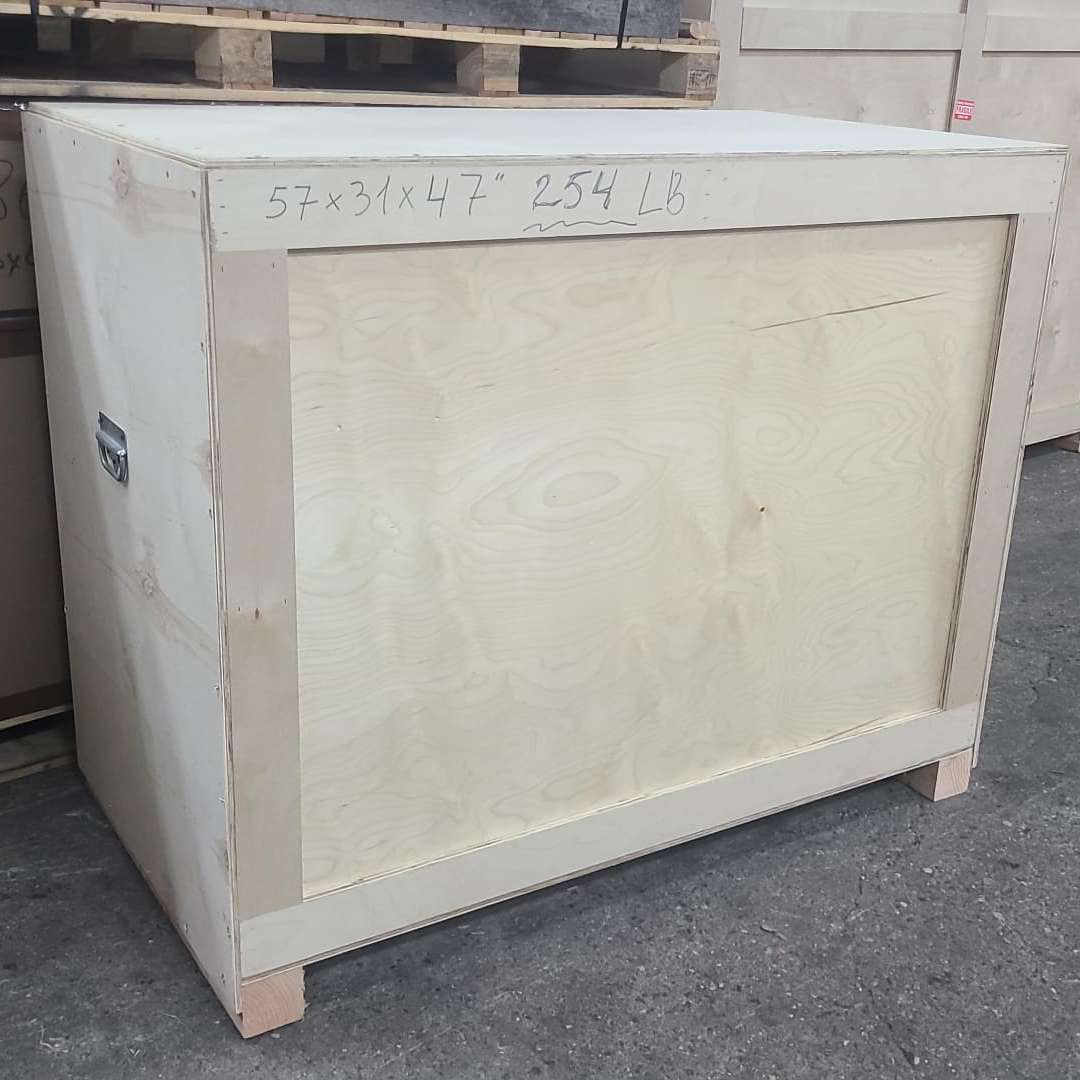
Whenever crating is performed, the crate is engineered around the object, not the other way round. That’s why choosing the right type of crate is object-specific. Here is a detailed guide that will help you decide the difference between museum-quality and commercial art crates.
Museum-Quality Crates: Construction and Design
Museum-quality crates, also referred to as fine art crates or conservation crates, are carefully engineered, rigid containers meant for shipping irreplaceable art objects.
Museum-grade crate construction includes:
- Custom-fabricated timber frames and plywood walls.
- A suspension or ‘float’ system in the interior, preventing the art object’s contact with the crate.
- Aluminum taping at the crate’s joints and passive climate buffering systems.
- Professional-grade hardware that doesn’t slip and puncture the interior.
Commercial Crating Principles
Commercial crates are more general-purpose crates built for art objects that possess high value but are not uniquely irreplaceable. They guarantee adequate artwork protection at a manageable cost and within a reasonable engineering turnaround.
Commercial crate design looks as follows:
- Standard-grade plywood.
- High-quality interior protection and padding.
- Moderate climate control measures.
- Standard hardware.
The Difference Between Museum-Quality and Commercial Art Crates, Explained
If you’re still choosing between these two options, have a look at the table below. It illustrates the difference between museum-quality and commercial art crates against the main safety criteria important for art logistics.
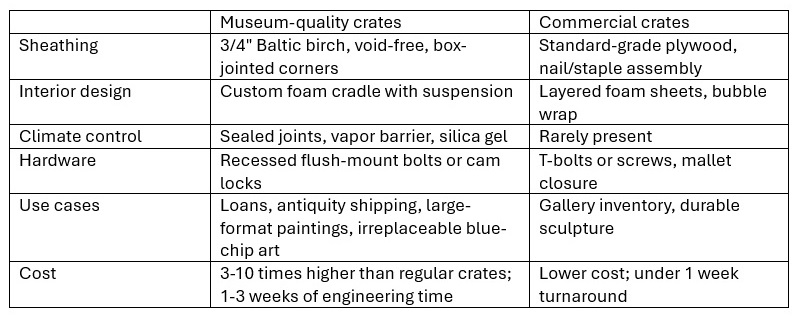
As you can see, museum-grade crating is a distinct precaution that not every artwork requires. Every element of the crate’s selection matters, as the stakes are very high. Commercial crates are more widespread in regular fine art logistics because they also ensure a high level of protection, but don’t overburden art owners with excessive expenditures and long waiting times.
FAQ
Can commercial crates be used for high-value artwork?
Yes, the artwork’s value isn’t the main determinant of crate selection. The art object’s fragility, rarity, and transportation route are the main decision-making criteria.
Why do museum-grade crates come with suspension systems?
Direct contact with the walls creates hard pressure points that may damage the artwork. Suspension distributes energy evenly and prevents compression bruising or paint cracking.
Why is plywood a gold standard in crate engineering?
Plywood is an eco-friendly, cost-effective material that guarantees good structural integrity under vibration.